


Dear COP31 Türkiye Brief Community,
April showed that COP31 Türkiye Brief had moved from editorial formation into editorial momentum. May showed something equally important: momentum now needs channels, bridges, and editorial discipline. The conversation around COP31 is no longer only about preparing for a future climate summit. It is becoming a broader test of how Türkiye, the region, and the wider climate community understand implementation at a time when clean energy, finance, technology, industrial strategy, and public trust are becoming inseparable.
That was the central signal of May. The month widened the platform’s editorial field and opened with Santa Marta and the Politics of Leaving Fossil Fuels Behind, published on May 4 by Selen İnal, which placed the politics of fossil fuel phase-out within the wider COP31 debate. On May 5, Türkiye’s Climate Tech Moment: Why COP31 is a Defining Test by Eftal Efeçınar turned the lens toward technology, competitiveness, and the credibility of Türkiye’s climate leadership. Two days later, on May 7, Development of a Community-Based Green Hydrogen Production with Combined Wind and Solar Electrolysis Model and its Project Management (Part 3) by Mesut Öztürk kept the practical delivery question in view. Together, these early pieces showed that May would not be a single-theme month. It would connect fossil fuel politics, climate technology, hydrogen, finance, CDR, citizens, grids, and regional cooperation into one implementation story.
May also mattered because the official COP31 calendar became more concrete. The UNFCCC Road to Antalya page highlighted the 20 May joint letter from the COP31 President-Designate and the President of Negotiations, while the official COP31 information page later confirmed that Blue Zone pavilion and office space applications had opened. For an editorial platform built around Türkiye’s COP31 moment, these signals shifted the context from anticipation to preparation.
This is why the May 4 essay Santa Marta and the Politics of Leaving Fossil Fuels Behind mattered as an opening signal. By linking fossil fuel politics to the moral and practical challenge of climate diplomacy, Selen İnal placed the month’s later discussions in context: technology, finance, hydrogen, CDR, grids, and citizens all depend on the same unresolved question of how societies move beyond fossil fuel dependence while maintaining development, security, and political legitimacy.
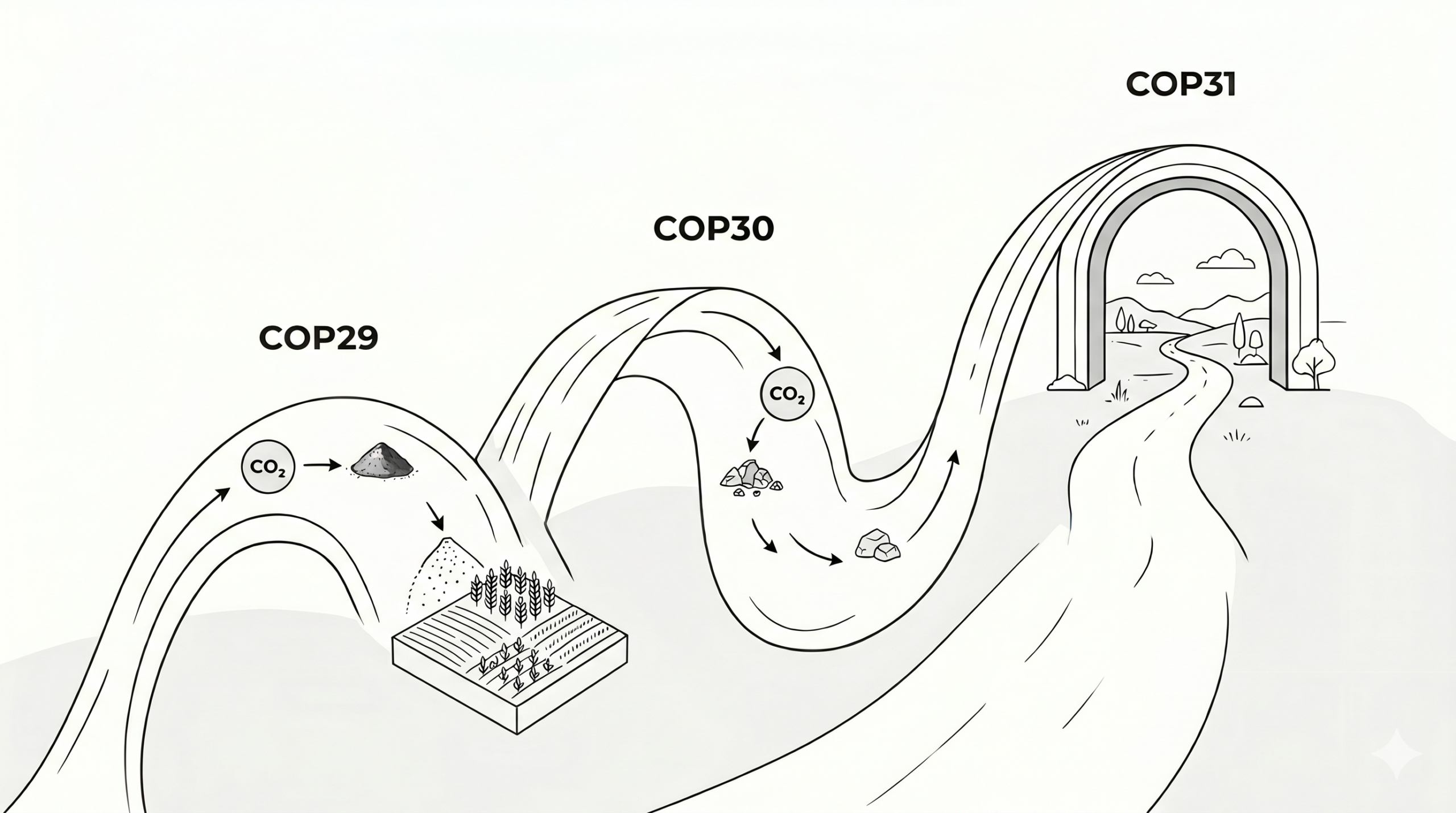
The task ahead is therefore no longer simply to explain why COP31 matters. It is to help readers understand what kind of systems, institutions, markets, technologies, and communities will determine whether the road to Antalya becomes credible.
A new channel with Solarbaba
On May 8, COP31 Türkiye Brief and Solarbaba Open a New Channel for Türkiye’s Energy Transition Debate became one of the month’s most important platform developments. It was more than a content announcement. It recognized that Türkiye’s energy transition debate needs better circulation across languages, platforms, and professional communities.
For years, Solarbaba has brought together one of Türkiye’s most active clean energy communities. COP31 Türkiye Brief, in turn, was created to open a window onto COP31 and the wider climate and energy agenda through Türkiye’s lens. The collaboration links these missions: selected Turkish articles from Solarbaba can reach international readers in English, while selected COP31 Türkiye Brief pieces can reach Turkish audiences with full attribution.
That matters because climate communication is now part of climate capacity. A transition cannot be built only through infrastructure, regulation, and investment. It also needs translation, interpretation, public understanding, and trusted editorial channels.
Technology as the material language of transition
The Solarbaba stream also gave the platform a more vivid technology layer. The May article The World’s First Fully Electric Giant Passenger Ship Has Been Unveiled showed how clean transport innovation can move beyond the familiar vocabulary of cars and batteries into maritime systems, large passenger vessels, and urban mobility futures.
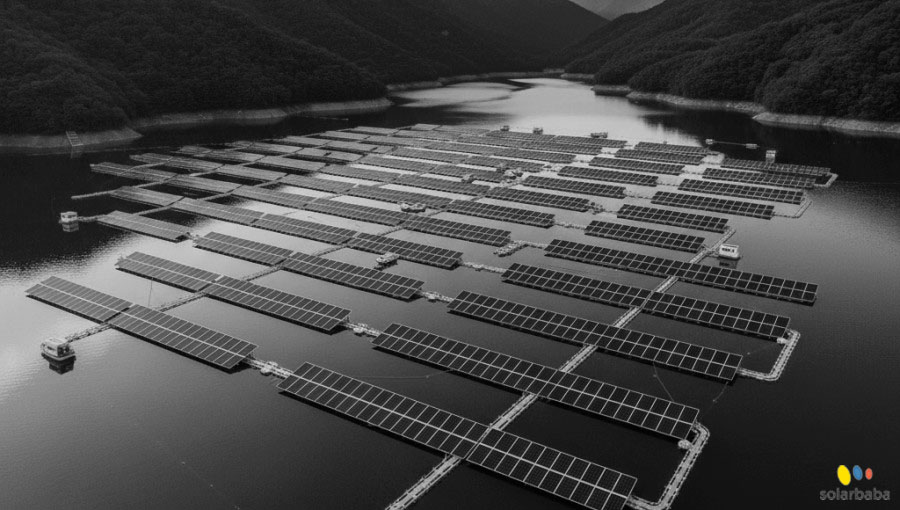
These technology stories may appear, at first glance, to sit at the edge of the COP31 conversation. In fact, they belong close to its center. Climate diplomacy often speaks in targets. Technology shows where those targets become material. Electric ships, flexible solar tiles, vertical solar façades, robotaxis, solid-state batteries, and floating solar projects all point to the same conclusion: the transition is becoming an infrastructure and design project as much as a policy project.
This is one reason the LinkedIn layer matters. On the portal, these stories create an archive. On LinkedIn, they become signals in a wider public conversation, reaching readers who may not yet search for COP31, but who follow energy, technology, investment, and sustainability debates.
CDR Brief becomes a stronger editorial pillar
On May 13, Pınar Öncel advanced one of the platform’s most important editorial pillars with CDR Brief Issue 6: Growing a Balanced CDR Portfolio | Nature and Technology Complement Each Other. The piece moved beyond the false divide between nature-based and technology-based carbon removal, framing the atmosphere as a system that needs balance and CDR as a portfolio question rather than a single-solution debate.
That framing is important. Carbon dioxide removal is often pulled into polarized narratives. Nature-based solutions are sometimes treated as soft or insufficient. Engineered removals are sometimes treated as expensive, distant, or overly technological. A serious CDR conversation must move beyond that binary. It must ask what different approaches can do, where they are credible, how they should be governed, and how they can scale without weakening the priority of rapid emissions reduction.
Later in the month, on May 25, Resolving the Accounting Confusion: Nested Accounting to Replace Corresponding Adjustments for Durable CDR, also by Pınar Öncel, brought the discussion into one of the most difficult areas of carbon market governance: how removals are accounted for across voluntary markets, national inventories, and international climate commitments. This is precisely where COP31 Türkiye Brief can add value by placing a technically complex subject within the wider politics of credibility, climate finance, and market architecture.
By May, CDR Brief had become more than a content series. It had become a specialized editorial space within the platform: technical, but not narrow; scientific, but not detached from governance; market-aware, but not reduced to market language.
The infrastructure beneath climate ambition
On May 28, The Grid Is Becoming the Center of the Energy Transition made one of May’s clearest implementation arguments: the next stage of climate action will not be decided only by how much renewable capacity is built, but by whether power systems can absorb, move, and use clean electricity at scale.
Electrification requires grids. Clean industry requires grids. Electric mobility, heat pumps, data centers, green hydrogen, storage systems, and flexible demand all require grids. This makes grid infrastructure not a background issue, but one of the central political economy questions of the transition.
For Türkiye, this question is especially relevant on the road to COP31. Hosting climate diplomacy will place more attention on the country’s power system, renewable integration capacity, industrial electricity demand, and long-term infrastructure planning. The grid is where ambition meets physics. It is also where policy meets permitting, finance, public acceptance, and institutional coordination.
Citizens, finance, and the political durability of transition
On May 26, The Citizen at the Center of Europe’s Energy Transition brought the European energy transition back to households, affordability, public trust, and participation. This is a crucial point. The energy transition cannot survive as a technocratic project if citizens experience it only through cost, complexity, or exclusion.
Europe’s energy crisis already showed how quickly energy policy can become social policy. Affordability, access, consumer protection, and participation are no longer secondary issues. They are part of the political stability of the transition. For COP31 Türkiye Brief, this theme connects directly to implementation: clean energy transitions are not only measured by installed capacity or emissions curves. They are also measured by whether people trust the process and see tangible benefits in daily life.
May also sharpened the finance, governance, and technology lens. On May 15, The Taxonomy Trap: When Classification Blocks Capital Mobility by Tayfun Bahsi raised a hard question for transition finance: are taxonomies optimizing for compliance integrity at the expense of capital movement? Three days later, on May 18, AI Is Not a Climate Solution. It Is Something More Disruptive Than That. by Eftal Efeçınar placed artificial intelligence outside the simplistic optimism that often surrounds technology and climate. Read together, the two pieces asked whether the institutions, markets, and digital systems around the transition are adapting quickly enough to the scale of disruption ahead.
Türkiye, the Gulf, and the regional logic of COP31
On May 11, Eftal Efeçınar widened the platform’s regional lens with The Türkiye-GCC Green Corridor: Capital, Technology, and the Logic of a Two-Way Partnership. It looked at one of the most important strategic questions for the next decade: how Türkiye’s industrial capacity, geography, and clean energy ambitions may connect with Gulf capital, technology agendas, and regional transformation strategies.
The most consequential climate partnerships of the next decade may not be built only around shared borders. They may be built around complementary strengths. Türkiye has industrial depth, manufacturing capacity, logistics advantages, and proximity to European markets. Gulf economies have capital, energy transition strategies, infrastructure ambitions, and growing interest in green investment.
For COP31 Türkiye Brief, this regional lens matters because COP31 will not be a purely national moment. Türkiye’s role will be read regionally. The country’s ability to connect Europe, the Mediterranean, Central Asia, the Middle East, and the Gulf will shape how its COP31 leadership is interpreted. Climate diplomacy is increasingly regional diplomacy, industrial diplomacy, and investment diplomacy at the same time.
Green hydrogen and climate technology as delivery tests
Mesut Öztürk’s May 7 contribution, Development of a Community-Based Green Hydrogen Production with Combined Wind and Solar Electrolysis Model and its Project Management (Part 3), kept another practical implementation question in view: how do new clean energy models move from concept to organized project delivery? By focusing on community-based green hydrogen production with combined wind and solar electrolysis, the piece brought technology, local energy planning, and project management into the same frame.
The May 5 article Türkiye’s Climate Tech Moment: Why COP31 is a Defining Test by Eftal Efeçınar added a wider technology and competitiveness frame. COP31 can become a stage for Türkiye’s climate diplomacy, but also a test of whether the country can turn its climate-tech potential into a stronger innovation ecosystem, investment narrative, and implementation capacity.
This is where COP31 Türkiye Brief’s editorial role becomes clearer. It is not enough to report announcements. The platform can help interpret the links between technology readiness, industrial competitiveness, regional investment, public policy, and international credibility.
LinkedIn as a community and distribution layer
May also showed that the platform is not only a website. Its LinkedIn presence is becoming an important distribution and community layer. The portal gives the publication depth, archive, structure, and editorial authority. LinkedIn gives it circulation, visibility, and a way to meet the professional community where the conversation is already happening.
This matters for a platform built around COP31. The audience is not a single audience. It includes energy experts, climate finance professionals, CDR practitioners, sustainability leaders, technology observers, public institutions, private companies, academics, and civil society actors. A portal can host the full argument. LinkedIn can carry the signal outward.
The editorial opportunity for June is to make this connection more intentional: every major portal piece should have a clear LinkedIn framing, every contributor should be visible as part of a wider community, and every technical theme should be translated into a public-facing question that invites discussion without diluting substance.
What May revealed
By the end of May, COP31 Türkiye Brief was operating across several layers at once. It was following the hard infrastructure of transition: grids, electrification, storage, hydrogen, and renewable integration. It was following the financial architecture: taxonomies, transition finance, capital mobility, CDR accounting, and carbon markets. It was following the emerging technology frontier: AI, batteries, electric mobility, solar innovation, and clean transport. It was following the institutional and social dimension: citizens, affordability, public trust, and communication. And it was following regional strategy: Türkiye’s role between Europe, the Gulf, and wider climate diplomacy.
That range is important, but it also requires editorial care. A platform built around COP31 could easily become too broad. It could try to cover everything and lose its center. May suggested a different path. COP31 Türkiye Brief is becoming broader, but not looser. Its center is becoming clearer: climate implementation through Türkiye’s lens, connected to the systems that make transition possible.
The road to Antalya will not be shaped only by declarations. It will be shaped by whether finance can move, grids can expand, technologies can scale, institutions can adapt, markets can remain credible, and communities can understand what is at stake.
May made that terrain more visible. It showed that COP31 Türkiye Brief is no longer only documenting the road to COP31. It is beginning to build some of the bridges that road will require.