
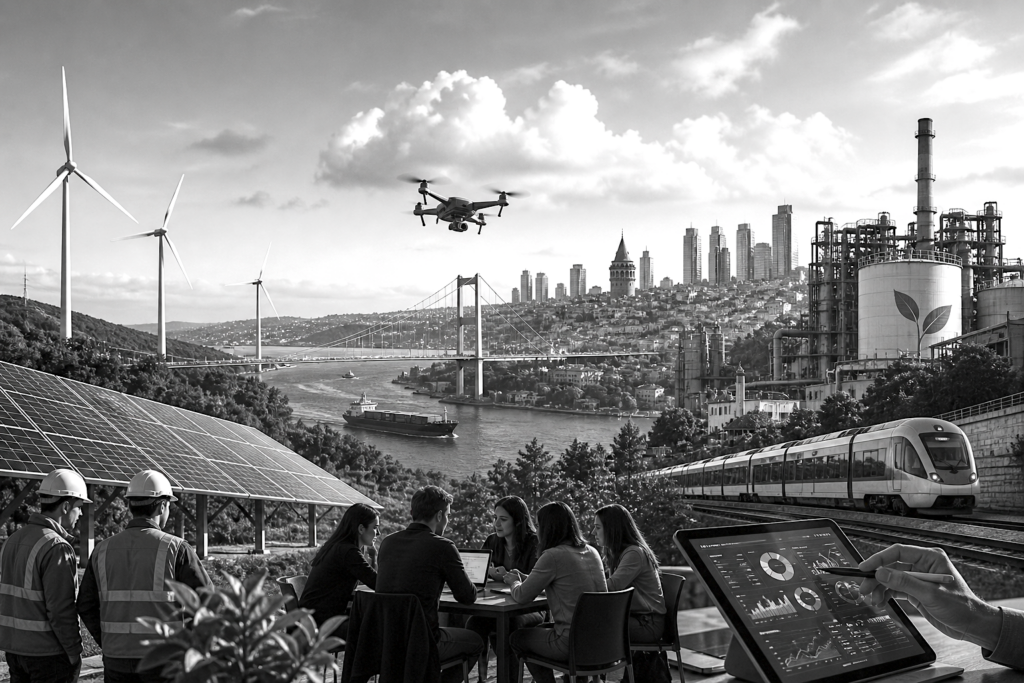
It is important to know strongly that COP presidencies are not conference hosts. They are leaders of partnership between countries, companies, NGO’s and also a stress test of a country’s ability to translate diplomatic ambition into credible, scalable action. As Türkiye prepares to host COP31, the question of climate technology—who develops it, who finances it, and who deploys it—sits at the very centre of that test.
From Diplomatic Opportunity to Industrial Obligation
In my earlier piece on this platform, I argued that COP31 represents a rare strategic inflection point for Türkiye in global climate governance. That argument rested on the country’s unique positioning: a NATO member and EU candidate economy straddling European regulatory frameworks and Middle Eastern capital flows, hosting a conference that will demand real delivery over ambition. What I want to explore here is the specific domain where that positioning becomes most concrete through climate technology and why Türkiye’s role as a hub for green innovation is structurally necessary.
The COP31 Action Agenda’s nine priority areas, from Zero Waste and Clean Energy Transition to Green Industrialization and Climate Resilient Cities, are not abstract policy themes. They are procurement categories. Every item on that agenda near-zero industrial technologies, electrification and grid optimization, sustainable building certification, ocean data sharing, circular economy infrastructure requires technology providers, integrators, financiers, and implementers. Türkiye, sitting at the intersection of manufacturing depth, energy transition momentum, and growing innovation capacity, has a credible claim to each of those roles. The question is whether the country chooses to build that claim systematically, or lets the window pass.
The Infrastructure Is Already Being Built
Türkiye’s renewable energy trajectory is well documented: roughly 72.5 GW of installed renewable capacity by mid-2025, a 4.5-fold increase over two decades. But capacity figures alone are not what make a country a technology hub. What matters is whether that buildout generates indigenous capability—local manufacturing, engineering expertise, financeable project pipelines, and the institutional knowledge to replicate and export what works.
The evidence here is more encouraging than the headlines suggest. Türkiye is home to one of Europe’s largest wind turbine component manufacturing clusters, a growing EV and rail electrification sector anchored by TOGG and domestic train projects, and a cleantech startup ecosystem increasingly connected to global accelerator networks through TÜBİTAK’s GCIP programme and UNIDO’s green transition track. The country’s new Climate Law, passed in July 2025, introduces an Emissions Trading System modelled closely on the EU ETS—creating the compliance architecture that will, over time, drive corporate demand for emissions management technology, carbon data infrastructure, and verified reduction pathways. COP31 is the moment to make that latent capability visible to the world.
COP31’s Agenda as a Technology Map
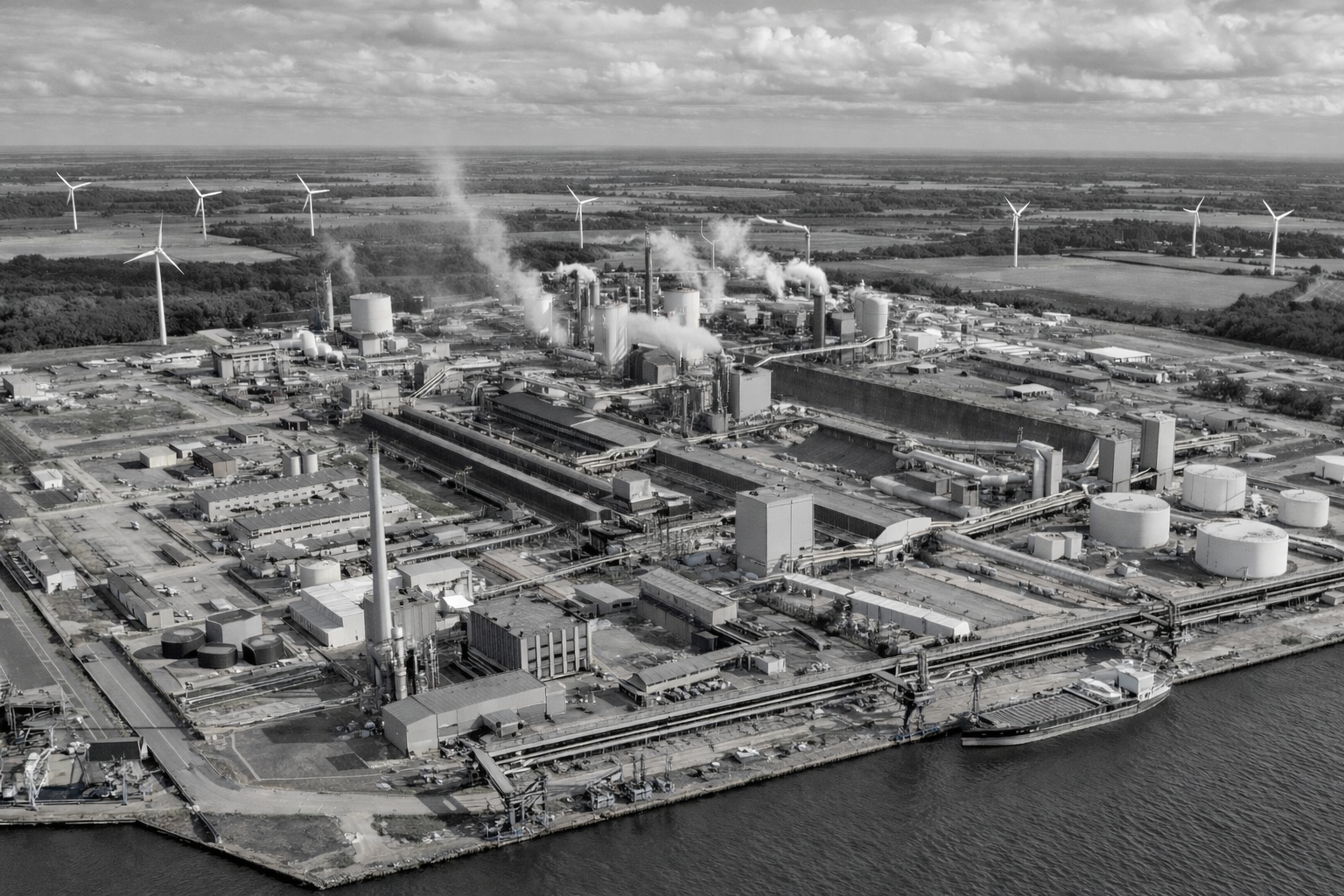
Let’s read the COP31 priorities as a technology roadmap. Türkiye’s industrial profile begins to map onto it with surprising precision. Green Industrialization calls for near-zero industrial technologies including electrification, hydrogen, and carbon capture. Türkiye’s industrial base in steel, cement, and chemicals, sectors facing acute decarbonization pressure from the EU’s Carbon Border Adjustment Mechanism, creates both urgent domestic demand and potential demonstration capacity for exactly these solutions. Climate Resilient Cities, emphasises green building certification and life-cycle emissions management—a space where Turkish construction and engineering firms operating across the GCC, Central Asia, and Africa are already active, but currently without a systematic sustainability layer.
Youth and Education might seem softer terrain, but it maps directly onto a structural advantage: Türkiye has one of the youngest engineering workforces in the OECD, with tens of thousands of graduates annually in engineering, computer science, and environmental sciences. If the country invests in green skills pipelines and clean-tech entrepreneurship infrastructure now, COP31 becomes a recruitment event as much as a policy forum—attracting international climate tech firms to establish regional hubs in Istanbul or Ankara.
The Harder Question: Ambition vs. Architecture
None of this is guaranteed. Türkiye’s NDC trajectory remains, by independent assessments, far below a 1.5°C-compatible pathway. The government’s simultaneous pursuit of fossil gas expansion and green transition creates a credibility gap that international investors and technology partners notice. COP31 cannot paper over that gap—and the climate policy community is sophisticated enough to distinguish between hosting an event and owning its agenda.
What COP31 can do, if handled with strategic intent, is accelerate the internal policy architecture that makes Türkiye genuinely investable as a climate tech destination: faster ETS implementation, green hydrogen regulation, digital MRV infrastructure, and bilateral technology cooperation frameworks that go beyond memoranda of understanding. The conference is the deadline that forces the institutional work that should have started years ago to get done.
That is, ultimately, the most honest framing of Türkiye’s climate tech moment. The opportunity is real. The structural assets exist. What remains is the political will to build the architecture—and the urgency that COP31, if nothing else, supplies.