



Dear COP31 Türkiye Brief Community,
April was the month COP31 Türkiye Brief moved from editorial formation into editorial momentum.
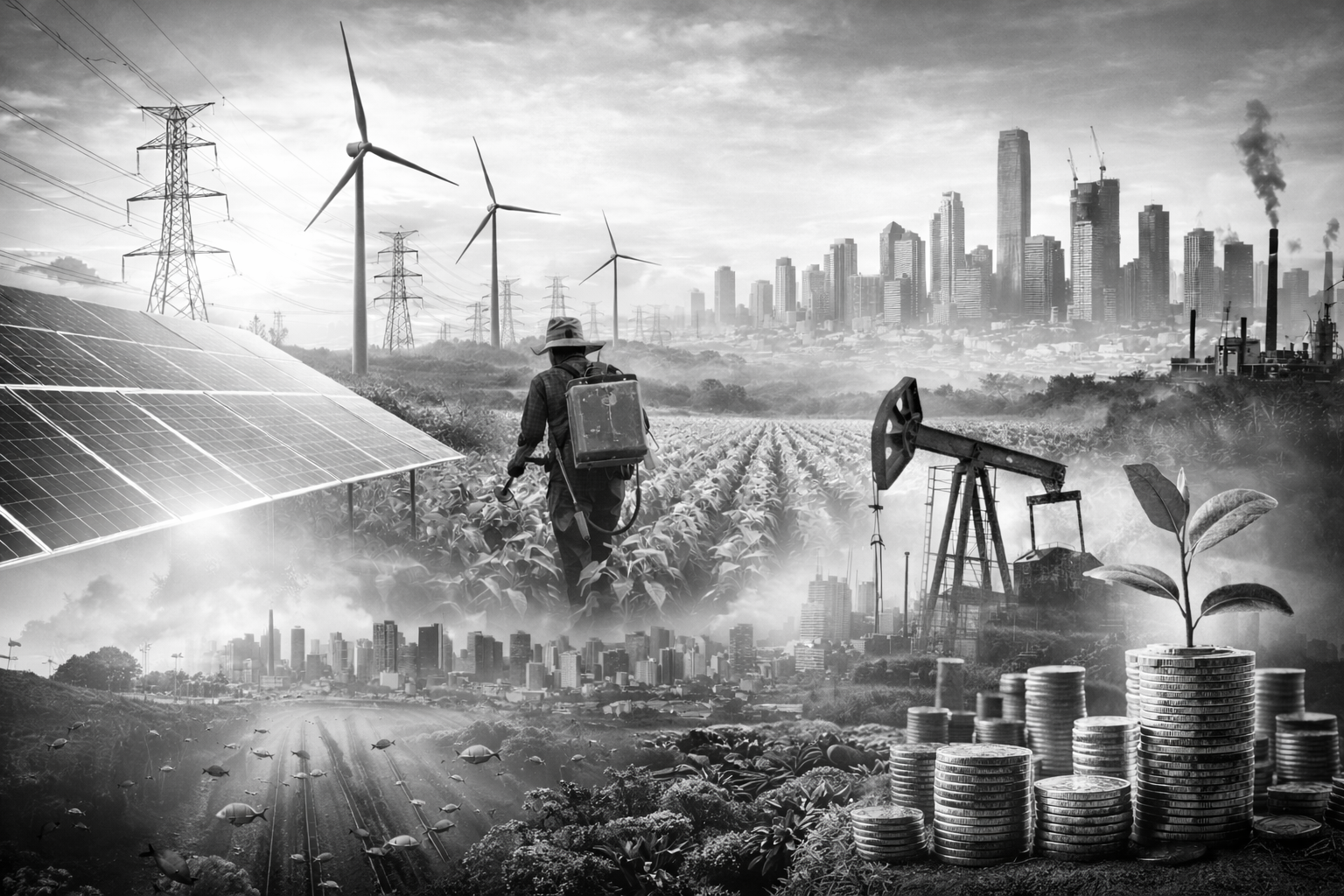
If January introduced the platform, February widened the conversation, and March sharpened its instinct, April began to show what this publication can become when it operates as a living space for climate interpretation. The month brought more voices, more technical depth, more Türkiye-focused analysis, and a clearer sense that COP31 is no longer only a future diplomatic milestone. It is becoming a lens through which energy, industry, finance, technology, cities, markets, and resilience can be read together.
That shift matters.
The global climate conversation is becoming more concrete and more difficult at the same time. The easy language of ambition is giving way to harder questions of delivery. How will countries build clean industrial capacity? How will energy markets remain credible and transparent? How will carbon data become usable infrastructure? How will Türkiye’s electricity system evolve under the pressure of COP31 visibility? How will climate finance, carbon removal, energy poverty, green hydrogen, artificial intelligence, and industrial competitiveness become part of the same implementation agenda?
April was the month COP31 Türkiye Brief began to answer those questions not through a single editorial line, but through a wider community of contributors.
The platform published pieces across green hydrogen, carbon data, CDR, ecological risk, energy poverty, artificial intelligence in the energy sector, IVECF 2026, industry and stability, market integrity, Europe’s competitiveness agenda, clean energy technology manufacturing, Türkiye’s power system, and carbon removal credits. These were not separate fragments. Together, they formed a more mature editorial arc: climate transition is moving from policy language into the systems that must carry it.
Several pieces made that transition especially visible.
Tuğba Sarı’s Carbon Data as Infrastructure: Why Türkiye’s CBAM Response Needs Digital-First Architecture placed carbon reporting at the center of Türkiye’s industrial readiness. The point was not only that the European Union’s Carbon Border Adjustment Mechanism is changing trade conditions. It was that data itself is becoming part of climate infrastructure. In a world where emissions information affects market access, competitiveness, and credibility, measurement is no longer administrative. It is strategic. The article was published on April 6 and framed CBAM’s definitive phase as a turning point for exporters, importers, and institutions alike.
Pınar Öncel’s CDR Brief Issue 4: A Systems View on CCS and CDR widened the lens further. Rather than treating carbon removal as a narrow technology question, the piece situated CDR within planetary boundaries, climate thresholds, and system-level risk. Later in the month, Göker Avcı’s CDR Brief Issue 5: CDR Credits, Supply Gaps, and the Shape of the Market took the discussion into the emerging market architecture of carbon removal credits, standards, registries, off-takes, pricing, and buyer demand. Together, these pieces showed how CDR Brief is becoming one of the platform’s most important editorial pillars: technical enough to be useful, but framed broadly enough to connect science, markets, and governance.
April also brought the conversation closer to Türkiye’s energy reality.
Ufuk Alparslan’s What does the COP31 host’s electricity system look like? offered a timely reminder that Türkiye’s clean energy story is not one of simple success or failure. It is a mixed picture. Coal remains central, while wind and solar are growing fast enough to change the shape of the system. The article noted that coal remained Türkiye’s largest source of electricity generation in 2025, while wind and solar reached a record 22 percent share, crossing the one-fifth threshold for the first time. For a country preparing for COP31 visibility, that tension is precisely the point. The transition is underway, but the harder system questions are still ahead.
Energy markets also became a stronger editorial theme.
Serhat Aydın’s The Turkish Reflection of REMIT: Transparency and Market Integrity in Energy and Environmental Markets brought attention to a subject that often stays outside the public climate debate: trust in market formation. As electricity, carbon, and environmental markets become more central to transition policy, transparency and integrity are no longer technical concerns for regulators alone. They are part of the institutional credibility required for climate-aligned investment.
Tayfun Bahsi’s April contributions deepened another important line of inquiry: the way ecological risk enters financial logic. Global Risk, Local Pricing and The Valuation Gap: Why Financial Models Misprice the Future pushed the discussion beyond ESG disclosure and into the structural weakness of financial models that still struggle to price renewal, regeneration, threshold risk, and long-term ecological dependency. This is where COP31 Türkiye Brief’s editorial voice is becoming more distinct. It is not treating finance as an isolated sector. It is asking whether finance can still understand value correctly in a century of ecological instability.
Another April thread was industrial strategy.
Industry, Energy and the New Architecture of Stability argued that industry, energy, climate, and security now move together, especially across middle-income and emerging economies. That framing connected closely with The Clean Energy Race Has Entered Its Industrial Age, which reflected on the International Energy Agency’s Energy Technology Perspectives 2026 and the shift from clean technology deployment alone toward clean technology manufacturing, supply chains, industrial capacity, and strategic competitiveness.
This was also visible in Europe’s Competitiveness Compass Is Really About Power, which looked at the European Commission’s competitiveness agenda not only as an industrial policy document, but as an energy question. Europe’s future competitiveness will depend on whether it can make clean power abundant, affordable, and reliable enough to sustain industrial transformation. In that sense, competitiveness, decarbonization, and energy security are no longer parallel conversations. They are the same conversation, told through different institutional languages.
April also showed that the platform is becoming more open to applied and emerging themes.
Çiğdem Dilek’s Information Note on the TBMM AI Workshop Report: The Energy Sector brought artificial intelligence into the energy transition debate, linking national institutional discussions with the operational future of the sector. Arif Künar’s ENYOKDER Launches in Türkiye to Advance the Fight Against Energy Poverty added an equally important social dimension. Clean transition cannot be judged only by installed capacity, market design, or industrial strategy. It must also be judged by whether households can access affordable, secure, and dignified energy.
Green hydrogen, too, remained part of the April agenda.
Mesut Öztürk’s two-part series on Development of a Community-Based Green Hydrogen Production with Combined Wind and Solar Electrolysis Model and its Project Management examined the feasibility, benefits, investors, funding, and technical assistance requirements of a community-based production model. The value of this contribution lies in its practical orientation. It brought green hydrogen down from the level of national strategy into the project logic of local production, renewable integration, and implementation design.
One of the month’s most important dispatches came from Vienna.
IVECF 2026: Keeping Green Positivity Alive captured the International Vienna Energy and Climate Forum as a space where energy, climate, industrial development, security, and resilience are increasingly understood as part of the same strategic field. That matters for COP31 Türkiye Brief because it reinforces a central editorial conviction: the climate conversation cannot remain confined to emissions pathways. It must also engage prosperity, institutional capacity, industrial transformation, stability, and public trust.
By the end of April, another editorial signal had become visible: community growth.
The platform’s contributor base expanded to more than 50 listed community members, with names across energy, finance, policy, CDR, academia, and practice. The LinkedIn page also continued to grow, reaching 2,456 followers by early May, compared with the 2,173 followers noted in the March editor’s letter. That is not only a numerical increase. It signals that COP31 Türkiye Brief is beginning to find an audience for a particular kind of climate writing: analytical, cross-sectoral, Türkiye-rooted, and internationally aware.
What changed most in April was the platform’s range.
March gave the publication sharper edges. April gave it more depth. The conversation became more technical without becoming narrower. It became more Türkiye-focused without becoming inward-looking. It became more international without losing its anchor in the practical questions that will shape Türkiye’s COP31 journey.
That is not an easy balance.
A platform built around COP31 could easily become event-driven. It could follow announcements, amplify slogans, and wait for diplomacy to provide the storyline. April showed a different path. COP31 Türkiye Brief is increasingly treating COP31 as a way to examine the deeper systems beneath climate diplomacy: electricity grids, industrial policy, carbon markets, financial models, local institutions, energy poverty, data systems, emerging technologies, and regional credibility.
That is where the platform’s role is becoming clearer.
COP31 will not be defined only by negotiation rooms. It will also be defined by whether countries can show that implementation is possible under real constraints. Türkiye’s own transition will be read through that lens. Its power system, industrial base, market institutions, climate technology ecosystem, urban agenda, and financing capacity will all matter. So will the quality of the public conversation around them.
April showed that COP31 Türkiye Brief can contribute to that conversation by doing what good editorial platforms do best: connecting the pieces.
It connected CBAM to digital infrastructure. CDR to market formation. Electricity data to national credibility. Energy poverty to social justice. REMIT to market trust. Artificial intelligence to energy governance. Industrial strategy to stability. Finance to ecological reality. Green hydrogen to project design. IVECF to the wider architecture of climate, energy, industry, and security.
That connective work is becoming the publication’s signature.
In a climate debate often divided between optimism and fatigue, April offered something more useful: seriousness. Not pessimism, not cheerleading, but seriousness about the scale of the work ahead.
Because the road to COP31 will not be shaped only by ambition. It will be shaped by capacity.
It will be shaped by the ability to build, finance, regulate, measure, govern, and explain the transition in ways that hold under pressure. It will be shaped by whether institutions can turn climate language into credible systems. It will be shaped by whether Türkiye and the wider region can use this moment not only to host a summit, but to clarify what delivery now requires.
April made that clearer.
COP31 Türkiye Brief is no longer only documenting the road to COP31. It is beginning to map the terrain beneath it.