



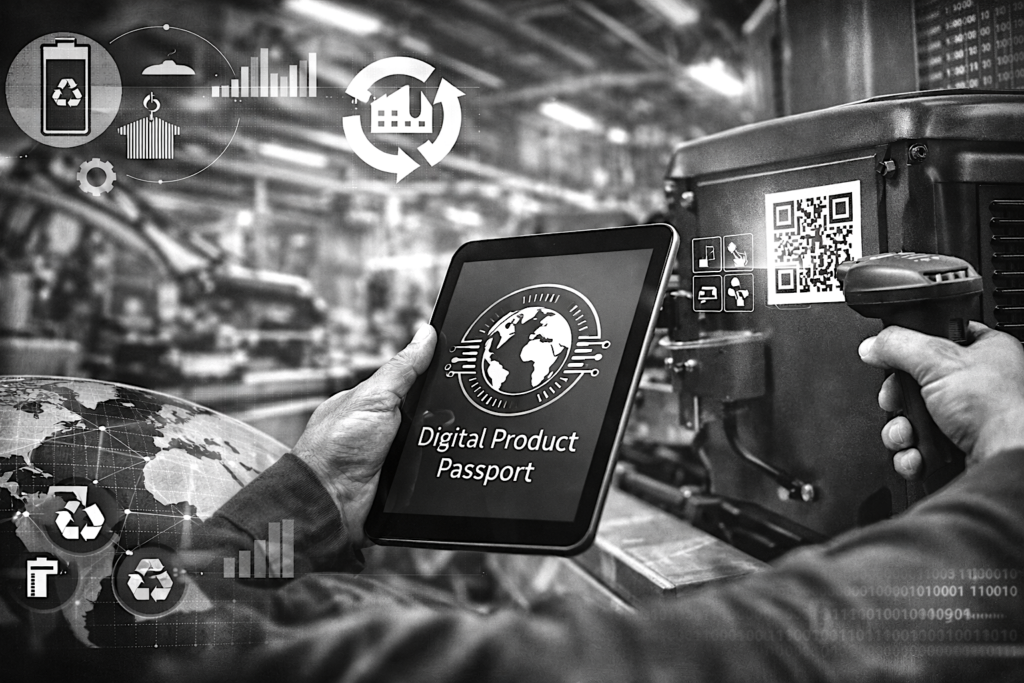
Imagine every product carrying its own digital identity, a record not just of what it is but where it came from, what it contains, how it was made and how it can be reused or recycled. That is the ambition behind the Digital Product Passport, a central pillar of the European Union’s Ecodesign for Sustainable Products Regulation, part of the Green Deal and Circular Economy Action Plan.
At its core, the Digital Product Passport is a machine-readable digital record linked to a physical product, consolidating verified data on materials, composition, origin, environmental impact, repair and recycling instructions, and compliance information. The passport can be accessed through QR codes, RFID tags or similar digital identifiers.
The European Commission is phasing in requirements for DPPs between 2025 and 2030, with the first mandatory application starting in February 2027 for industrial and electric vehicle batteries. Other product categories likely to follow include textiles, electronics, furniture, tyres and building materials.
The goal is not merely to label products differently. It is to change the way products are designed, regulated and understood. For decades, consumers, regulators and even companies have lacked reliable, comprehensive data on product lifecycles. Supply chains have grown longer and more complex, obscuring environmental impacts and complicating efforts to reduce waste and emissions. The Digital Product Passport aims to bring that invisible information into the light.
For businesses, the implications are already rippling through strategy and operations. Companies that export to the EU will need to build systems for gathering, storing and maintaining structured data for every product they sell in the market. That includes not only large multinationals but also smaller manufacturers that depend on European trade routes. Compliance will require investments in data infrastructure, supply chain transparency and new digital tools capable of updating product information over time.
Critics argue that the requirements could burden small and medium-sized enterprises or create competitive disadvantages for firms outside the EU. Yet the Digital Product Passport also creates opportunities. Transparent data can build consumer trust, streamline regulatory compliance across categories and support new circular business models focused on repair, reuse and recycling.
The passport is also part of a larger shift in how sustainability is measured and enforced. Instead of voluntary claims or isolated environmental product declarations, product information will need to be verified, structured and accessible to regulators, recyclers, consumers and others throughout the lifecycle.
In a world where greenwashing has eroded trust and sustainability claims often outpace evidence, the Digital Product Passport could be a powerful corrective. It is not simply a compliance requirement. It is a mechanism for embedding transparency and accountability into the material economy. The data will travel with the product, enabling better decision-making from manufacture to end of life.
For companies operating globally, the policy signals a broader trend. Markets are increasingly demanding not only that products perform but that they can be traced, understood and improved. Whether the rest of the world adopts similar systems, the Digital Product Passport will shape how products are made and sold for years to come.
Perhaps most important, it sets a precedent that sustainability can be quantified, demanded and regulated with the same rigor as safety or quality. In doing so, it challenges manufacturers and consumers alike to rethink what it means for a product to be truly responsible.
The Digital Product Passport is not a future idea. It is already reshaping global commerce.
And its influence is growing every day.