Cleantech is entering a more disciplined phase.
The 2026 edition of the Global Cleantech 100 Trend Watch, published by Cleantech Group in its 17th year, suggests that the sector is no longer defined by broad optimism alone. It is being shaped by competition, capital constraints and a narrowing set of technologies that can withstand economic and geopolitical pressure.
Growth is concentrating rather than spreading. This year, the strongest momentum clusters around two areas: artificial intelligence infrastructure and critical minerals. Venture investment in cleantech remains significantly higher than pre-pandemic levels, a sign of resilience. But funding is increasingly selective, favoring companies that can demonstrate scalability, durability and system-level relevance.
The report frames 2026 as a year defined by “economic durability.” In practical terms, that means technologies that do more than reduce emissions. They must strengthen supply chains, stabilize grids and reinforce industrial continuity.
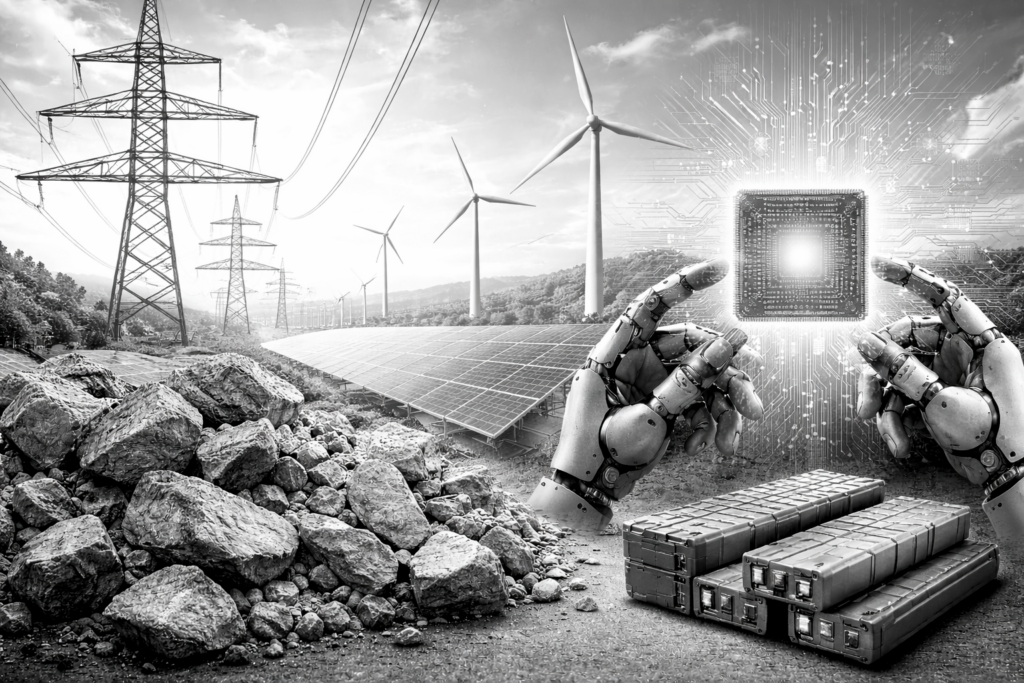
Resource security has become central. Companies focused on lithium refinement, rare earth alternatives and battery recycling are gaining strategic weight as governments seek to reduce dependence on concentrated mineral supply chains. Circularity is no longer peripheral; it is becoming industrial policy.
Electricity systems are another focal point. Rising demand, accelerated by digital infrastructure and electrification, is placing pressure on aging grids. Companies developing modular transformers, high-capacity conductors and AI-enabled grid management tools are increasingly positioned as essential infrastructure players rather than experimental start-ups.
Artificial intelligence plays a dual role. It is a driver of electricity demand through data center expansion, but also a solution for forecasting, system optimization and mineral discovery. In this sense, cleantech and digital infrastructure are converging rather than operating in parallel.
The list also reflects a subtle but important shift toward resilience and adaptation. Wildfire detection systems, grid hardening technologies and risk management tools are emerging alongside traditional mitigation solutions. Climate response is broadening beyond carbon reduction toward continuity under stress.
The cleantech sector of 2026 looks more mature and more competitive. It is less about conceptual breakthroughs and more about deployable, financeable solutions that align with industrial and national priorities.
The transition has become as much an economic story as a climate one.
And in a world defined by supply chain tension, rising demand and tightening timelines, durability may prove to be the cleantech industry’s most valuable innovation.