


As global competition in space intensifies, energy generation and resilience are becoming strategic pillars of modern defense architectures. Ultra-lightweight perovskite and thin-film solar cell technologies are emerging as game-changing solutions for applications ranging from satellite constellations to military systems, thanks to their low weight, flexibility, and high specific power capabilities. Scientific breakthroughs, such as the ultra-thin solar cells developed by researchers at Nanyang Technological University in Singapore reportedly 10,000 times thinner than a human hair highlight the growing importance of transforming these technologies into operational capabilities. NATO and allied ecosystems are expected to accelerate investments and international cooperation to industrialize these critical technologies.
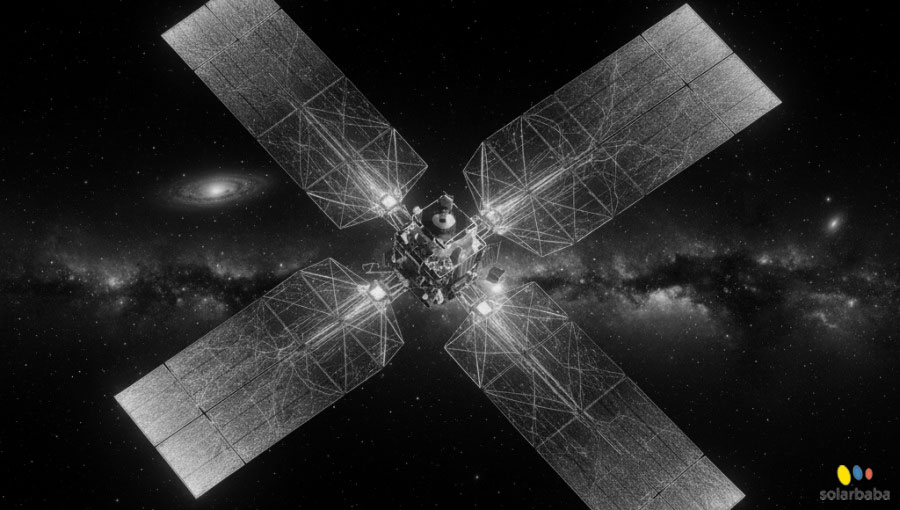
In the next phase of space technology development, energy resilience and generation capacity are becoming just as important as launch systems themselves. As artificial intelligence-driven intelligence networks, autonomous systems, and orbital infrastructures continue to evolve, energy is no longer viewed as a secondary subsystem but as a strategic foundation. In this context, perovskite, organic, and ultra-thin film solar technologies offer significant advantages over traditional rigid silicon panels, providing flexibility, lower mass, and the ability to integrate directly onto various surfaces.
Future space systems are expected to evaluate solar panel performance not only by efficiency but also by “specific power”—the amount of energy generated per kilogram launched into orbit. Lightweight photovoltaic structures could fundamentally reshape the design of CubeSats, lunar infrastructure, robotic exploration systems, unmanned aerial vehicles, and even wearable power systems for astronauts and military personnel. Researchers at Nanyang Technological University have demonstrated this potential by developing vacuum-processed perovskite solar cells with a thickness of approximately 10 nanometers, making them around 10,000 times thinner than a strand of hair.
Despite their promise, several engineering challenges must be overcome before these next-generation solar technologies can be widely deployed. Radiation resistance, thermal cycling durability, and vacuum compatibility remain key hurdles for operational use. European countries and NATO members possess strong scientific expertise in this field, but bridging the gap between laboratory research and real-world deployment is essential. Coordinated support for radiation testing facilities, pilot-scale manufacturing infrastructure, and defense-oriented operational testing will play a decisive role in shaping the energy architecture of the future orbital economy.
Companies such as SPACELIS Space Technologies are already advancing this vision by developing flexible and durable energy systems for both space missions and harsh terrestrial environments. Ultimately, the future of the space race will not only depend on who can deploy the most systems into orbit, but also on who can power them more efficiently, more reliably, and for longer periods of time.
Source: Solarbaba – In Turkish