



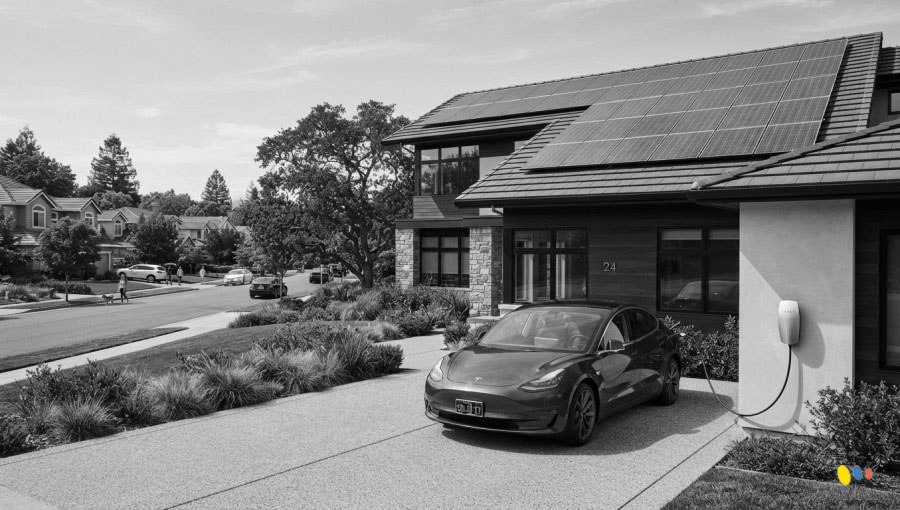
Homeowners equipped with rooftop solar panels have emerged as the vanguard of rising electric vehicle adoption. Federal tax incentives coupled with the ability to charge at home via solar power offset high upfront purchase costs, making zero-emission transportation significantly more affordable for middle-income households. Particularly across the outer fringes of major metropolitan hubs like Melbourne—where rooftop solar penetration exceeds state averages—the pace of electric vehicle uptake is climbing markedly. While existing tax exemptions accelerate this shift, a phased transition to the incentive scheme scheduled from 2027 onward seeks to spur the entry of more affordable EV models into the market.
Data published by the National Automotive Leasing and Salary Packaging Association reveals that areas with the highest EV adoption rates coincide with districts where rooftop solar uptake sits substantially above state benchmarks. Across the state of Victoria in particular, outer suburbs situated at least 29 kilometers from the urban core—such as Tarneit, Werribee, Craigieburn, Clyde North, and Cranbourne—exhibit solar penetration rates between 36% and 49%. These figures outpace the statewide average of 32%. A parallel pattern is visible across New South Wales and Queensland.
The higher upfront purchase price of electric vehicles compared to internal combustion engine equivalents remains a primary consideration for prospective buyers. However, free or ultra-low-cost home charging enabled by residential solar arrays, paired with the federal Fringe Benefits Tax (FBT) exemption, helps neutralize this financial barrier. Especially for essential frontline workers and suburban families, these combined benefits keep daily commuting expenses manageable, offering tangible relief against broader cost-of-living pressures.
The federal government is preparing a strategic revision to its electric vehicle incentive architecture. The current full tax exemption is set to remain intact through March 2027, after which a tiered phase-down will take effect. Starting in April 2027, the full exemption will be limited strictly to vehicles priced below $75,000, with vehicles exceeding that threshold receiving a 25% discount up to the Luxury Car Tax ceiling. From April 2029 onward, a uniform 25% tax discount will become permanent for all eligible EVs. Regulators indicate that these structural revisions will incentivize automakers to deliver more budget-conscious electric models to consumers.
Source: Solarbaba – In Turkish