
The global energy transition has entered a more difficult phase.
For years, progress was measured mainly in renewable capacity: More solar panels, more wind turbines, more gigawatts added each year. That progress remains essential. Yet IRENA’s new roadmap argues that the next stage will be decided by something less visible and more complex: Whether power systems can absorb clean electricity, move it across economies and use it to replace fossil fuels in daily life.
The report, Transitioning Away from Fossil Fuels, places electrification and grid enhancement at the center of the next phase of climate action. Replacing fossil fuels in transport, buildings and industry requires electricity to become the main energy carrier. That electricity must increasingly come from renewables, travel through modern grids and be supported by storage, flexibility, efficiency and coordinated planning.
The numbers show the scale of the shift. Electricity supplies about 23 percent of global final energy consumption today. In IRENA’s 1.5°C scenario, that share rises to 35 percent by 2035 and above 50 percent by 2050. Renewable power capacity would need to reach around 18.4 terawatts by 2035 and 38.2 terawatts by mid-century.
This turns the transition into a demand-side transformation.
Buildings move first. Electricity reaches 55 percent of final energy consumption in buildings by 2035 and more than 75 percent by 2050, driven by heat pumps, electric appliances, cooling demand, water heating and efficiency gains. Industry follows, with electrification rising to around 35 percent by 2035 and above 40 percent by 2050, especially for low- and medium-temperature heat. Transport starts from a much lower base, yet grows fastest in relative terms, rising from about 1 percent today to 15 percent by 2035 and over 45 percent by 2050.
The fossil fuel decline is steep. In IRENA’s revised 1.5°C scenario, fossil fuels fall from more than 80 percent of total primary energy supply in 2023 to 48 percent by 2035 and 15 percent by 2050. In final energy consumption, their share drops from 63 percent in 2023 to 42 percent by 2035 and 16 percent by 2050.
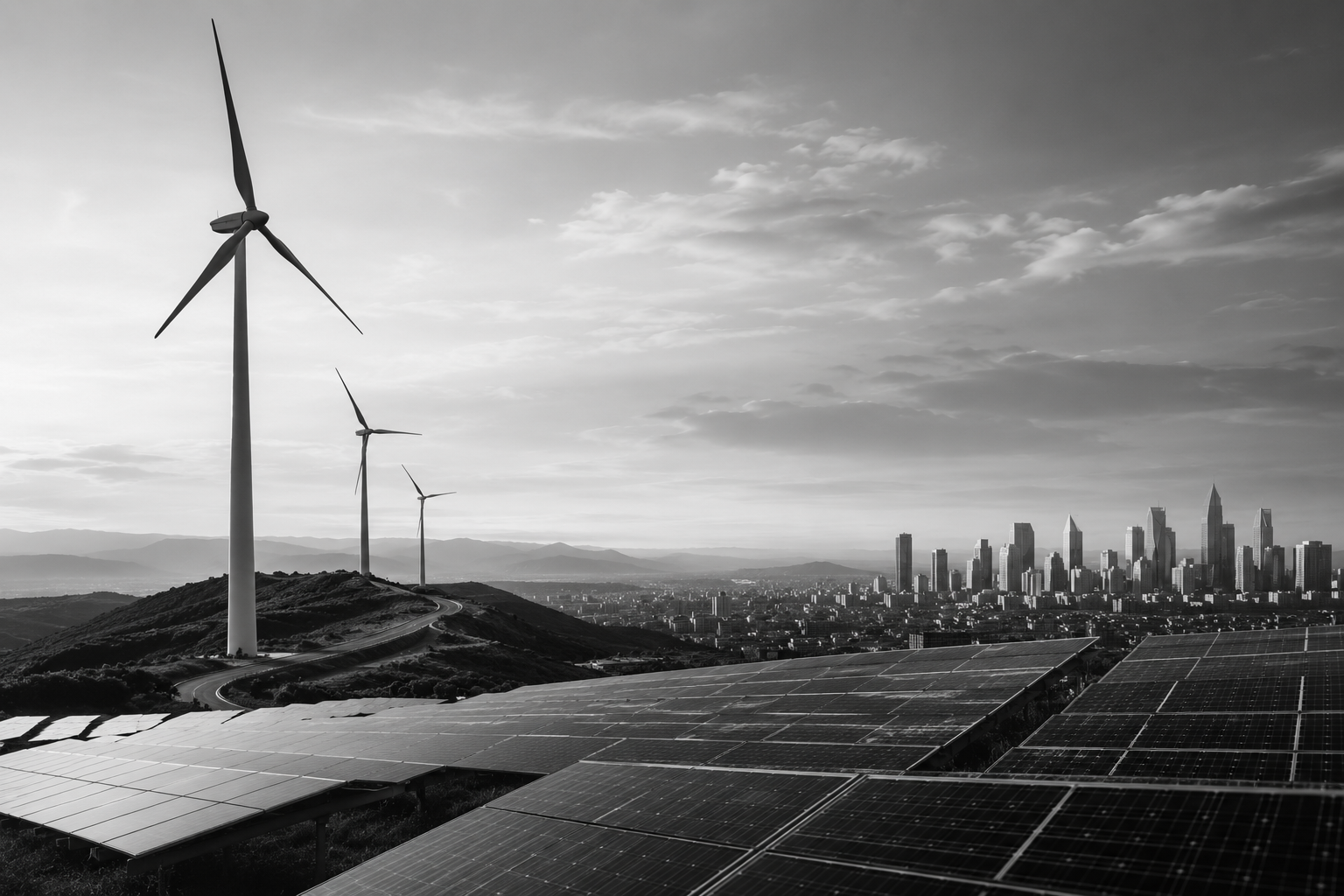
The constraint is no longer generation alone. It is the grid.
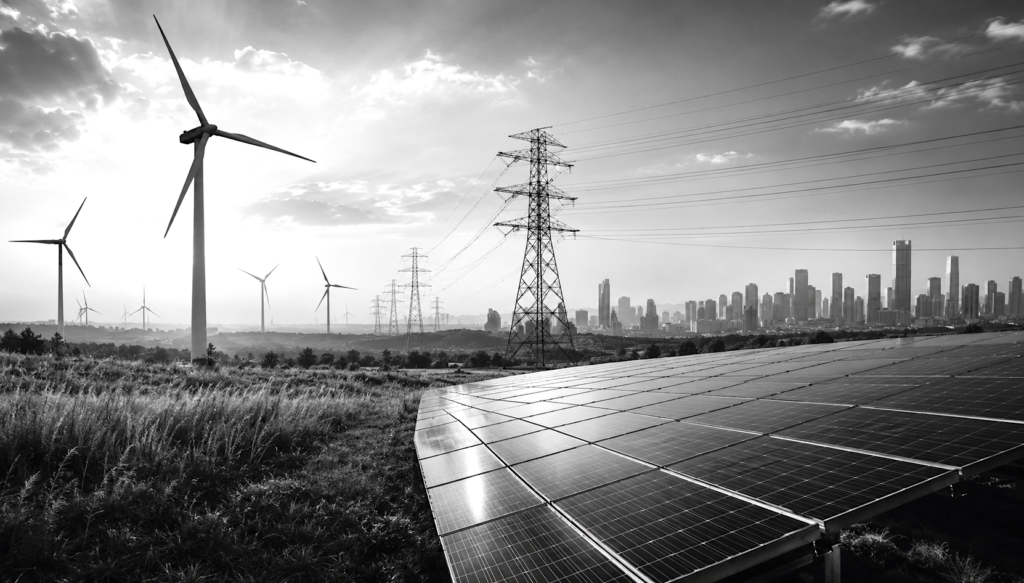
Around 2,500 gigawatts of wind, solar and storage projects are already waiting in grid connection queues. Renewable projects can often be built faster than the networks needed to carry their output. Transmission and distribution systems require long planning cycles, permits, financing and construction. That mismatch is becoming one of the defining risks of the transition.
Without stronger grids, electrification could produce congestion, curtailment, reliability problems and higher costs. Clean power may exist on paper while failing to reach homes, factories, ports, charging stations and industrial sites.
IRENA estimates that annual global grid investment must rise from about USD 0.5 trillion in 2025 to around USD 1 trillion per year between 2026 and 2035. It then needs to reach USD 1.2 trillion per year between 2036 and 2050. Cumulative grid investment reaches USD 29 trillion by mid-century.
Storage faces a similar climb. Global installed storage capacity must grow from 416 gigawatts in 2025 to 2,530 gigawatts in 2035 and 6,859 gigawatts by 2050. Flexibility becomes a core operating principle. Daily flexibility needs rise from 7 percent of overall electricity demand in 2019 to around 13 percent in the near-term transition period and 30 percent by 2050.
The politics of the transition have shifted with this infrastructure reality. COP28 gave governments the language of “transitioning away from fossil fuels.” COP29 elevated storage and grids. COP30 has pushed the agenda toward implementation, sustainable fuels and delivery pathways. IRENA’s report connects those strands through electrification.
The report rejects a single global template. Advanced economies must replace fossil-based technologies across buildings, transport and industry. Emerging and developing economies face a wider task: expanding access, supporting industrialization, meeting urban demand and building modern infrastructure while reducing fossil fuel dependence.
Regional pathways differ sharply. By 2050, electricity could supply around 64 percent of final energy consumption in the EU-27, roughly 50 percent in Africa and about 54 percent globally. These outcomes depend on income levels, grid readiness, resource endowments, investment capacity and policy design.
IRENA calls for global electrification and grid enhancement targets for 2035, supported by national and regional roadmaps. These targets would sit alongside existing goals to triple renewable capacity and double energy efficiency improvements by 2030. Their purpose is alignment: renewables, end-use electrification, grid expansion, storage, market design and finance need to move together.
The policy agenda is demanding. Governments need credible fossil fuel phase-down timelines, subsidy reform, clear price signals, faster permitting, modernized electricity markets, stronger skills systems, private finance, concessional capital and institutional coordination across energy, transport, industry, buildings, finance and planning authorities.
The transition has already proved that renewables can scale. The next test is whether electricity systems can carry that growth into the real economy.
IRENA’s conclusion is pragmatic. Electrification can cut fossil fuel demand, strengthen energy security, reduce emissions and support development. Yet clean electricity has limited value if it remains stranded behind weak grids, slow permits and underfunded infrastructure.
The energy transition is entering its infrastructure decade. The countries that move fastest will be those that connect renewables to demand, design flexibility into power systems and turn electrification into a practical route away from fossil fuels.