
Climate policy is often written in the language of urgency: emissions targets, carbon budgets, energy transitions measured in gigawatts and deadlines. But the European Union’s New European Bauhaus (NEB) initiative suggests something radical in its simplicity: the green transition will only succeed if it also feels human.
Launched in 2020 as part of the European Green Deal, NEB is not another regulatory framework. It is closer to a cultural proposition, an invitation to imagine sustainability not as sacrifice, but as a way of building places that are beautiful, inclusive, and regenerative.
Its inspiration comes from the original Bauhaus movement of the early 20th century, which sought to unify art, design, craftsmanship, and industry. NEB revives that spirit for the climate era, arguing that decarbonization cannot be reduced to technical infrastructure alone. The transition must also reshape how neighborhoods look, how public spaces feel, and who gets to belong in them.
At the heart of NEB are three intertwined values:
- Sustainability — reducing environmental impact and embracing circular thinking
- Beauty — quality of design, culture, and everyday experience
- Inclusion — ensuring the transition works for all communities, not only the privileged
These are more than slogans. The European Commission’s NEB Facility (2025–2027) is a dedicated funding tool that channels significant EU support toward transforming neighbourhoods and lifestyles in line with these principles.
Concrete examples help clarify the concept:
Barcelona’s Green Axes and Squares
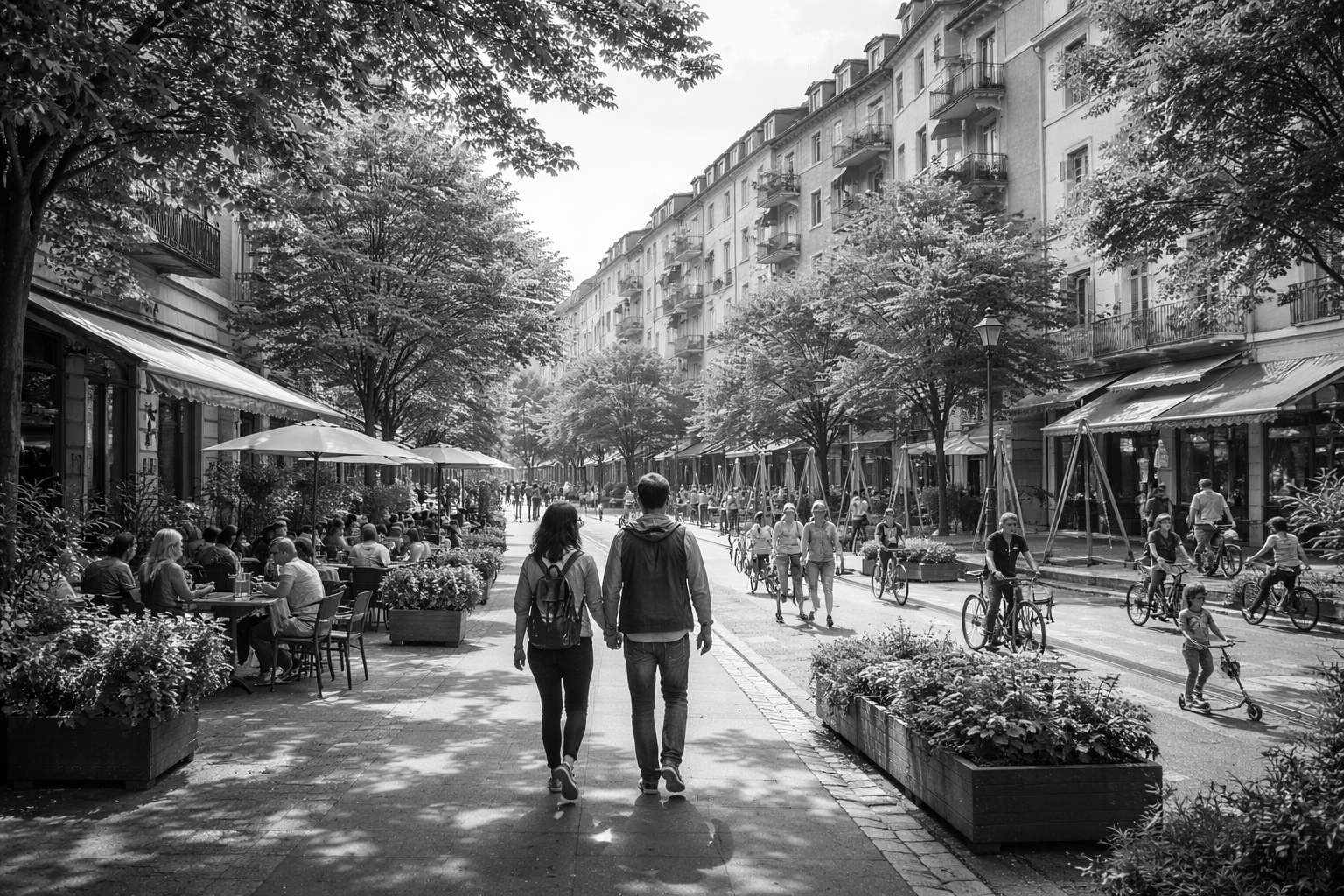
In Spain, the Green Axes and Squares project, a 2025 NEB Prize winner, showcases how urban streets can be transformed from car-dominated corridors into green public spaces that improve both climate outcomes and people’s quality of life.
die HausWirtschaft (Austria)
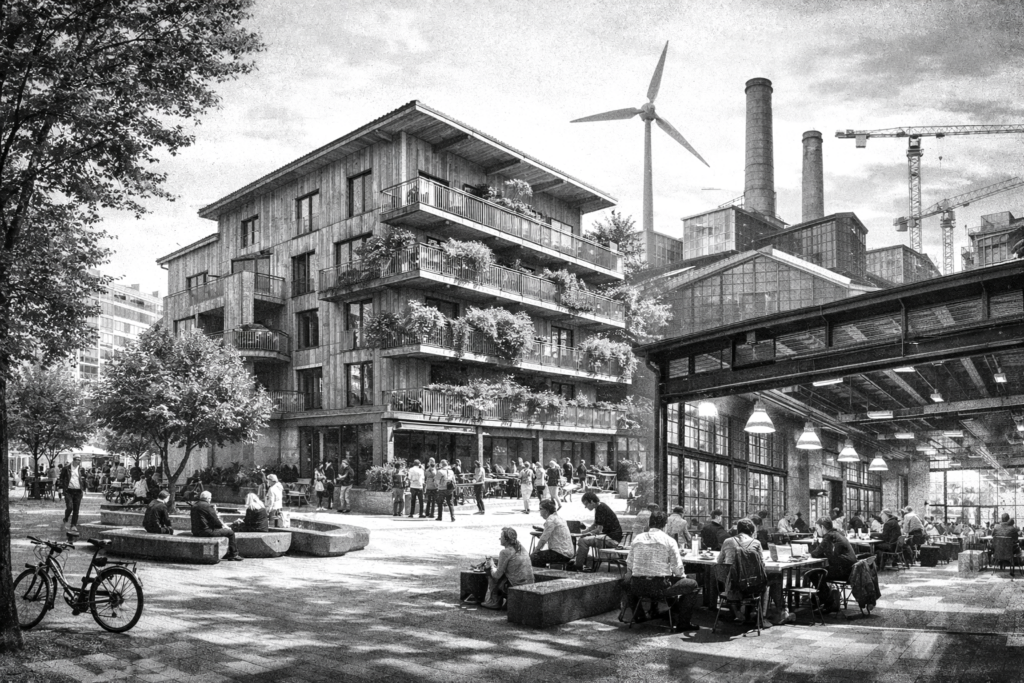
Also recognised by the 2025 NEB Prizes, die HausWirtschaft is a cooperative in Austria blending affordable housing, shared work spaces and childcare, proving that inclusive, climate-sensitive architecture can also build community.
Promprylad (Ukraine)
In Ukraine, the Promprylad innovation hub illustrates NEB’s transformational potential beyond EU borders: an old industrial site reborn as a centre for innovation, education and social investment in a war-affected region.
Each of these projects demonstrates that sustainability isn’t solely about emissions; it’s about environment, belonging and dignity; integrating culture, design and climate action in real communities.
NEB also maintains a dashboard of projects and actors across Europe, underscoring its growing footprint and diversity.
Critics may raise an eyebrow at the inclusion of “beauty” in climate discourse, as if aesthetics were a luxury. But NEB’s premise is precisely that people act, defend and invest in futures they find meaningful and inspiring. Climate solutions that overlook the human dimension risk isolation and resistance.
As the world converges on COP31 to resolve the next phase of global climate policy, the New European Bauhaus reminds us that sustainability cannot be divorced from everyday life. The transition is not only about cutting carbon, it is about shaping the environments we will inhabit.
A sustainable future, NEB insists, should not only be livable.
It should be worth living in.