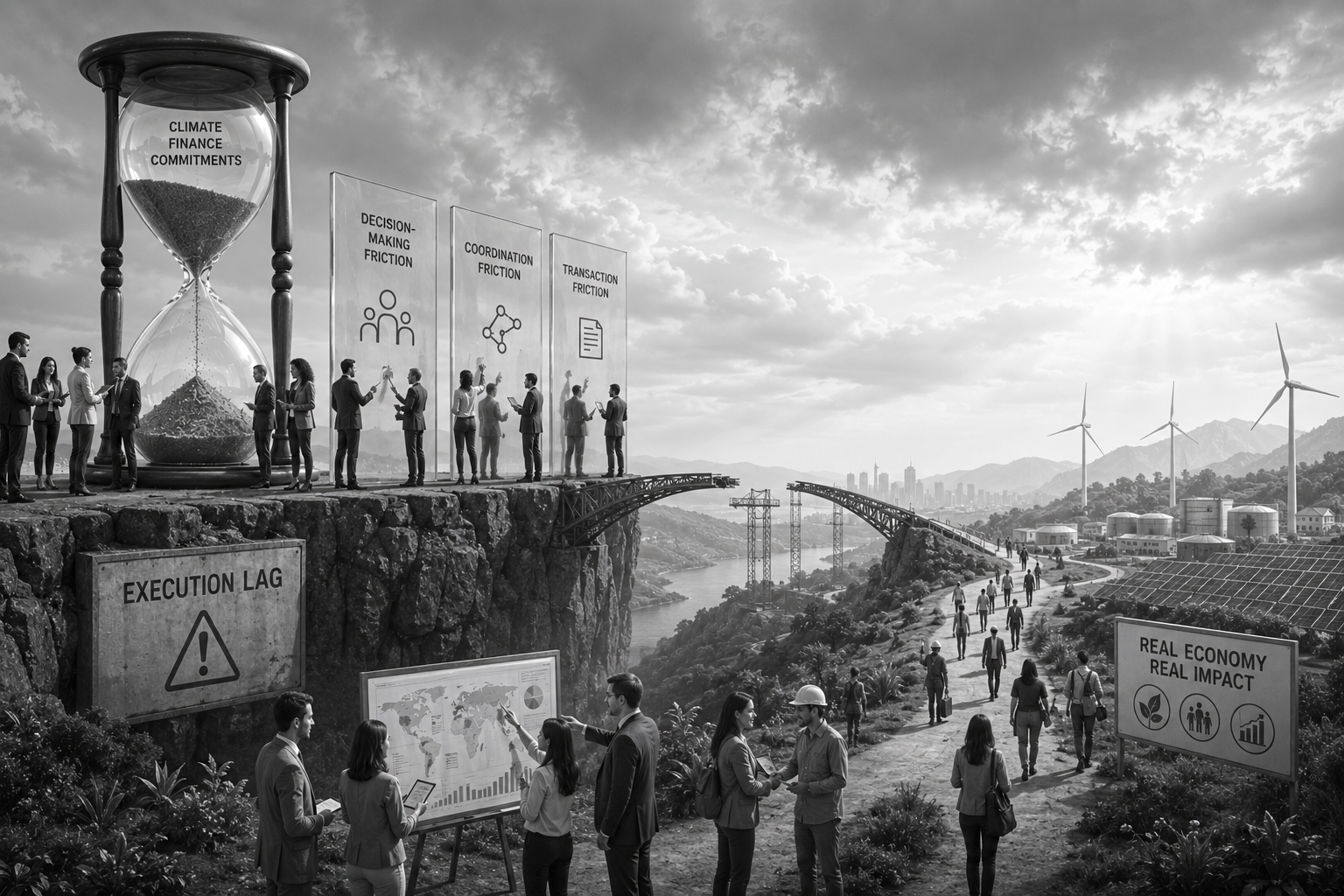


In the first article of this series, I examined the growing gap between political ambition and financial transmission – how climate finance commitments have scaled, but the mechanisms required to move capital into the real economy remain structurally incomplete. This piece builds on that foundation, shifting the focus from capital movement to asset durability: how ecological systems shape the solvency of the assets they underpin.
The Structural Gap in Capital Allocation
As biodiversity commitments accelerate globally, a structural gap remains in how financial markets operationalize this shift. While policy frameworks increasingly acknowledge ecological risk, the technical interface required to assess the durability of the underlying asset base remains insufficiently embedded in underwriting logic.
A critical friction now defines capital allocation in ecosystem-dependent production systems: the disconnect between ecological performance and credit discipline. The institutional question is not whether natural systems possess intrinsic value, but whether current financial models can identify the point at which ecosystem degradation begins to impair the long-term solvency of the assets they support.
Quantifying Ecological Solvency as a Credit Variable
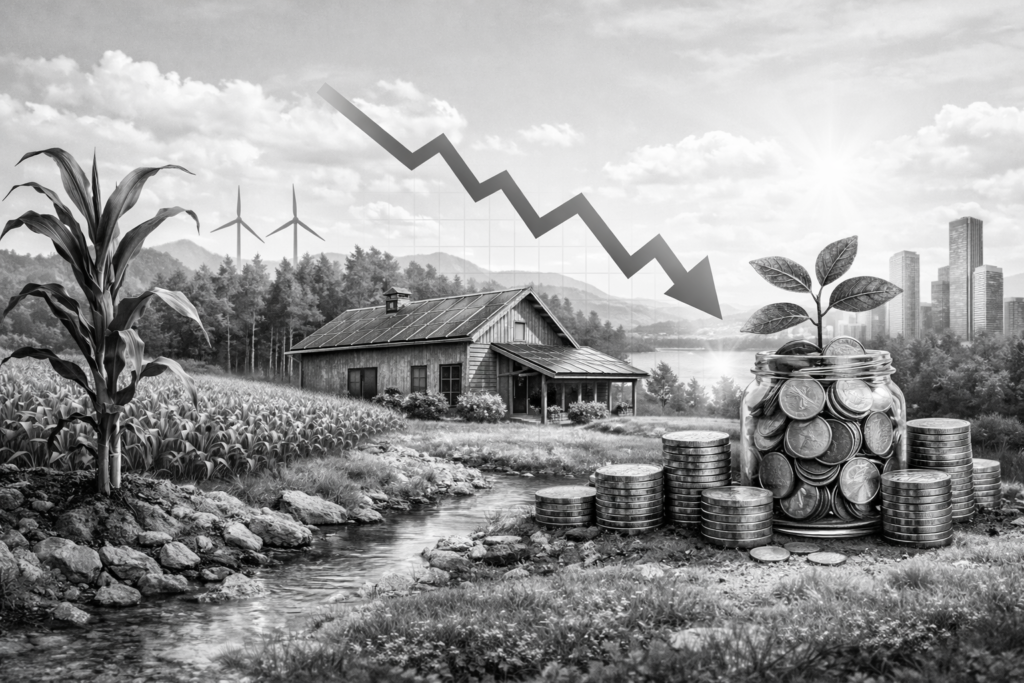
In financial terms, ecological solvency is not a sustainability narrative; it is a credit variable. It refers to the capacity of a landscape to sustain the productive and protective functions required for cashflow stability. Within a credit framework, ecological insolvency manifests as:
- Revenue Volatility: Output instability driven by systemic environmental stress. Studies on agricultural yields suggest that ecological degradation increases production volatility and weakens resilience, introducing instability into debt service coverage ratios.
- Accelerated Impairment: Physical degradation of the resource base, compressing terminal asset value. The World Bank estimates that the collapse of select ecosystem services – such as wild pollination and timber from native forests – could result in a decline in global GDP of $2.7 trillion annually by 2030.
- Escalating Risk Premiums: Increasing lender and insurer exposure as ecological buffer capacity erodes. Research into “Nature-blind” sovereign credit ratings suggests that partial ecosystem collapse could increase annual interest payments on public debt between $28 to $53 billion globally due to credit downgrades.
Market Design and Structural Adjustment
The challenge is not a shortage of nature-based projects; it is a market design failure. While the Kunming-Montreal Global Biodiversity Framework sets a target to mobilize $200 billion per year by 2030, current global biodiversity finance is estimated at only $78–$91 billion, public financial flows remain structurally misaligned, with only a marginal share of agricultural support directed toward biodiversity outcomes.
The maturation of nature finance will not be measured by the number of projects labelled or credits issued, but by whether ecological performance becomes embedded within core credit assessment logic. Integrating ecological durability into underwriting frameworks requires moving beyond disclosure regimes toward structural adjustments in how risk is modelled, priced, and layered within capital stacks.
Where ecological degradation materially increases volatility, compresses terminal value, or elevates insurance exposure, those variables must be incorporated into lending thresholds, covenant structures, and risk premiums. Ecological solvency, therefore, is not a parallel sustainability ambition – it is a precondition for durable capital allocation in ecosystem-dependent economies.