



A Sustainable Urban Mobility Plan (SUMP) is a city’s long-term strategy for moving people and goods in a way that improves daily life while cutting congestion, pollution, and climate impact. The European Commission defines a SUMP as a strategic plan designed to satisfy the mobility needs of people and businesses in cities and their surroundings for a better quality of life.
In plain terms, a SUMP is what happens when a city stops treating transport as a collection of separate projects and starts treating it as a system. Not just “build a road” or “add a bus line,” but rethinking how the whole urban area moves, and why.
Unlike traditional transport plans, a SUMP is expected to cover the entire functional urban area, meaning the city and its commuting zone, based on real travel patterns rather than administrative borders. It also puts people at the center: access to jobs, schools, healthcare, and public spaces becomes the goal, not traffic speed.
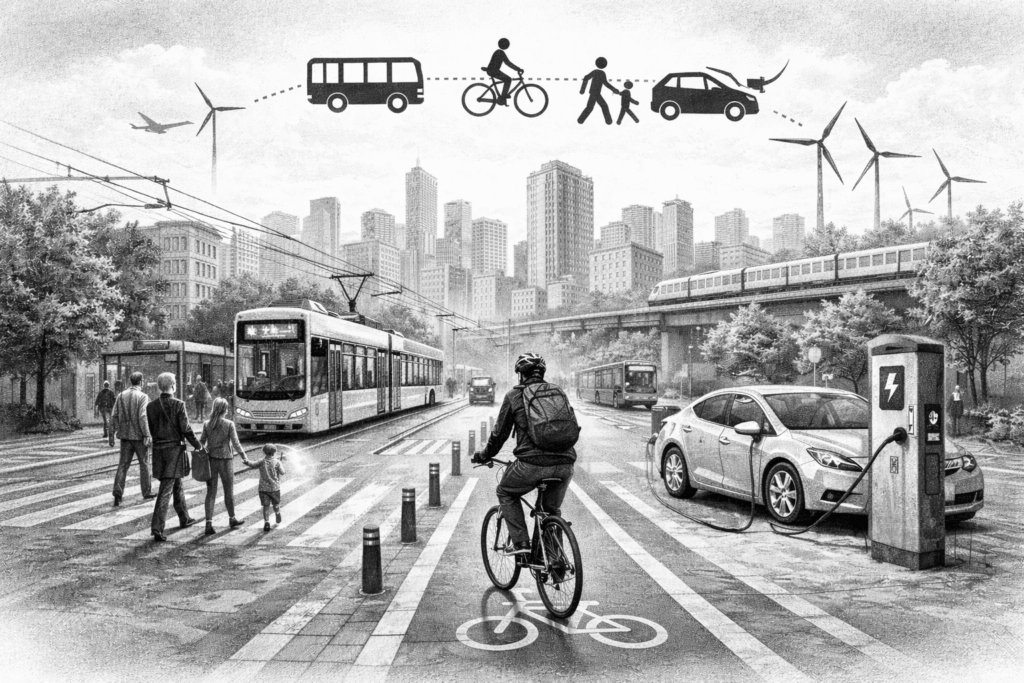
The EU Urban Mobility Observatory calls SUMPs the cornerstone of European urban mobility policy, encouraging cities of all sizes to adopt them. The point is not to ban cars overnight. It is to make sustainable options feel normal, safe, and practical through a balanced mix of measures: better public transport, safer walking and cycling infrastructure, smarter logistics, cleaner vehicles, and demand management.
A SUMP is also a governance tool. It requires stakeholder participation, coordination across departments, and ongoing monitoring and evaluation, so the plan can adjust as the city changes. The most effective SUMPs work like a living document: not a report that sits on a shelf, but a roadmap tied to investment, implementation, and outcomes.
In today’s energy and climate transition, SUMPs are increasingly seen as a “quiet lever.” They help cities reduce emissions not only by electrifying transport, but by reducing unnecessary car dependency, making mobility more efficient, and improving quality of life at the same time.