

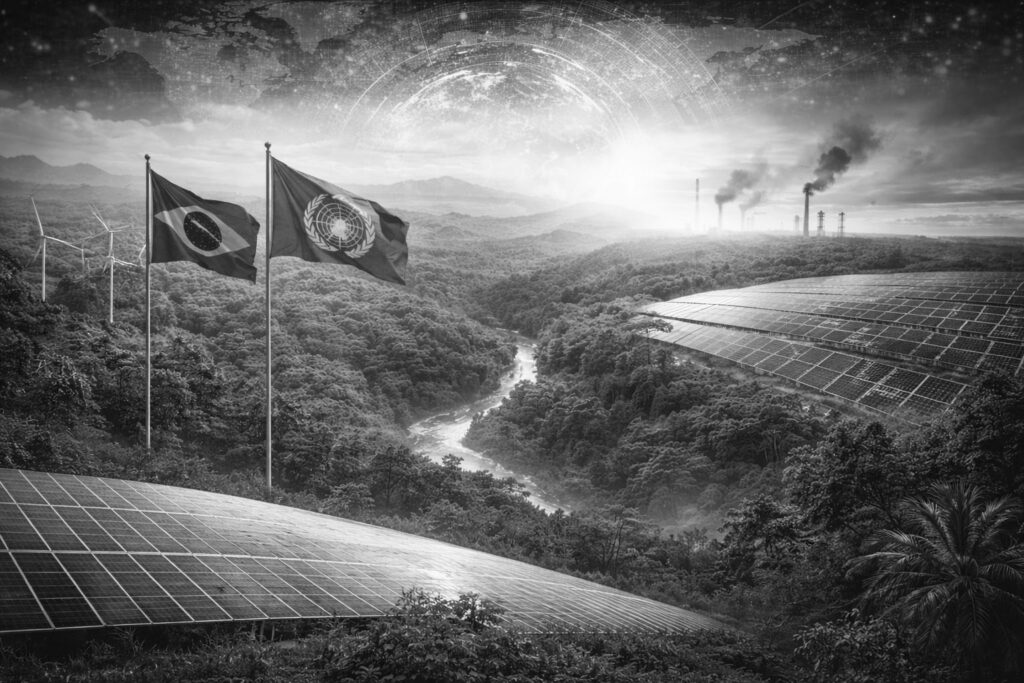
When COP30 concluded in Belém, Brazil, on November 12, 2025, the conference closed not with a sense of triumph, but with a clearer understanding of where the global climate effort now stands. Hosted at the edge of the Amazon, a region emblematic of both planetary resilience and vulnerability, the summit underscored a defining reality of the climate decade ahead: ambition is no longer the central challenge. Implementation is.
This year, participation in COP30 took many forms. While negotiations unfolded on the ground in Belém, expanded virtual access once again allowed policymakers, experts, and observers to follow the process beyond the physical venue. Attending COP30 online, I followed plenaries and thematic sessions in real time, engaging closely with discussions on mitigation, adaptation, and climate finance. The virtual format offered a different vantage point, one less shaped by corridor diplomacy but no less connected to the substance of the negotiations. It reflected how climate governance is increasingly extending beyond conference halls.
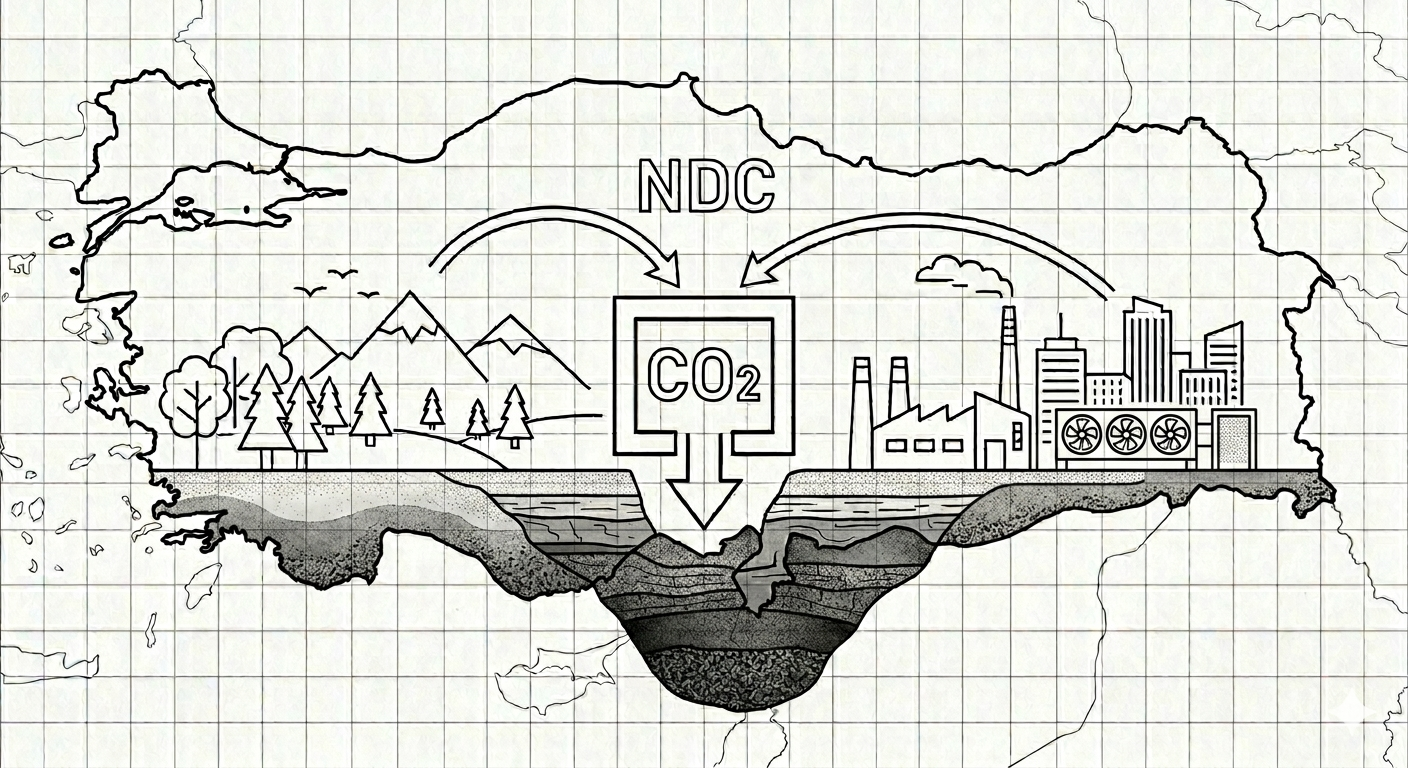
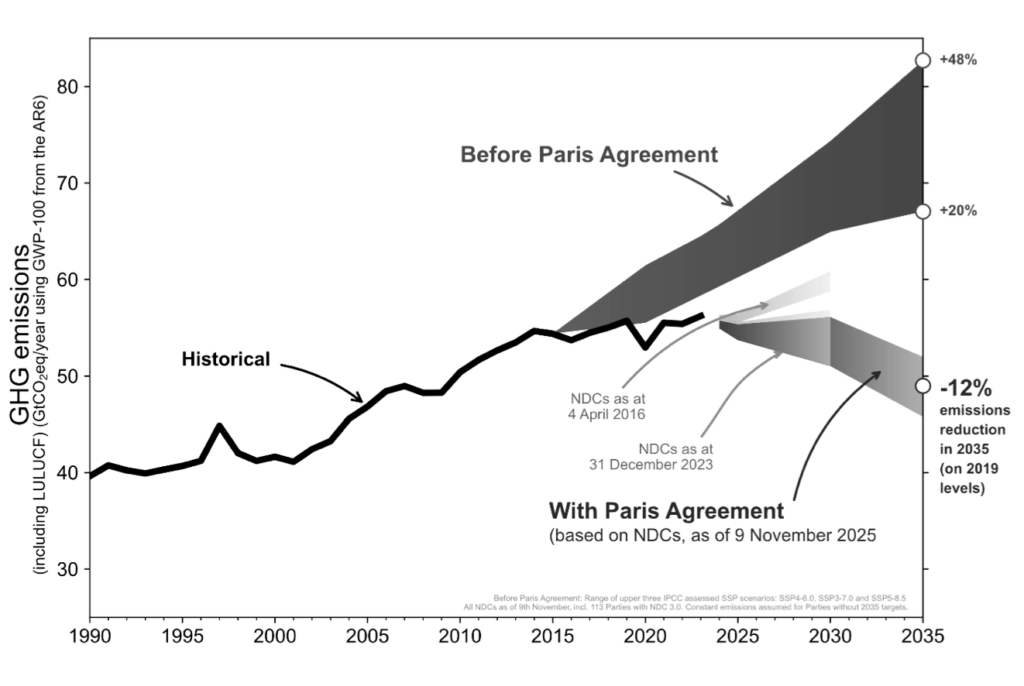
Substantively, COP30 was anchored by the UNFCCC’s 2025 NDC Synthesis Report, as well as by subsequent updates released during the conference that incorporated additional NDC submissions recorded in the registry through the final days of negotiations. Together, these updates signaled measurable, though insufficient, progress. Based on the most recent data, as presented in the graph below, global greenhouse gas emissions are now projected to be approximately 12 percent below 2019 levels by 2035. This marks a significant departure from pre-Paris trajectories, when emissions were expected to rise sharply. Even with these gains, the current pathway remains misaligned with the 1.5°C goal, reinforcing the urgency of deeper and faster action.
The composition and quality of NDCs have evolved notably. Nearly 89 percent of Parties now communicate economy-wide mitigation targets, while sectoral measures, particularly in energy, transport, and industry, have become more detailed and operational. Renewable energy expansion, electrification, and energy efficiency are no longer framed as pilot efforts but as central pillars of national strategies. Adaptation, long overshadowed by mitigation debates, has gained renewed prominence, with a growing number of countries articulating clearer priorities, monitoring frameworks, and metrics.
Loss and damage also featured more prominently than at previous conferences. Most Parties now explicitly recognize observed climate impacts, and more than two-thirds outline actions to avert or address them. While the initial capitalization of the Loss and Damage Fund remains modest relative to global needs, its operationalization represents an important political milestone for climate-vulnerable countries seeking predictable and accessible support.
Finance, predictably, remained the most contentious issue. Aggregate NDC implementation costs now approach two trillion dollars, with adaptation gaps particularly acute. The Baku to Belém Roadmap aims to mobilize public and private capital toward the long-discussed 1.3 trillion dollar climate finance scale-up, but negotiations revealed persistent divisions over burden-sharing, contribution bases, and delivery mechanisms.
As attention turns toward COP31, the message from COP30 is unambiguous. The credibility of the climate regime will hinge less on new pledges than on tangible progress. That means translating commitments into projects, finance into flows, and targets into outcomes. The question is no longer whether the world understands what is required, but whether it can deliver at the scale and speed the moment demands.