

Industry, energy, climate and security now move together. Across middle-income and emerging economies, they shape the same question: how countries build resilience, create jobs, reduce fragility and secure long-term stability in an age of disruption.
That reality calls for a wider understanding of security. The term reaches far beyond geopolitics. It now includes the strength of infrastructure, the reliability of energy systems, the ability to withstand supply shocks, and the capacity to create economic opportunity during periods of rapid change. Through that lens, industry sits at the center of the stability agenda. It influences how societies recover, how communities adapt, and how economies hold together under pressure.
Green industrialization carries particular weight in this context. Its importance extends across far more than emissions targets. It shapes the quality of economic recovery, the depth of local value creation and the degree of exposure to external shocks. In strong models, green transformation supports domestic capability, productive employment and more resilient supply networks. In weaker ones, the transition remains shallow, imported and unevenly shared.
Energy sits at the heart of that transformation. A just energy transition depends on the structure of investment, the distribution of opportunity and the links between energy systems and productive industry. The central issue is whether new energy pathways strengthen the wider economy and support durable livelihoods. Where industrial strategy and energy planning move in step, the transition gains depth and direction.
Supply chains also define the contours of stability. Recent years have shown how quickly concentrated production systems can become sources of vulnerability. Conflict, inflation, pandemics and resource competition have all exposed the costs of overdependence. A more resilient path lies in stronger local capability, regional cooperation and greater value retention across the production chain. Countries gain stability when they expand what they can produce, upgrade and sustain within their own economies.
Cities form another critical part of this picture. They are where industrial systems, infrastructure pressures, energy demand and climate risks increasingly converge. Heat stress, water constraints, transport bottlenecks and pollution affect the productive economy as directly as they affect daily life. Urban resilience and industrial resilience now belong to the same story. Each one shapes the other.
Finance will determine the speed and scale of progress. Many promising projects stall because capital remains expensive, risks remain poorly structured and pipelines remain too weak to attract sustained investment. Stronger financial architecture can change that equation. Better project preparation, clearer policy signals, blended finance and more effective risk-sharing can help move ambition into implementation. Finance, in this sense, shapes the conditions for transformation itself.
Skills and inclusion carry equal importance. Lasting transitions create work, widen access and open space for younger generations and women to take part in economic change. Social inclusion gives the transition legitimacy. Skills give it continuity. Shared opportunity gives it political durability.
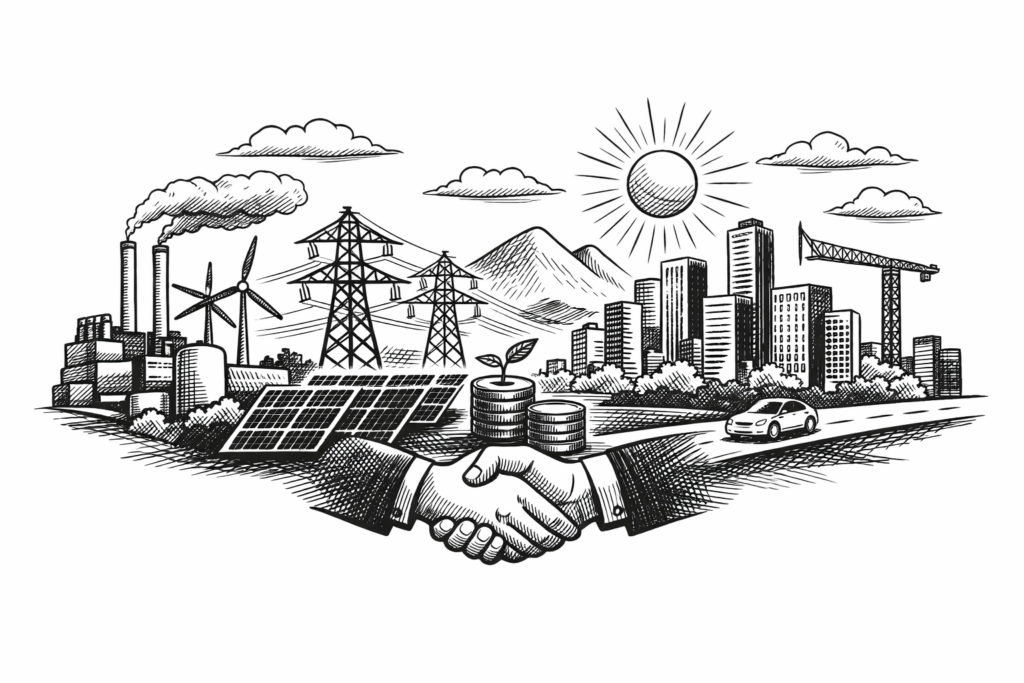
The larger lesson is: stability grows from systems that connect industrial policy, energy transition, infrastructure resilience, investment and inclusion. Countries that build those connections will be better placed to navigate an increasingly volatile century.
The future of prosperity will depend on the strength of that architecture. The future of security will as well.