Carbon removal is the deliberate removal of carbon dioxide (CO₂) from the atmosphere and its storage for climate-relevant timeframes. In practice, it means one measurable tonne of atmospheric CO₂ is taken out of circulation and stored in a reservoir that is expected to retain it, with quantified uncertainty and reversal risk management. The European Commission frames carbon removals as processes that capture CO₂ from the atmosphere and store it durably in geological, terrestrial, or marine reservoirs, or in long-lasting products.
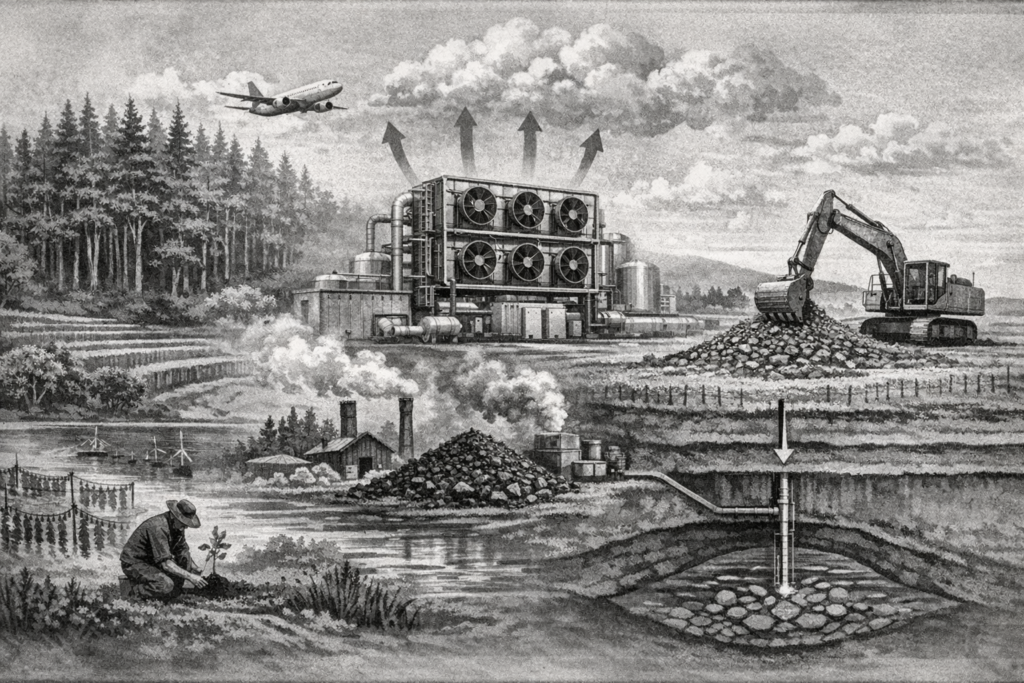
The field is commonly described through two broad categories: nature-based carbon dioxide removal (CDR) and engineered CDR. The distinction matters for durability, land and ocean impacts, monitoring complexity, and how credits are treated by regulators and markets.
What carbon removal includes
Nature-based CDR relies on ecosystems and land management to increase carbon stored in biomass and soils. Typical pathways include afforestation and reforestation, improved forest management, soil organic carbon practices, peatland restoration, and blue carbon in coastal systems. These approaches can scale quickly, but storage can be vulnerable to disturbance and climate-driven shocks, which raises permanence and liability questions.
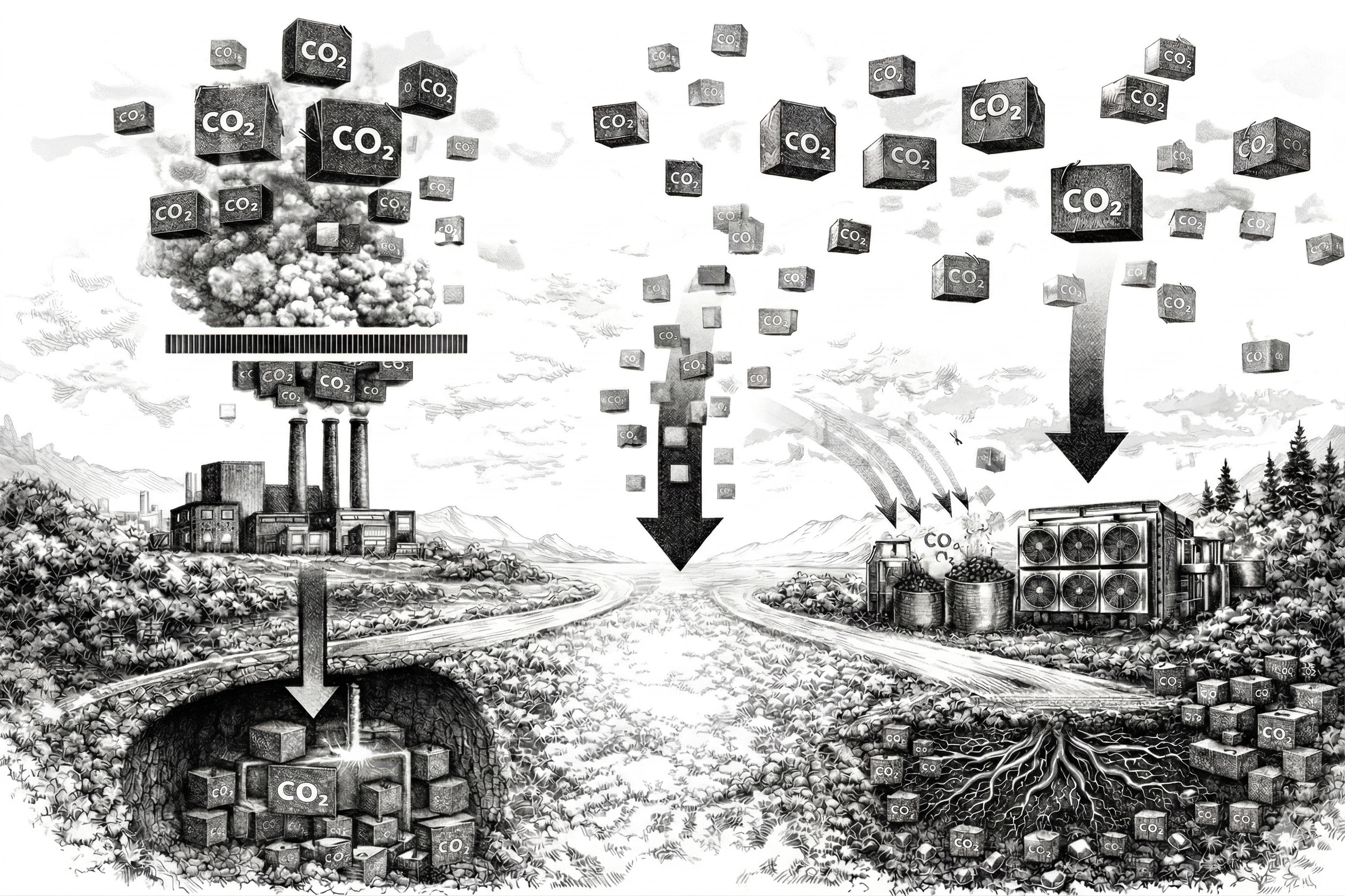
Engineered CDR uses designed interventions to remove CO₂ and lock it away through physical, chemical, or biological means. The most discussed engineered pathways include:
- Direct Air Capture (DAC): Machines chemically bind dilute CO₂ from ambient air, then concentrate it for storage, usually via geological injection. Energy needs are substantial, so the net outcome depends heavily on clean power and heat.
- Bioenergy with Carbon Capture and Storage (BECCS): Biomass grows via photosynthesis, capturing CO₂. That carbon is converted to energy products, while CO₂ is captured at a facility and stored geologically. The climate value depends on sustainable biomass, land-use impacts, and storage integrity.
- Biochar: Biomass is thermochemically converted into a carbon-rich solid (biochar). When the biochar is applied to soils or embedded in long-lived products, part of the carbon can remain stable for extended periods, depending on feedstock and process conditions.
- Ocean Alkalinity Enhancement (OAE): Alkaline materials are added to seawater to increase its capacity to absorb atmospheric CO₂ and store it mainly as dissolved inorganic carbon. This is scientifically plausible and early-stage, with open questions around monitoring, ecological effects, and governance.
- Enhanced Rock Weathering (ERW): Finely crushed silicate or carbonate minerals are spread on land (often agricultural soils) to accelerate natural weathering reactions that consume CO₂ and convert it into bicarbonate or stable carbonates. The main constraints include material supply, energy for grinding and transport, and robust quantification.
- Seaweed Sinking: Macroalgae grow fast and capture CO₂ through photosynthesis. Carbon storage concepts include sinking biomass to the deep ocean, processing into durable products, or coupling with capture and storage in engineered chains. The pathway remains methodologically challenging, especially for verification and ecological safeguards.
A useful way to understand engineered CDR is that several of its most promising pathways begin with photosynthesis, then add engineering to increase durability and measurability. BECCS, biochar, and macroalgae-based routes follow that logic directly. Other engineered routes, such as DAC, replicate the “function” of natural sinks by pulling CO₂ from air without relying on land biomass.
Why the world has to return to CDR
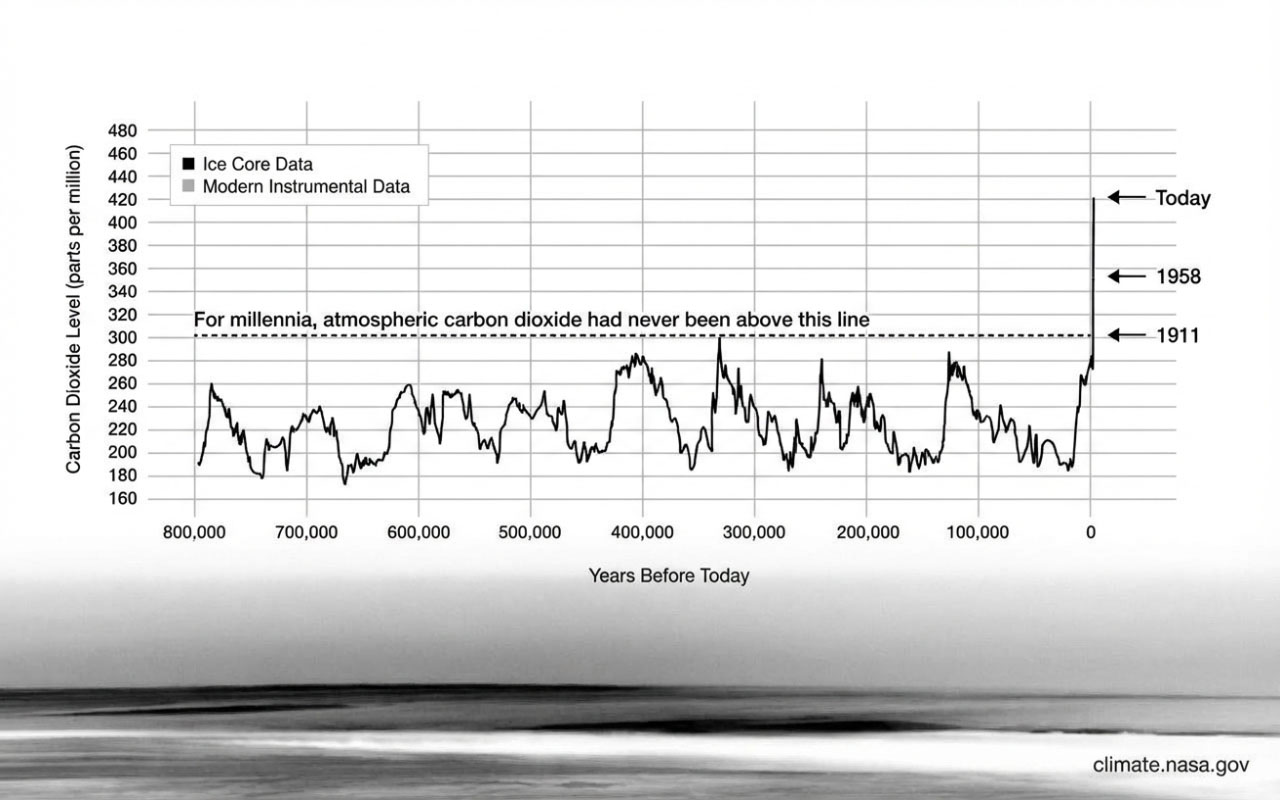
CDR is increasingly treated as a “last line” tool because global mitigation trajectories still leave large residual emissions, and because temperature overshoot becomes harder to reverse without net-negative CO₂. The Intergovernmental Panel on Climate Change (IPCC) assessed that achieving net negative CO₂ emissions requires very large-scale CDR deployment in the second half of the century, and it quantified the magnitude of removals needed for measurable cooling.
The world is still emitting at a scale that overwhelms today’s removal capacity. Global greenhouse gas emissions reached about 57.1 gigatonnes of carbon dioxide equivalent (GtCO₂e) in 2023, according to the United Nations Environment Programme (UNEP) Emissions Gap framing as reported in coverage of the report’s findings.
Today’s durable removals are still tiny compared to what models assume for mid-century. This gap is the reason carbon removal is moving from academic debate to policy design.
The implied CDR requirement is no longer marginal. The State of Carbon Dioxide Removal report summarizes that around 7 to 9 billion tonnes of CO₂ per year may need to be removed by mid-century to align with a 1.5°C-consistent pathway, while emphasizing that removals complement emissions reductions rather than replacing them.
A second driver is the reality of residual emissions in hard-to-abate sectors. The IPCC assessed that CDR becomes essential for offsetting residual emissions to reach net zero CO₂, and then becomes more important if policy aims include net-negative phases to reverse overshoot. The International Energy Agency (IEA) net zero pathway similarly includes engineered removals as part of a full-system transition, with the scale rising after mid-century.
A third driver is governance and credibility. The National Academies of Sciences, Engineering, and Medicine (NASEM) laid out research priorities and risk considerations for “negative emissions technologies” and reliable sequestration, highlighting measurement, permanence, and safeguards as central.
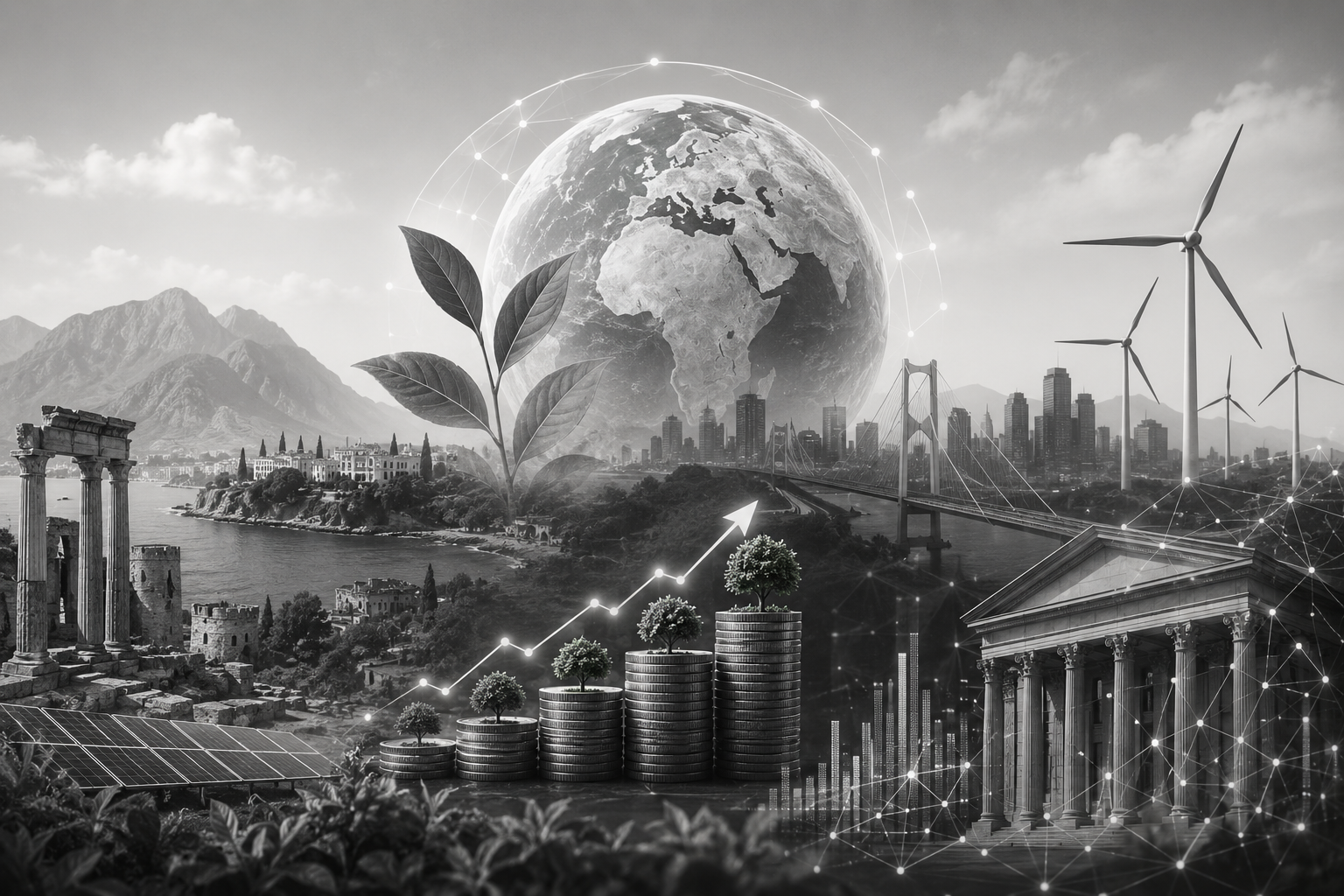
Host countries can shape what becomes politically ‘normal’ during a COP year. They convene coalitions, curate technical dialogues, and turn abstract concepts into project pipelines that investors and ministries can actually work with. For COP31, Türkiye has an opportunity to frame carbon removal as an integrity-first, implementation-ready agenda, and to translate regional strengths into bankable pilots that can survive beyond the conference.
Türkiye’s under-discussed CDR opportunity
Türkiye has a realistic chance to treat CDR as an industrial and rural development opportunity, provided it is built on conservative accounting, clear sustainability rules, and export-grade monitoring, reporting, and verification (MRV). The “opportunity” framing is grounded in three structural strengths: biomass and organic waste availability, strong renewable energy and heat options for energy-intensive pathways, and a geology and industrial base that can support storage, mineralization research, and cement sector integration.
Biomass and organic waste as feedstock for durable removals
Türkiye generates organic waste streams large enough to justify national-scale CDR program design. TurkStat reported 32.3 million tonnes of municipal waste collected in 2024. Within the organic fraction, household food waste alone is estimated at 102 kilograms per capita per year in Türkiye, totaling about 8.69 million tonnes annually in the United Nations Environment Programme (UNEP) Food Waste Index.
Agricultural residues add a second feedstock pillar. Peer-reviewed work continues to quantify regional biomass residue potentials and conversion routes in Türkiye. A recent Cleaner Production-oriented analysis discusses agricultural biomass-based energy potential and conversion possibilities. Older and regional studies remain useful for feedstock mapping and residue typologies, while newer work benefits from updated activity data and improved methods.
Biochar-specific potential has also been estimated from defined residue classes. A BioResources study estimated the total biochar potential of pruning wastes from fruit-bearing trees in Türkiye at around 175 thousand tonnes for 2021, illustrating that even narrow residue categories can produce meaningful biochar volumes when aggregated nationally.
Energy for engineered pathways, with a geothermal advantage
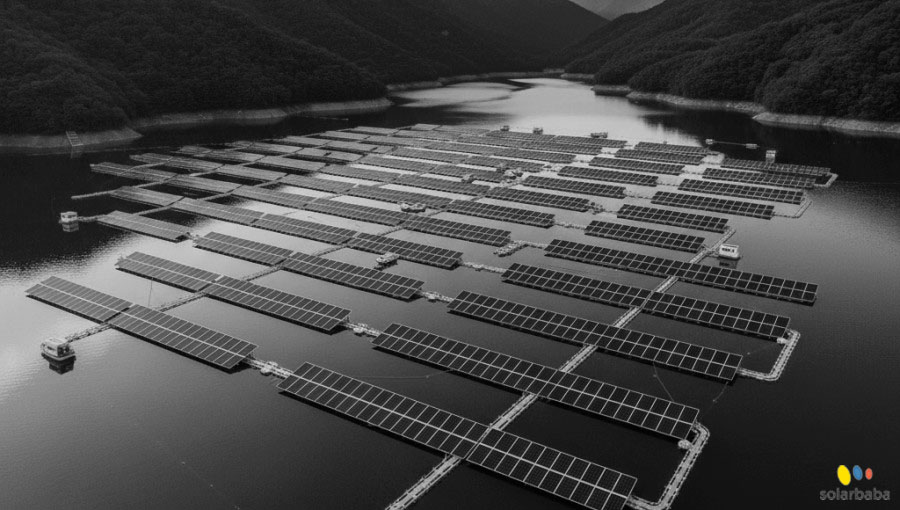
Several engineered CDR pathways are energy intensive, which creates a strategic advantage for countries that can pair removals with low-carbon electricity and heat. Türkiye’s geothermal endowment is often underused in climate strategy discussions. A World Bank assessment describes Türkiye’s total estimated geothermal potential as more than 60,000 megawatts thermal, with hundreds of known geothermal fields. The International Renewable Energy Agency (IRENA) statistical profile tracks geothermal capacity growth within Türkiye’s wider renewables build-out.
This matters for DAC and for mineralization concepts in geothermal settings. Recent peer-reviewed work examined CO₂–rock interactions using samples from the Kızıldere geothermal field in Türkiye, directly connecting Turkish geothermal geology to the scientific literature on in-situ mineralization and storage behavior.
Storage and mineralization, treated carefully and evidence-first
Durable CDR frequently requires secure storage, and the most bankable option remains well-characterized geological storage. Türkiye’s depleted oil field capacity appears limited as a national solution, which pushes attention toward saline aquifers and other formations. A Türkiye-focused carbon capture, utilization and storage (CCUS) program summary notes that depleted oil field storage capacity is limited and highlights the need to determine the storage capacities of saline aquifers.
For ERW and mineral carbonation, Türkiye’s ultramafic and ophiolitic geology is relevant because these rocks naturally form carbonate-bearing alteration products under certain conditions. Geological papers on Turkish ophiolites and listwaenites describe processes consistent with natural carbonation chemistry, which supports a research agenda for mineral-based CDR in Türkiye. The policy-relevant conclusion is straightforward: Türkiye can justify serious, locally grounded feasibility work on mineral pathways, anchored in energy and logistics realities and paired with conservative MRV.
Cement and concrete as a practical integration point
Türkiye’s cement industry is large enough that even incremental carbon storage per tonne of product becomes nationally meaningful. Cement decarbonization pathways in IPCC mitigation assessments and sector roadmaps repeatedly emphasize that process emissions require solutions beyond efficiency, with carbon capture and storage (CCS) and material innovation among the primary options.
Two near-term integration angles are especially relevant for Türkiye. One is CO₂ storage through mineralization in cement and concrete value chains, where CO₂ can be bound as stable carbonates in certain product pathways under controlled conditions. The second is biochar incorporation in cementitious materials or complementary building products, which can embed stable carbon in long-lived infrastructure in a way that avoids large project-by-project land footprints. The literature on biochar in cement and concrete is growing and supports further applied research and standards work for performance and durability.
A proposal for Türkiye: TR-BioCarbon Program
Türkiye’s agricultural residues and biogas sector by-products can be converted into export-grade climate assets while improving rural incomes and biogas plant economics. Below is a structured concept that keeps accounting conservative and governance export-compatible.
Program name
Türkiye Agricultural Residues to Biochar and Digestate Carbon Removal Program (TR-BioCarbon Program).
Core objectives
The program targets three outcomes.
- Convert underutilized agricultural residues into biochar for durable carbon removal.
- Standardize solid and liquid digestate from biogas facilities and scale safe field application to increase soil organic carbon.
- Issue credits that can connect to a future Türkiye Emissions Trading System (ETS) and qualify for international transfer routes where feasible.
Export channels and compliance frameworks
Three frameworks shape the export logic and buyer confidence.
- EU Carbon Removals and Carbon Farming (CRCF) Regulation: Regulation (EU) 2024/3012 establishes an EU-wide voluntary certification framework for permanent carbon removals, carbon farming, and carbon storage in products. This supports buyer trust through rules on quantification, verification, and transparency.
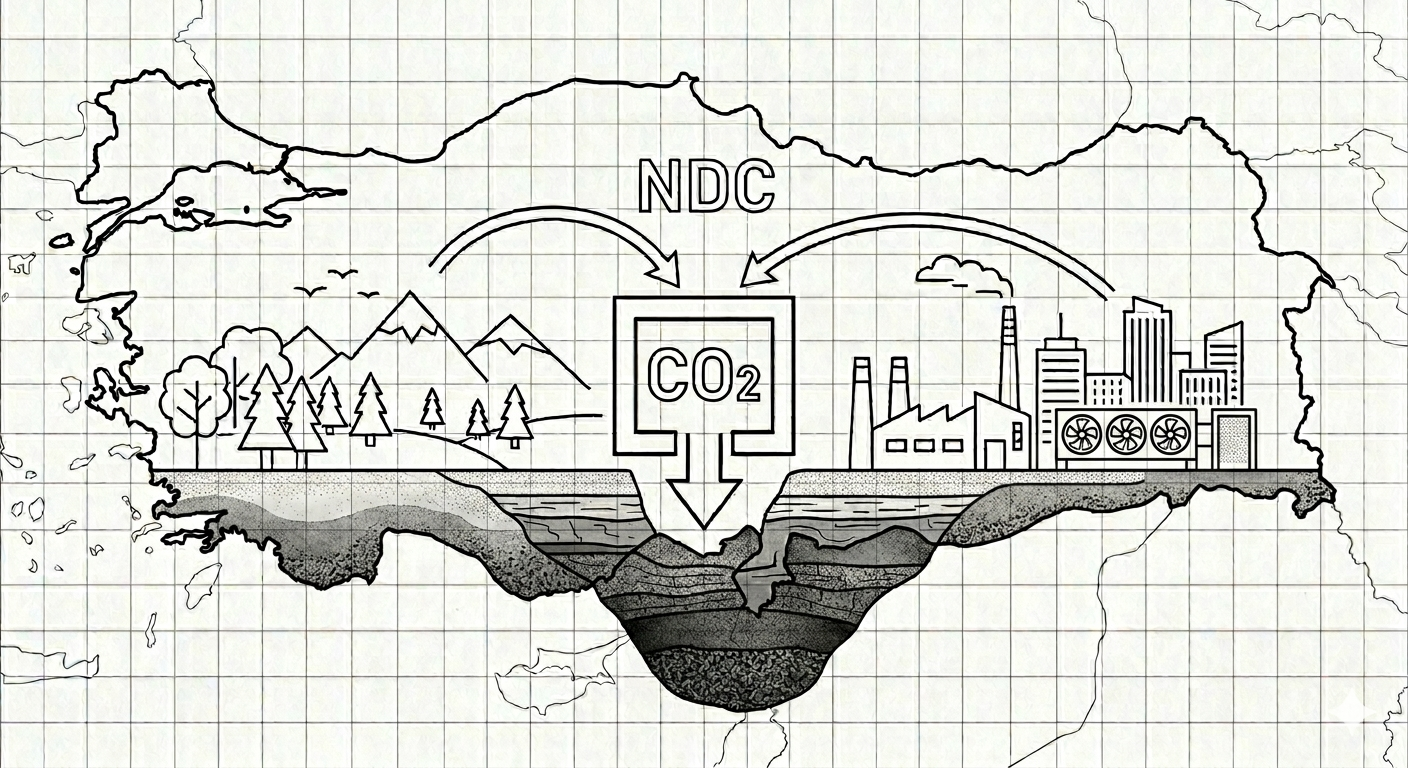
- Paris Agreement Article 6.2 Cooperative Approaches: Enables transfers of Internationally Transferred Mitigation Outcomes (ITMOs) between countries, with corresponding adjustment rules designed to avoid double counting against Nationally Determined Contributions (NDCs).
- Paris Agreement Article 6.4 Mechanism: A UNFCCC crediting mechanism with supervisory body standards, including work on removals, reversals, and buffer approaches.
Two crediting “production lines” under one program
Line A: Farmer-based simple biochar crediting
The problem is clear. Agricultural residues are frequently burned, left to decay, or diverted into low-value uses, while biochar production remains limited.
The solution is a distributed model. Provide standardized low-cost pyrolysis units, training, safety protocols, and a purchase guarantee. Biochar is produced locally, then aggregated and quality-controlled through regional hubs.
A practical operating chain can follow seven steps.
- Map eligible residues by region and season, including pruning, stalks, shells, and field residues.
- Deploy standardized equipment and training, with clear safety and emissions controls.
- Define eligible storage pathways, including soil application and storage in long-lived products.
- Implement MRV using batch records, chain-of-custody tracking, and quality metrics such as carbon content and hydrogen-to-carbon ratios as proxies for stability.
- Build a verifier network with training, sampling protocols, and digital evidence capture.
- Quantify net removals as biochar carbon stored adjusted for durability factors, minus life-cycle emissions from production and logistics.
- Share revenue across farmers, hubs, verifiers, and program operations with transparent rules.
Biogas plants can act as hubs in this line by providing aggregation, testing, storage, and trusted data infrastructure, turning a regional waste management node into an MRV and logistics backbone.
Line B: Digestate standardization and soil carbon crediting
Digestate is often treated as a disposal burden. Farmers default to synthetic fertilizers due to convenience and familiarity, leaving digestate underused despite its soil value.
The solution is to convert digestate into a standardized, traceable soil input with field-level guidance and conservative accounting.
The operating chain can follow six steps.
- Set a national digestate specification with limits for pathogens and heavy metals and defined nutrient reporting.
- Track every batch from facility output to field application using batch identifiers, lab analysis, and delivery records.
- Record application dose, timing, crop type, and field location.
- Apply a two-layer MRV approach. Use conservative accounting for fertilizer substitution and organic matter input early on. Add soil sampling and modeling in priority regions over time to verify soil organic carbon changes.
- Quantify net climate impact as soil carbon gains and substitution effects, minus logistics emissions and a nitrous oxide (N₂O) risk buffer.
- Share revenue between facilities and farmers, with verifier costs treated as an integrity investment.
Why Türkiye should keep CDR visible at COP31
COP31 creates a rare convergence of diplomacy, finance, and technical rulemaking, and Türkiye can use that window to position itself as a regional CDR hub with export credibility. The strongest strategic angle is to advance integrity-first program designs that pair rural development with durable removals and transparent MRV.
COP31 can also be a practical venue to socialize how removals fit within a disciplined hierarchy. Emissions reductions remain the primary task. Removals address residuals, support net-zero integrity, and reduce the risks associated with temperature overshoot. This framing aligns with IPCC and NASEM assessments and avoids the political trap of treating removals as a substitute for decarbonization.
A Türkiye-led CDR agenda can focus on three deliverables that are negotiation-friendly and implementable.
- A blueprint for conservative MRV and reversal risk management for biochar and soil carbon in emerging markets.
- A roadmap to align national programs with EU CRCF certification and Paris Agreement Article 6 transfers.
- A pipeline of pilot projects that anchor engineered pathways in real energy and geology constraints, including geothermal-linked research and cement sector integration.
Selected sources for further reading
The references below are a strong starting point for an evidence-led COP31 CDR narrative.
- IPCC Sixth Assessment Report (AR6), Working Group III, Chapter 3 and Summary for Policymakers, for CDR scale and net-negative framing. (ipcc.ch)
- The State of Carbon Dioxide Removal (2024 edition), for required mid-century removal scale and current deployment gaps. (pure.iiasa.ac.at)
- NASEM (2019) Negative Emissions Technologies and Reliable Sequestration, for research agenda and integrity issues. (nationalacademies.org)
- European Commission Carbon Removals and Carbon Farming page and CRCF Regulation overview, for EU certification logic and definitions. (climate.ec.europa.eu)
- UNFCCC Article 6.2 reference manual and Article 6.4 supervisory body documents on removals and reversals, for transfer rules and crediting standards. (unfccc.int)
- TurkStat Waste Statistics 2024, for municipal waste scale in Türkiye. (data.tuik.gov.tr)
- UNEP Food Waste Index, for Türkiye household food waste estimates. (sdg2advocacyhub.org)
- World Bank geothermal opportunities note and IRENA Türkiye renewable profile, for geothermal potential and capacity context. (documents1.worldbank.org)
- Peer-reviewed geothermal mineralization work involving the Kızıldere geothermal field, for Türkiye-linked storage and mineralization research. (sciencedirect.com)