Welcome to the first issue of the CDR Brief series.
The objective of this series is to ensure that by the time stakeholders meet at COP31 in Antalya, the dialogue is grounded in high-quality information and a shared understanding of carbon dioxide removal. We also aim to grow regional know-how steadily so that Türkiye and the wider region can unlock real CDR potential, rather than just discussing the concept.
The newsletter will follow a structured roadmap, moving from foundational concepts to more complex technical topics.
This kick-off issue covers two foundational questions:
- Why is CDR needed at all?
- What counts as CDR, and what does not?
Start with the bathtub analogy
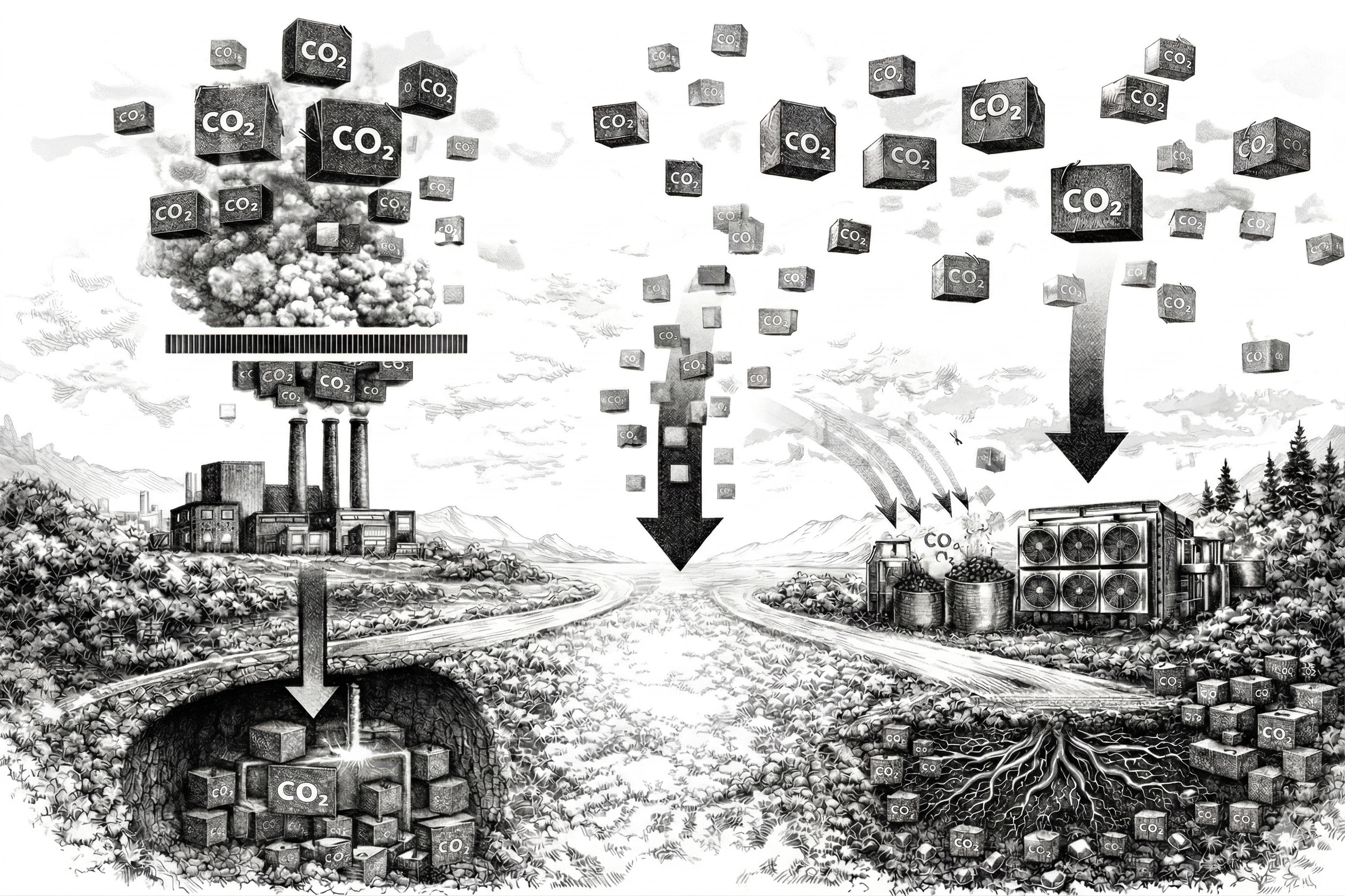
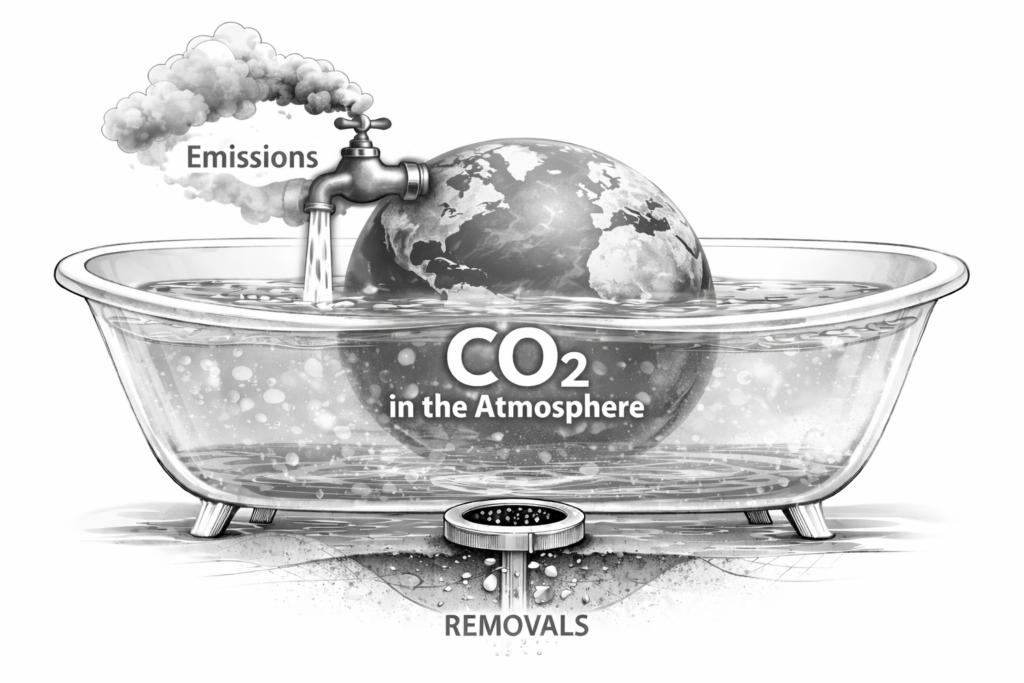
Think of the atmosphere as a bathtub.
- The faucet is human-caused emissions.
- The drain is the planet’s natural ability to remove CO₂, plus any intentional removal we add.
- The water level is the amount of CO₂ in the atmosphere, and the warming it causes.
For a long time, the faucet has been running faster than the drain can handle. Even if we turn the faucet down significantly, as long as it still flows faster than the drain, the water level keeps rising.
Emissions reductions turn down the faucet.
CDR opens the drain wider by removing CO₂ already in the air and storing it.
This is also the key principle: CDR is not a replacement for cutting emissions. It is what you need when emissions cannot fall to zero immediately, and when you want to stabilize or even lower the atmospheric CO₂ level after an overshoot.
Why CDR is necessary
1) The world is still emitting at massive scale
Global greenhouse gas emissions reached a record 57.1 GtCO₂e in 2023, according to UNEP’s Emissions Gap Report.
2) Residual emissions remain in hard-to-abate areas
Even with strong decarbonization, some emissions are likely to persist for longer in sectors such as aviation, shipping, heavy industry process emissions, and parts of agriculture. That means net-zero plans often rely on removals to balance what is left.
3) Where the 5 to 10 GtCO₂ per year idea comes from
You will often hear that the world may need around 5 to 10 gigatonnes of CO₂ removals per year at scale around mid-century, and potentially more later depending on how much we overshoot and how fast we cut emissions.
Here is the reasoning in simple steps:
- A major synthesis, State of Carbon Dioxide Removal (2024), indicates that pathways consistent with 1.5°C often require removals on the order of 7 to 9 GtCO₂ per year by mid-century, while emphasizing that removals complement emissions cuts.
- IPCC AR6 makes the “cooling math” very clear: if we overshoot, bringing temperatures back down implies extremely large cumulative removals. IPCC discusses orders of magnitude such as roughly 220 GtCO₂ for 0.1°C of cooling, with uncertainty.
- Even a small amount of cooling after an overshoot can therefore imply hundreds of gigatonnes of cumulative removals, which spread over multiple decades naturally translates into multi-gigaton-per-year deployment.
- Practitioner guidelines such as the World Economic Forum’s CDR best practice report also reflect this mid-century gigaton scale framing aligned with IPCC-style estimates.
So “5 to 10” is not a magic number. It is what shows up when you combine continued high emissions today, expected residuals, and the scale of removals implied by stabilization and potential post-overshoot cooling.
What is CDR?
Carbon Dioxide Removal (CDR) is the deliberate removal of CO₂ from the atmosphere, followed by storage in a way that is measurable and intended to last for climate-relevant timeframes.
Two clarifications help avoid confusion early:
- Capturing CO₂ at a smokestack is usually not CDR. It is typically carbon capture that prevents fossil CO₂ from entering the atmosphere. It can be important, but it is not removal from ambient air.
- Storage quality matters as much as capture. Temporary storage with high reversal risk is not the same as durable storage.
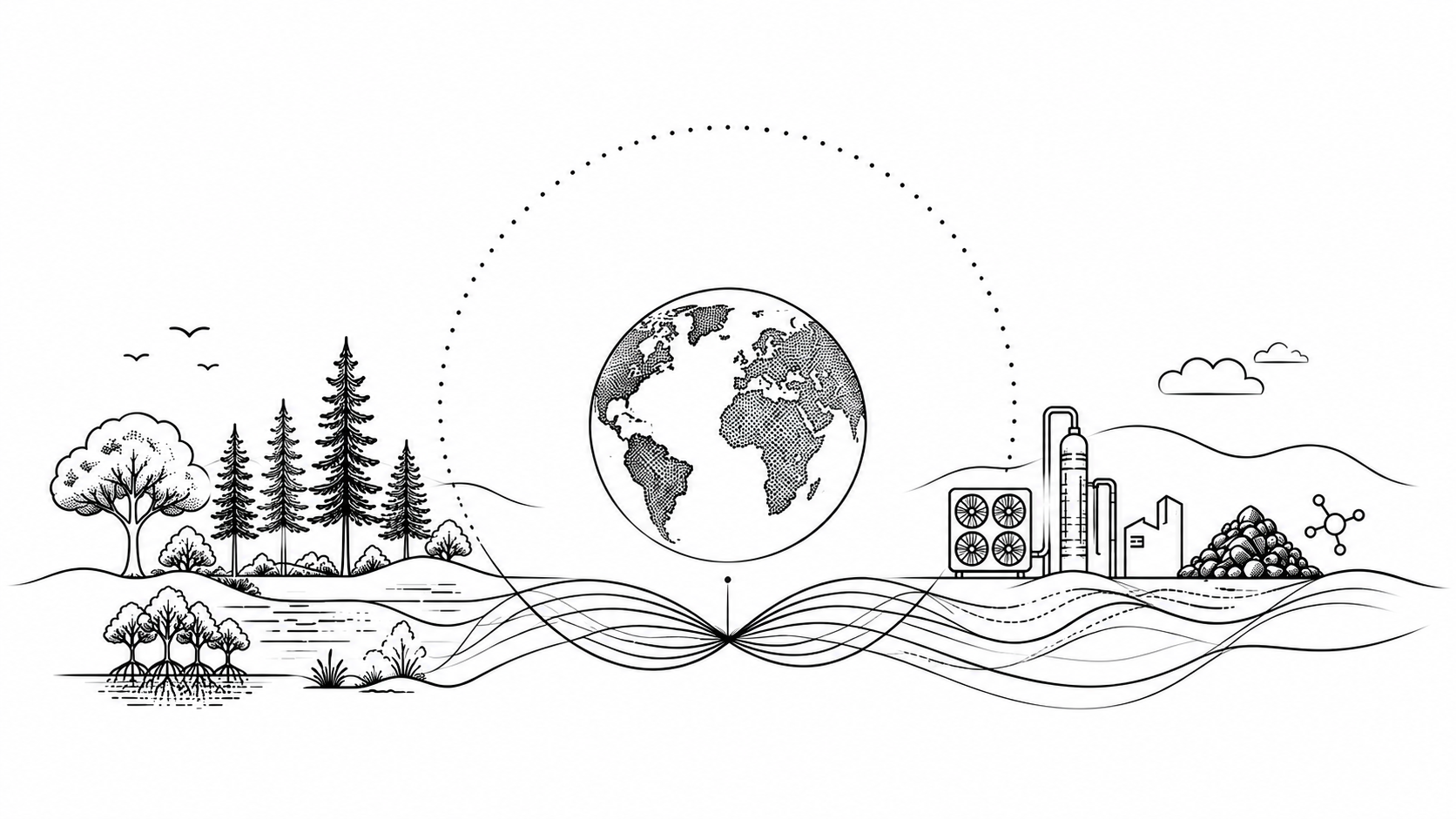
Two big families: nature-based and engineered
Nature-based CDR
This uses ecosystems to increase carbon stored in biomass and soils. Common examples include:
- Afforestation and reforestation
- Soil organic carbon practices
- Peatland restoration
- Blue carbon ecosystems such as mangroves, seagrasses, and salt marshes
Strengths: can scale relatively quickly and often brings co-benefits.
Challenges: permanence and reversal risk (fire, drought, pests), land competition, and measurement uncertainty.
Engineered CDR
This uses designed systems to remove CO₂ and store it through physical, chemical, or engineered biological pathways. It often offers higher measurability and potentially higher durability, but can require more energy and materials. We will unpack engineered CDR in much greater detail in upcoming issues.
We cut emissions because we must, and we build CDR because we cannot afford to leave the residual emissions and the overshoot problem without an answer.
Closing thought
CDR matters because the physics of the “bathtub” are unforgiving. Many credible pathways rely on both rapid emissions cuts and meaningful removals at scale, and the gap between what is implied and what exists today is large.