


The history of the United Nations Climate Change Conferences is a story of profound human effort and systemic evolution. Over the last thirty years, thousands of dedicated individuals have worked to transform a narrow, technical negotiation into a deeply integrated, systems-wide understanding of our planet. We can see this evolution most clearly when we look back at the shift from the Kyoto Protocol to the Paris Agreement. While Kyoto treated emissions like a complicated math problem for a small group of industrialized nations, Paris attempted to embrace the true complexity of the crisis. It created an inclusive, emergent framework where every nation could find its own path within a shared global vision.
Yet, as we moved through the final stages of COP30 in Belém, a deeper reality called for our attention. It took nearly three decades for the words “fossil fuels” to even appear in an official outcome, and even then, the language of “transitioning away” felt like a compromise that arrived long after the science had already spoken. When we saw fossil fuels missing from the final text in Belém, it was not just a political failure. It is a sign of a structural mismatch. The UN process is built on the principle of procedural legitimacy and universal consensus. It is a model designed to ensure that global action never moves faster than the collective agreement of all nations. This is a beautiful democratic ideal, but it is currently colliding with a physical reality that is already in motion.
From Complexity to Chaos
To find clarity in this moment, we can look through the lens of the Cynefin Framework. This tool, developed by Dave Snowden, helps us understand that not all challenges belong in the same “room”. Imagine four distinct environments. In the first, the rules are Clear and the relationship between cause and effect are obvious. In the second, the Complicated room, you need experts to analyze a problem and find the right technical solution. This is how the Kyoto era functioned. In the third, the Complex room, there are no “right” answers ahead of time. Instead, you must probe the system, sense how it reacts, and let patterns emerge. This is where the Paris Agreement lives, treating the climate as a living forest to be nurtured through collective effort instead of a machine to be fixed.
Finally, there is the Chaotic room. This is a state of high turbulence where there are no predictable patterns and no time for lengthy analysis. In Chaos, the requirement for survival shifts from the slow work of “negotiate and sense” to the urgent need to act and stabilize.
For much of its history, the COP process has lived in the Complex domain. In this space, there are no simple answers, so the primary mode of action is to “probe” through dialogue and wait for patterns to emerge. But the Earth is no longer offering the luxury of slow, emergent patterns. With seven of the nine planetary boundaries now breached, including the critical addition of ocean acidification, we are being pushed toward increasingly risky conditions.
An international team of scientists, published a study in the Proceedings of the National Academy of Sciences (PNAS), suggesting that we are nearing a critical threshold. Their research highlights that human influence is no longer the only factor at play in the current warming trend. As lead author Will Steffen explains, ‘Human emissions of greenhouse gas are not the sole determinant of temperature on Earth. Our study suggests that human induced global warming of 2°C may trigger other Earth system processes, often called feedbacks, that can drive further warming even if we stop emitting greenhouse gases.’
These ten natural feedbacks, some of which are considered “tipping elements” with critical thresholds, have the power to pull the planet onto a Hothouse Earth pathway. This is the domain of Chaos. It is a state where the self-reinforcing feedback loops of nature replace the predictable patterns of the past, and the slow work of “negotiate and sense” is outpaced by a system in runaway motion.
We are currently navigating a “borderland” between these two worlds, probably just before the last exit before Chaos. Our primary global tool is an organization designed for the patient, inclusive work of complexity, while the crisis itself may be entering a state of turbulence. This does not mean we abandon the UN process, as its legitimacy remains essential for our shared future. Instead, it means we must recognize the need for a dual-track leadership.
The International Conference on the Just Transition Away from Fossil Fuels, which took shape in the wake of Belém, is a powerful example of this new leadership. It represents an emergent response from a “Coalition of the Willing.” These are leaders who recognize that in the borderlands of Chaos, we cannot always wait for a global veto to lift. They are creating a “high-ambition” path that allows for decisive action while the wider consensus is still forming. True leadership in this era is about holding both of these realities at once: honoring the slow beauty of global democracy while building the capacity for the rapid, courageous acts that a planet in chaos demands.
The Architecture of Emergent Leadership
In the history of climate diplomacy, there are moments when the consensus tanker of the UN is simply too slow for the storm at hand. In these moments, success has come from those who dared to act ahead of the collective. The most powerful example is the High Ambition Coalition (HAC). Born in the final, high-pressure days of COP21 in Paris, this informal group was led by the Marshall Islands and supported by a diverse mix of developed and developing nations.
At a time when the official negotiations were struggling to move beyond a 2°C target, the HAC set a new Governing Constraint. They built their own room with their own rules, declaring that they would not accept an agreement that did not include the 1.5°C limit. They did not wait for the universal permission of 190 nations. Instead, they demonstrated a unified front of ambition that eventually pulled the entire Paris Agreement toward a more survival-aligned goal. This was a move to lead it through a moment of complexity.
We are seeing a similar emergent response today with the First International Conference on the Transition Away from Fossil Fuels. Scheduled for late April 2026 in Santa Marta, Colombia, this gathering is being co-hosted by Colombia and the Netherlands. Its location is a deliberate choice: Santa Marta is a major coal-exporting port in the world’s fifth-largest coal producer. This conference is a response to the fact that fossil fuels were once again absent from the final text at COP30 in Belém.
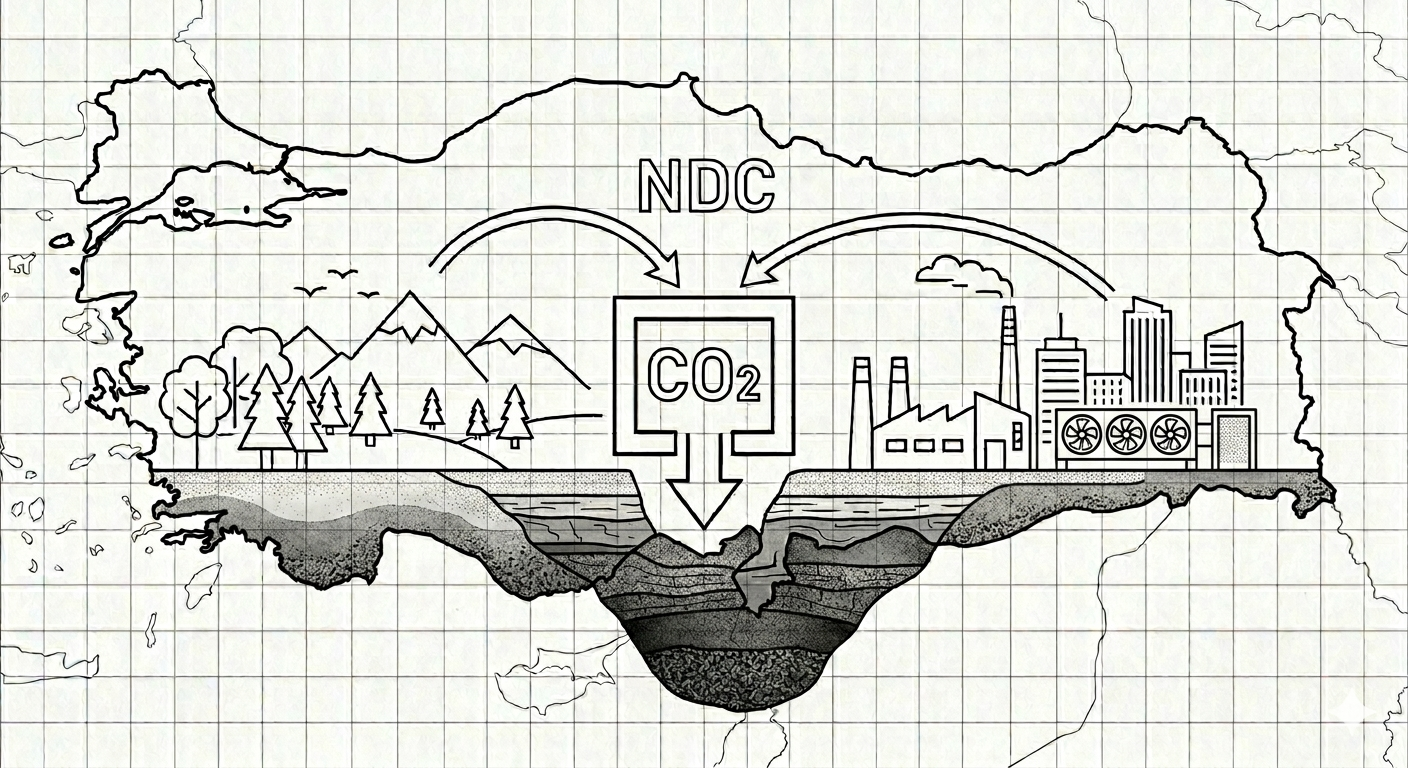
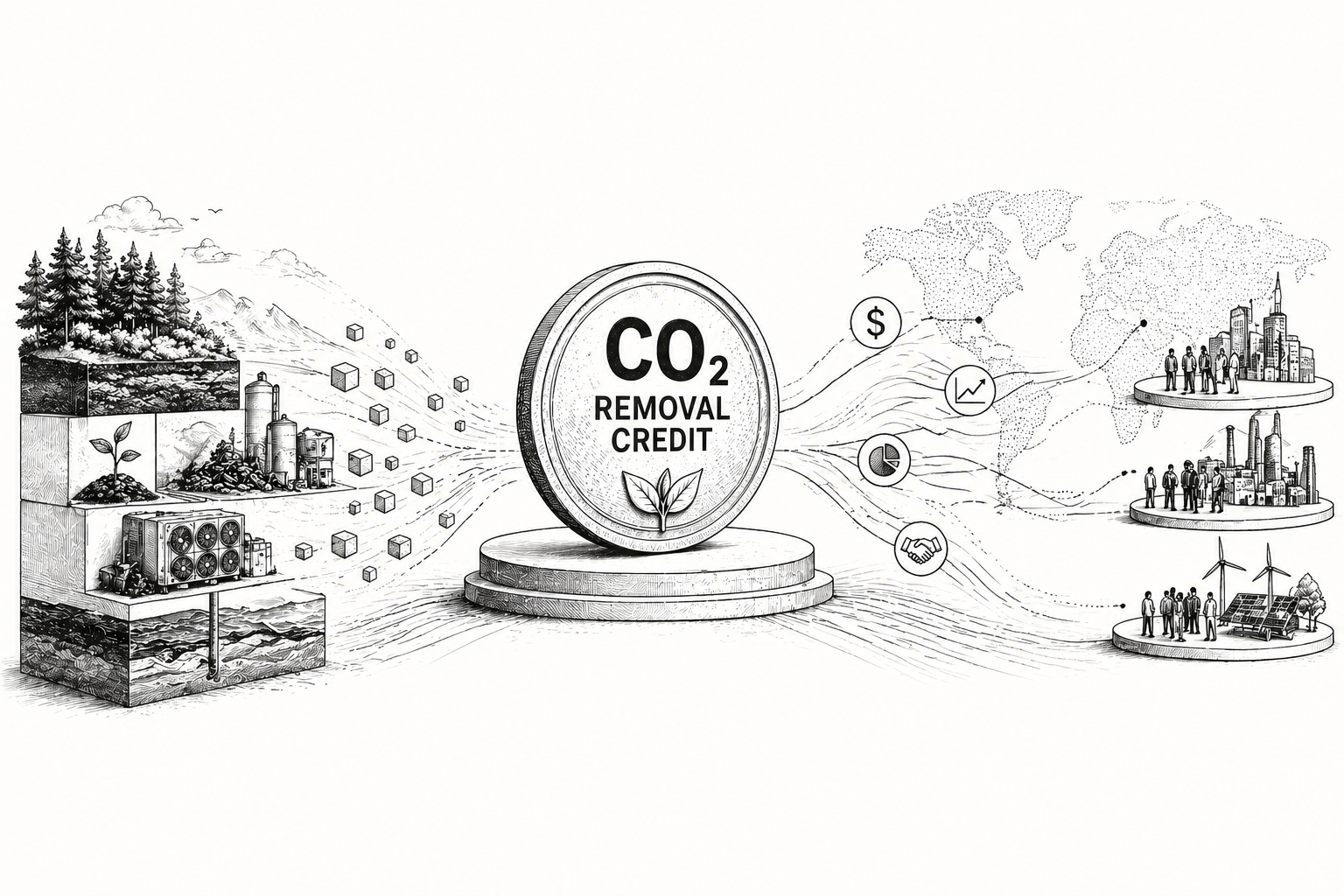
Alongside these diplomatic shifts, we can speak of the potential of Carbon Dioxide Removal (CDR) as a critical tool in this new landscape. Led by an emergent community of practitioners and scientists, CDR represents a move toward the physical stewardship of our atmosphere. If the 1.5°C target is the “North Star” of the High Ambition Coalition, then CDR is a stabilizing force we need as we navigate the borderline between Complexity and Chaos domains. In the language of the Cynefin Framework, it is an Emergent Practice. It is not a silver bullet, but a necessary act to reduce the pressure on a climate system that is drifting toward Chaos.
The Path to COP31 in Antalya
As we look toward COP31, the focus is shifting. The goal for Antalya is to move beyond the “negotiation of words” and toward the “demonstration of possibility.” By showcasing how we can demonstrate action and restore our planetary systems, we provide the evidence that a just transition is both necessary and achievable. True leadership in the borderlands of Chaos does not ask for permission to save the future. It acts with the courage and clarity that science demands, creating a path that the rest of the world can finally choose to follow.