
At the start of almost every green building project, a detailed sustainability assessment is carried out. Energy use, water demand, site conditions, material choices, operational scenarios… All are quantified, tested, and refined as the project moves from concept to construction.
Yet one thing keeps coming up.
In construction, where decisions move fast and problems get solved on site, sustainability expertise plays two roles at once: a reminder pushing for attention, and paperwork teams need to get through.
This tension between analysis and delivery plays out across hundreds of projects in Türkiye.
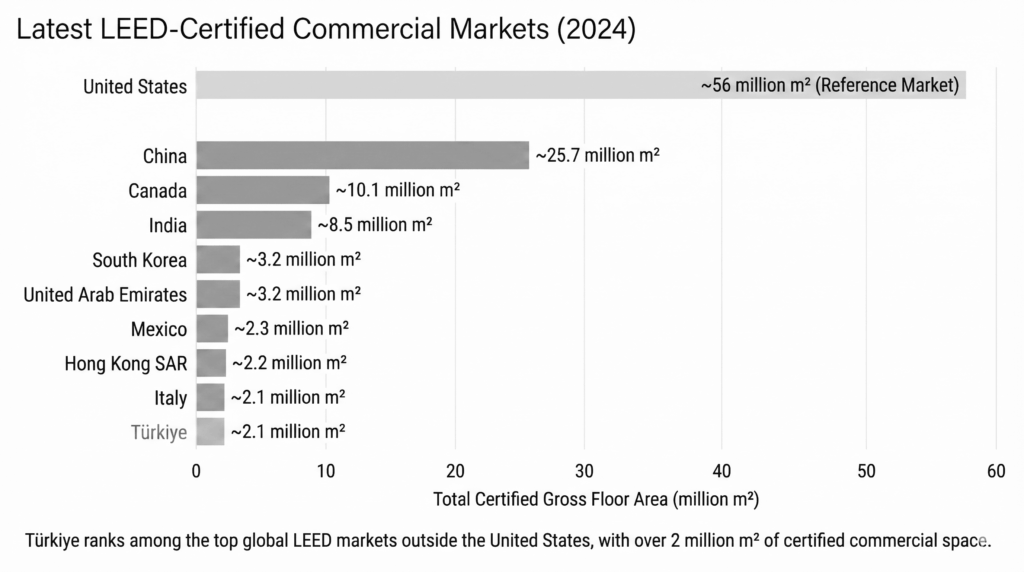
Türkiye consistently ranks among the top ten countries globally for LEED certification activity outside the United States. Over the past decade, more than 670 LEED-certified projects, representing nearly 20 million square meters of certified floor area, have been delivered in Türkiye. Each of these buildings generates detailed data on energy performance, water efficiency, and material-related emissions.
Most of this knowledge stays locked in project files, disconnected from broader climate, policy, and financial conversations.
As Türkiye prepares to host COP31, a simple question emerges:
What if some of our most relevant climate insights are already built and we’re simply ignoring them?
Green building certifications produce a substantial body of performance data. Three areas are especially relevant to Türkiye’s climate priorities.
- Water resilience is not just about reducing operational costs. In the Mediterranean basin, where climate change is intensifying water stress, certified projects document how demand can be reduced through efficient fixtures, water greywater and rainwater reuse systems, and landscape design. These projects demonstrate, in practice, how a critical adaptation resource can be managed more responsibly.
- Energy benchmarks tell another story. From early design stages, certified buildings evaluate how different materials, systems, and equipment choices affect energy performance, using internationally recognized standards. These assessments translate design decisions into long-term outcomes: annual consumption, comparative performance, and projected operating costs. This information is highly valuable well beyond the boundaries of a single project.
- Embodied carbon data is still developing, but its importance is growing rapidly. Life cycle assessments reveal emissions associated with material production, transportation, and construction. Since buildings directly drive demand for these materials, embodied carbon represents emissions that are effectively “decided” at the moment of design. For a country with a strong construction sector and a significant building materials export market, this data carries implications far beyond individual sites.
These datasets add up to a substantial body of climate intelligence sitting in Türkiye’s built environment. It exists. Whether it ever gets out of individual project boundaries, that’s the actual question.
This question hits differently in Türkiye, where construction happens at a pace and scale that’s hard to match anywhere else. Huge volumes of housing, infrastructure, and mixed-use projects go from drawing board to construction site incredibly fast, often because they have to. Seismic upgrades can’t wait. Urban renewal is urgent.
And that’s where urban transformation becomes both our biggest opportunity and our biggest risk when it comes to climate action. The decisions being made right now through urban transformation programs will determine our energy consumption, water resilience, and embodied carbon footprint for the next 30, 40, 50 years. When thousands of buildings get replaced or retrofitted every year, design choices stop being about individual projects. They shape national climate outcomes whether we realize it or not.
The problem? If we can’t figure out how to use what we already know about building performance to make faster, smarter, better-coordinated decisions, all that construction speed works against us. What should be an advantage risks becoming a liability, compounded with every new project.
So why does this information rarely move beyond project delivery?
Part of the answer: how sustainability fits (or doesn’t) within construction itself. Certification is typically managed by technical teams (architects, engineers, site and operations) working under tight timelines and fast-moving construction realities. Their priority is delivery: solving problems, meeting deadlines, keeping projects on track. From a sustainability consultant’s perspective, shaped by work across multiple projects and geographies, this is not a Türkiye-specific issue but a structural one.
Within this system, sustainability analysis becomes one input among many, rather than a decision-shaping framework. Data is produced, refined, and documented, but often in parallel with construction rather than embedded into its critical decision points. By the time insights are fully articulated, key choices about materials, systems, or layouts may already be locked in.
When sustainability input is not aligned with real decision moments, even high-quality data fails to influence outcomes in meaningful ways.
The teams working with this data at a strategic level (corporate sustainability units, policy teams, finance and reporting departments) operate in a very different context. They work with regulations, disclosures, risk frameworks, and long-term targets.
Both groups act rationally within their own constraints. Those constraints rarely align. There’s no bridge between them.
Translation matters as much as production. Without it, data stays correct but useless. Understanding looks different depending on who needs it. For some, it is a risk and compliance question. For others, it is a financial one. In some cases, it is about long-term value or responsibility. When requirements stay purely technical, they don’t reach decision-makers.
As a result, green building certifications can be reduced to a compliance exercise or a branding signal: a box to be checked, rather than a source of insight into climate risks and opportunities.
When building-level data gets interpreted beyond its technical format, possibilities open up. Climate finance could use verified performance data to underpin green bonds and sustainability-linked loans; grounding instruments in measurable outcomes instead of abstract commitments. Corporate teams could inform Scope 3 accounting and supply chain narratives. Policymakers could draw on aggregated insights for building codes and benchmarks that reflect what’s already achievable. All of this points to a clear bottleneck: too few professionals and frameworks that connect technical performance to decision-making.
Recent developments point in the right direction. LEED v5 and alignment efforts with frameworks such as the EU Taxonomy reflect growing awareness of this gap. But unlocking their potential requires more than updated standards.
In the next phase of climate action, deep specialization will remain essential. At the same time, professionals will increasingly need a more generalist perspective; one that connects building performance with finance, regulation, and long-term climate goals.
When each discipline operates in isolation, holistic solutions remain out of reach. In a sector where timelines are measured in months rather than years, this fragmentation becomes a risk in itself.
As national building regulations evolve, sustainability requirements are increasingly embedded in municipal permitting processes. The challenge is that they’re still primarily used as compliance documentation rather than as feedback mechanisms that could inform design, finance, or material decisions at scale. Türkiye’s Building Sector Decarbonization Roadmap highlights this potential. Current regulations focus heavily on operational energy performance but don’t take a whole life-cycle view. The roadmap calls for integrated data systems and stronger linkages between design, policy, and finance. What the roadmap is asking for goes beyond stricter rules, it’s asking for systems that can translate building data into actionable regulatory thresholds, smarter investment criteria, and clear pathways to decarbonization.
The problem is, the roadmap remains largely aspirational in practice. Without institutional mechanisms that bake these translation systems into everyday project work, its insights don’t make it into actual timelines, budgets, or design decisions.
This creates constant tension between delivery pressures and climate intent. When that tension stays unresolved, environmental outcomes suffer first. Emissions stay locked in, adaptation strategies stay isolated, and lessons that could inform the next project never leave the last one.
Türkiye takes pride in its construction capacity and building materials expertise. Hosting COP31 presents an opportunity to demonstrate not only how buildings are delivered efficiently, but how they can be produced in alignment with climate values and long-term resilience.
Türkiye’s certified buildings already hold lessons on energy performance, water management, and material efficiency. The data exists. The physical infrastructure exists. What does not yet exist is a system that consistently moves this knowledge from technical reports into the rooms where codes are written, finance is allocated, and supply chains are reorganized.
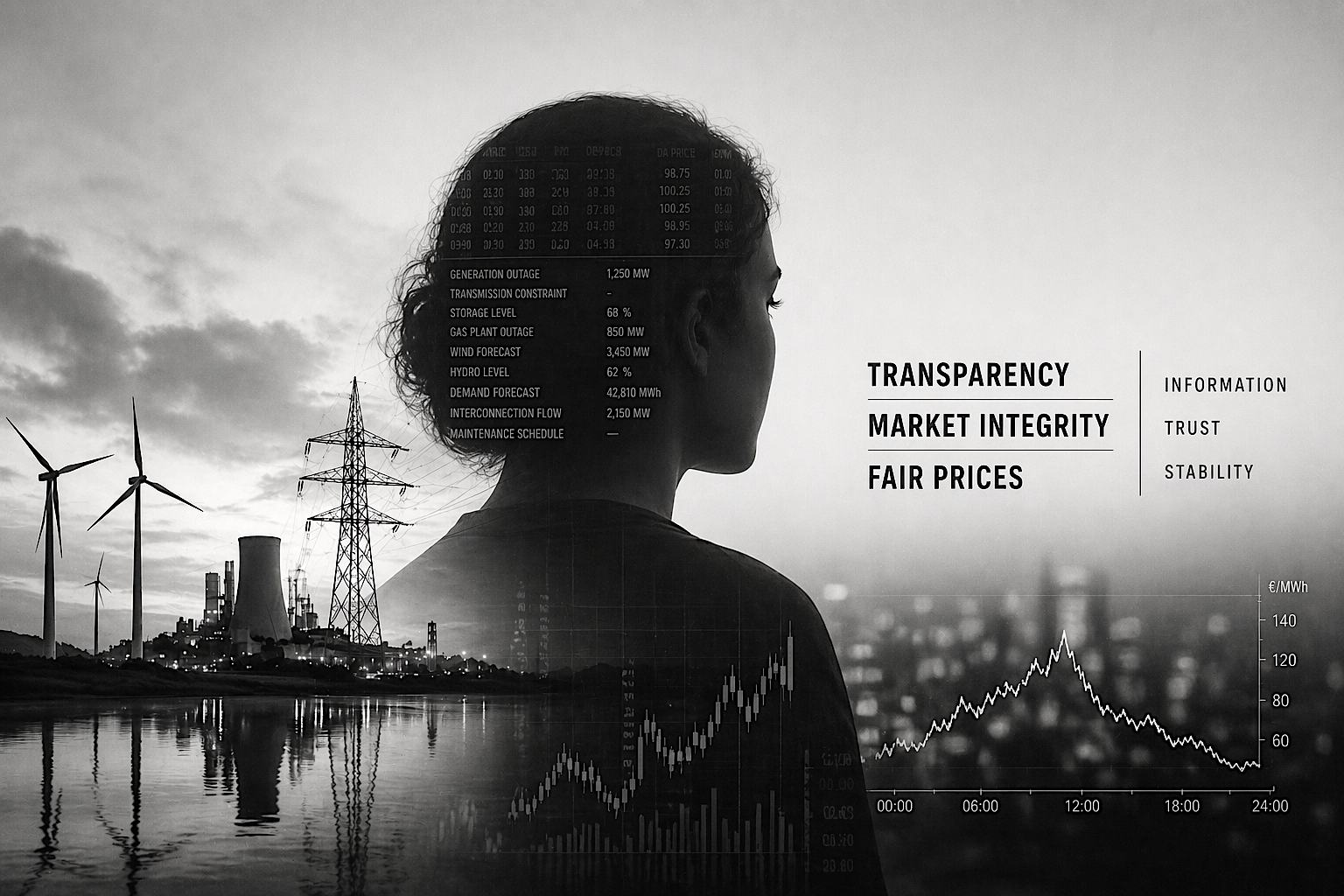
Translation efforts exist in Türkiye. National systems such as BEP-TR already aggregate energy performance data for millions of buildings, while YeS-TR represents an important step toward capturing broader sustainability metrics at the national level, particularly for public buildings. BEP-TR and YeS-TR represent important steps in data collection and standardization. What they do not yet provide is systematic translation: mechanisms that feed performance insights back into design choices, policy thresholds, and financial decision-making. In parallel, parts of the financial sector have begun to act as de facto translators. Banks such as TSKB and Garanti BBVA aggregate certified buildings into green bond portfolios, converting technical documentation into metrics that global capital markets can understand.
These initiatives matter. But they remain fragmented. Data gets collected, classified, and reported. Rarely connected across systems. Even more rarely fed back into the moments where design, policy, or investment decisions happen.
The cost shows up in carbon emissions locked in at design, in water strategies that don’t scale under climate stress, and in adaptation efforts that produce uneven results. When knowledge doesn’t travel, climate action slows. Türkiye’s Second NDC makes it clear: achieving our climate mitigation and adaptation targets means coordinating efforts across every sector, buildings included, and making sure we don’t just collect data but actually use it to drive change.
COP31 will not matter because of new commitments alone. It will matter if Türkiye can show how construction knowledge can be put to work at the scale climate action requires. In that sense, Türkiye’s translation infrastructure is not absent. The infrastructure is still under construction. What comes next depends on whether it gets finished before the climate window closes.