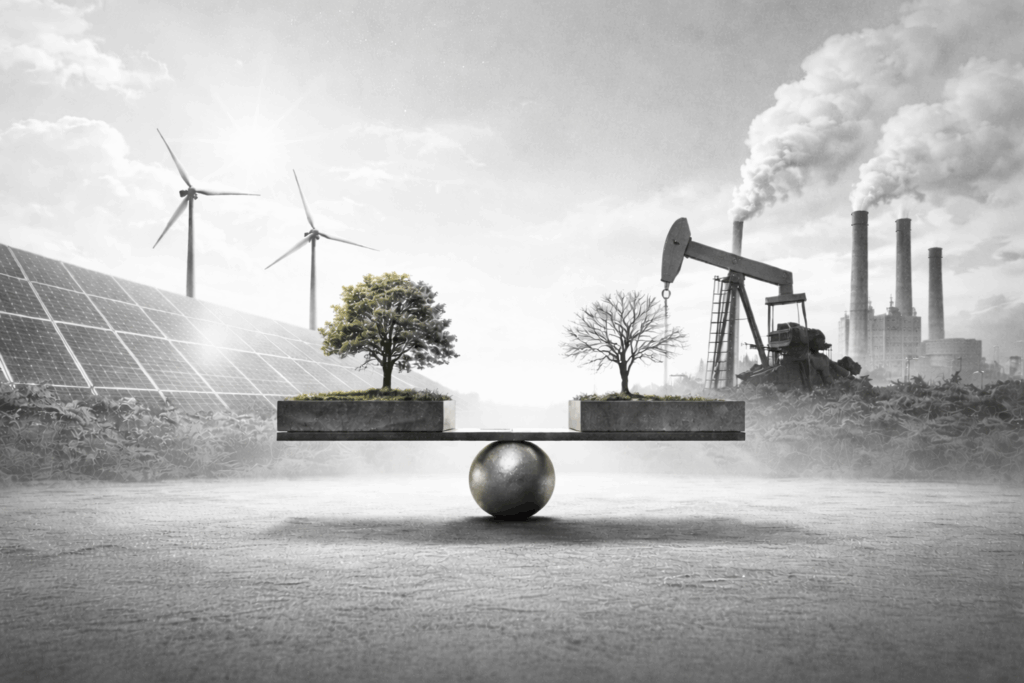
DAVOS, 2026. The world’s energy debate no longer sounds like a single conversation. It sounds like two competing scripts being read at the same time, in the same room, under the same bright lights.
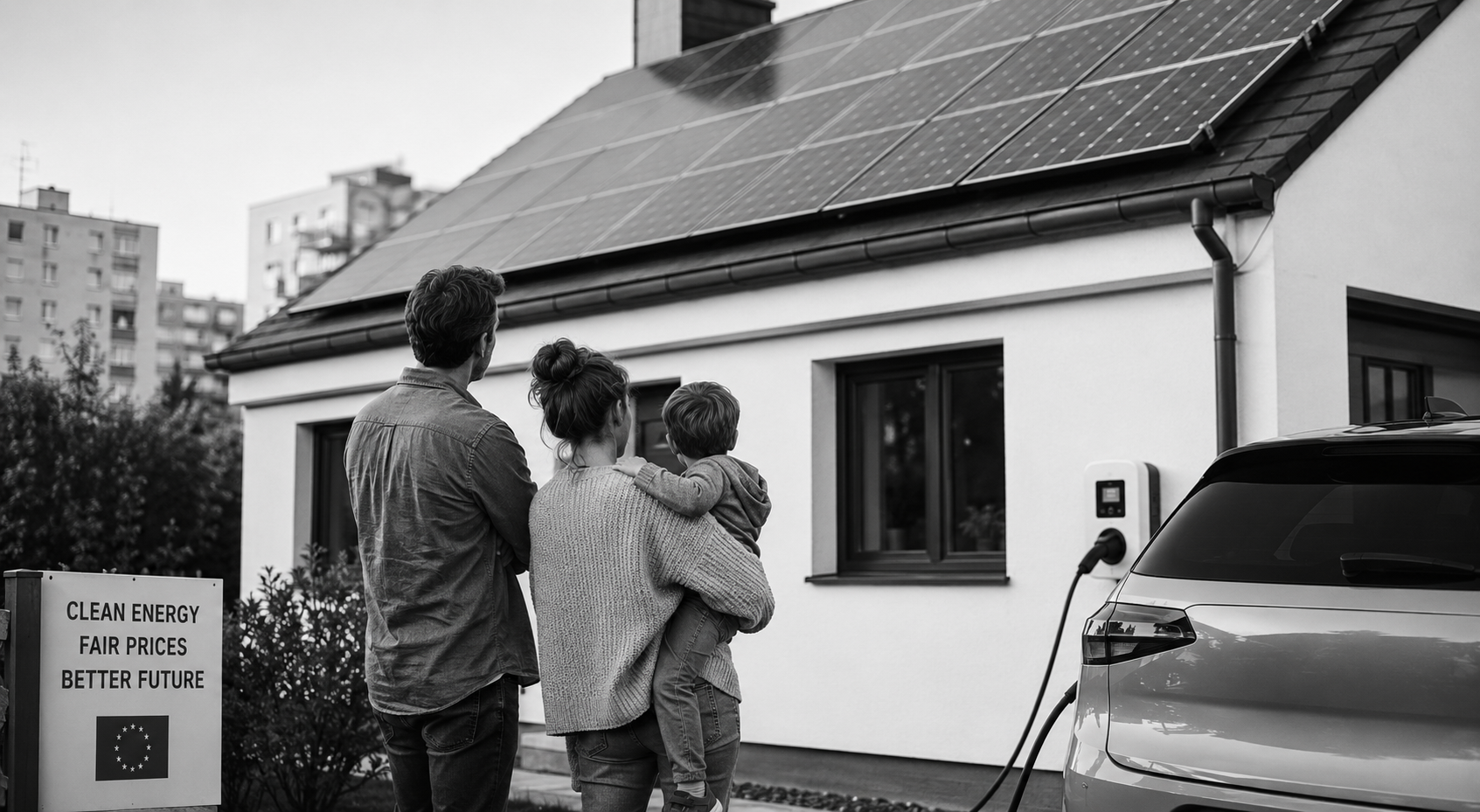
On one side is the clean-energy argument, framed not as aspiration but as strategy. Ursula von der Leyen, the president of the European Commission, put it bluntly: Europe needs “a true energy union”, because “energy is a choke point for both companies and households”. In her telling, the way forward is domestic resilience built on “homegrown energies… the nuclear and the renewables”, to cut dependency and bring prices down. It is not only a climate case. It is a competitiveness and sovereignty case. “Homegrown, reliable, resilient and cheaper energy”, she said, “will drive our economic growth and secure our independence”.
On the other side is the fossil-fuel backlash, increasingly wrapped in the language of realism. President Donald Trump, appearing in Davos coverage, dismissed climate-driven policies as “the new green scam”. The line was short and incendiary, but its meaning was clear: the transition, at least in this political moment, is up for renegotiation.
Between these poles sits a messier middle where major economies are not choosing a single path so much as choosing a condition: survival in an era of instability. Canada’s Prime Minister Mark Carney described a world moving toward self-sufficiency, arguing that countries must develop greater “strategic autonomy, in energy”, along with “critical minerals” and supply chains. Canada, he added, is not merely participating in the scramble. “We are an energy superpower”. And he pledged scale and speed: “We are fast tracking a trillion dollars of investments in energy, AI, critical minerals, new trade corridors and beyond.”.
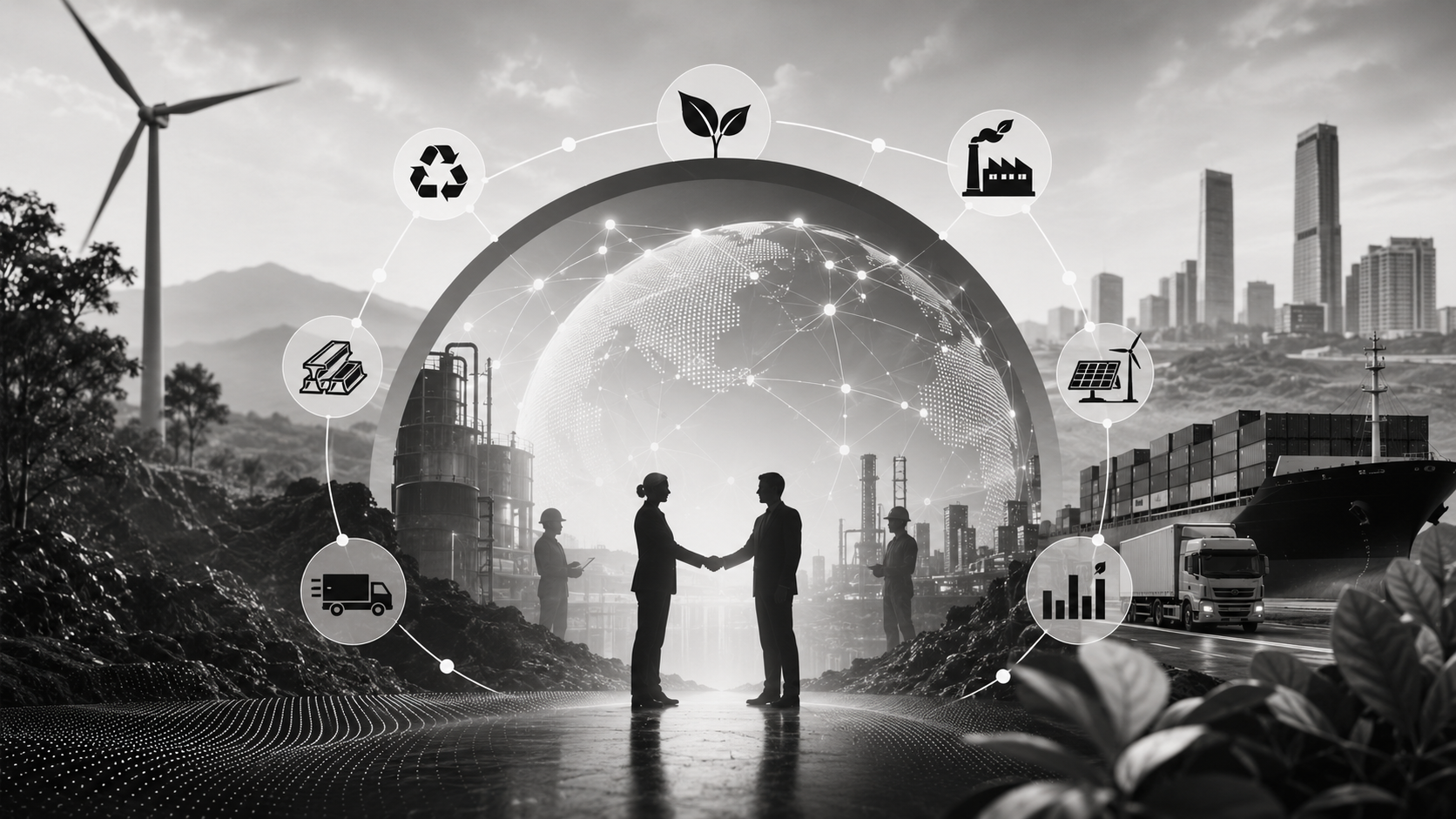
China looms over this argument even when it is not always speaking directly into it. But this year, Beijing’s message was unmistakably framed around stability and multilateral cooperation. According to China’s Foreign Ministry briefing on Vice Premier He Lifeng’s participation, China said it looked forward to working with others to “practice true multilateralism”, “jointly build an open world economy”, and “inject more stability and positive energy for the world economy”. While it is not a technical energy pledge, it reflects a familiar positioning from a country that plays a central role in clean energy manufacturing supply chains, while also accelerating major domestic investments to reshape its energy mix.
Asia, meanwhile, is pushing forward at speed, even when policies vary. India’s Ashwini Vaishnaw framed the new industrial wave in terms of economic discipline, noting that “the economics… is going to come from ROI”, and from deploying “the lowest cost solution” for the highest return. That logic fits clean energy in many Asian markets, where renewables increasingly win not because they are virtuous, but because they are competitive.
The argument is not only about what to build, but about what the world can actually deliver. In Davos halls filled with talk of artificial intelligence and industrial competitiveness, energy keeps reappearing as the invisible constraint. Saudi Arabia’s investment minister, Khalid Al-Falih, captured the mood: “Everybody wants to build the infrastructure for it”, but access is essential. Brad Smith of Microsoft pushed the same point in business language: “We need strategies that stimulate demand that furnish supply.” It is a reminder that electrification is not a slogan. It is a construction plan, and it requires grids, generation, permitting, and workforce capacity to keep up with demand.
Even the climate conversation itself is widening. Kirsten Schuijt of WWF observed that what used to be a narrow focus on “climate and energy” has expanded into a broader reckoning with systems: “fresh water, forests, food”. André Hoffmann, the interim co-chair of the World Economic Forum, delivered it as a warning with the tone of a diagnosis: “If you have no nature, you have no humanity, you have no business”.
So where does that leave the present?
It leaves it split, but not evenly. Europe is trying to lock in renewables and nuclear as a foundation for independence, with energy prices and industrial competitiveness as the political center of gravity. The United States, at least in rhetoric, is reopening the door to fossil expansion and skepticism toward climate policy. Asian economies are moving fast, often driven less by ideology than by economics and scale. China, watching all sides, presents itself as the anchor of stability, even as the world remains dependent on its industrial capacity.
The future outlook may depend less on which argument wins and more on which bottleneck breaks first. If grids fail to expand, supply chains remain fragile, and permitting stays slow, fossil fuels will keep their oxygen. If electrification infrastructure accelerates and clean power becomes reliably cheaper and more secure, the clean-energy path will stop looking like idealism and start looking like default policy.
In Davos this year, the energy debate was not one debate. It was a split-screen future. One vision calling renewables and nuclear a route to economic independence. Another dismissing the transition as a scam. A third, from Beijing, insisting the world should steady itself and cooperate. And yet, beneath the politics, there is a quieter reality that keeps gaining ground: renewables are increasingly competitive, scalable, and clean, and that combination may ultimately prove stronger than any argument.