

Let us make no mistake: the most consequential choice about COP31 has already been made, and it was not made in a plenary hall. It is built into the presidency itself.
When Türkiye and Australia agreed to share responsibility for COP31, most coverage treated the arrangement as a diplomatic compromise, the tie-breaker at the end of a long standoff over hosting rights. I read it differently. Look at how the job is actually divided. Australia leads the formal negotiations, drafts the texts, and champions the interests of the Pacific, with the Pre-COP itself taking place in Fiji in October, co-hosted with Fiji and Tuvalu. Türkiye hosts the world in Antalya from November 9 to 20, holds the overall presidency, and drives the vision and implementation agenda.
Read that split carefully. For the first time in three decades of climate summits, the machinery itself separates negotiation from implementation, and implementation has a dedicated owner.
Every COP claims to be about implementation. This is the first one structured for it.
The pattern this design is trying to break
The COP system has a habit: negotiate hard, announce a number, then hand delivery to nobody in particular. The last collective finance goal tells the story. Developed countries promised 100 billion dollars a year by 2020. It was met two years late, and the official outcome documents record it with the words “notes with deep regret”. At COP29 in Baku, the parties agreed a new core goal of 300 billion dollars a year by 2035, with a call to scale finance from all sources toward 1.3 trillion. Those numbers will follow the same path as their predecessor unless something in the system changes.
My test for any COP outcome has not changed since Dubai: does the number turn into a delivery mechanism, or does it stay a number? A COP text becomes real the day a finance ministry prices it into a budget or a regulator writes it into a grid code. Under the traditional presidency model, no one owns that translation. The host country runs the negotiations, lands the text in the final plenary, takes the applause, and hands the gavel to the next host. Delivery becomes everyone’s aspiration and no one’s job.
The Türkiye and Australia split changes the assignment. Australia’s negotiators can concentrate on the texts. Türkiye’s presidency can concentrate on what the texts are for.
October decides November
None of this is theory to me. I served as Senior Advisor to the COP28 Presidency in Dubai, and I organized a Pre-COP side event at Emirates Palace, the same event where the technical report behind the pledge to triple renewable energy capacity was launched. From the inside, I learned a simple rule: much of what the world celebrates in November is actually decided in October.
That is why the Fiji Pre-COP deserves far more attention than it is getting. Holding it in the Pacific, co-hosted with the nations facing the sharpest climate risks, is not a ceremonial gesture. It puts finance access and adaptation on the table before the cameras arrive in Antalya. The road to Antalya runs through the Global South, and this time that is by design.
There is also a warning sign worth naming honestly. This June in Bonn, three major negotiating tracks deadlocked and were pushed forward to Antalya under Rule 16, the procedural rule that carries unresolved items to the next session. Some read that as failure. I read it as the system straining under exactly the load this new structure was built to carry. The closer we get to real delivery, the harder the rooms get.
The machinery to watch
Minister Murat Kurum has already named the ambition: “This COP will be the COP of implementation”. UN Climate Change’s own explainer goes further and describes COP31 as envisioned as the “COP of the Future”. I read those two labels as one sentence: the future is decided by what gets implemented.
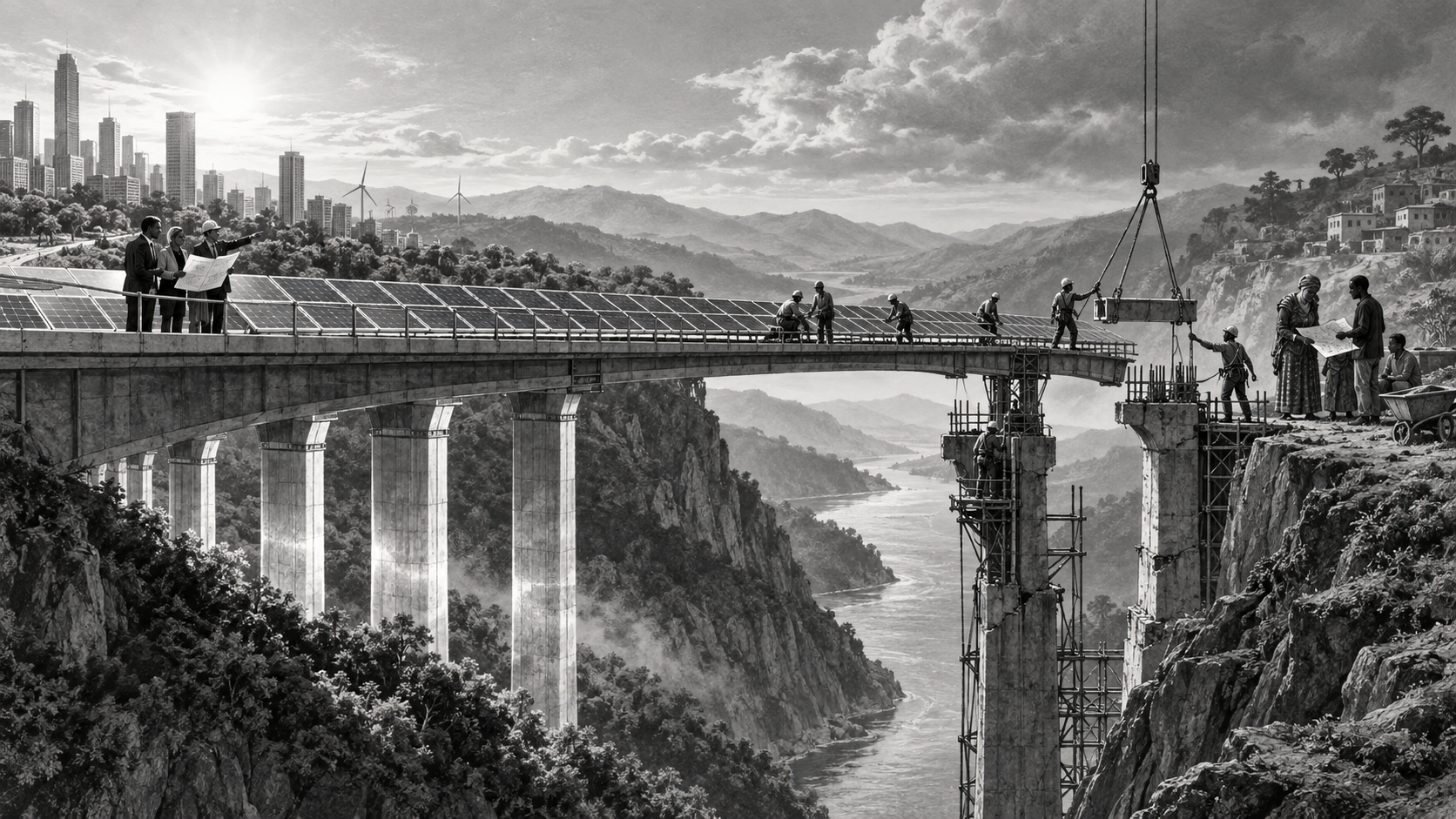
Among the presidency’s flagship initiatives, the one I am watching most closely is the Climate Implementation Bridge. Its problem statement targets the right disease: the disconnect between climate objectives and macroeconomic decision-making, project bankability, de-risking, and private capital at scale. Anyone who has tried to reach financial close on a clean energy project in an emerging market will recognize that list. It is the difference between a pledge and a power plant.
So here is what I am watching between now and November. The 300 billion moving from a political number toward actual project finance. Article 6 proving it can pull private capital into emerging markets. Just Transition getting specific enough that a grid operator or a local government can plan around it. And the Climate Implementation Bridge turning from a flagship name into working machinery.
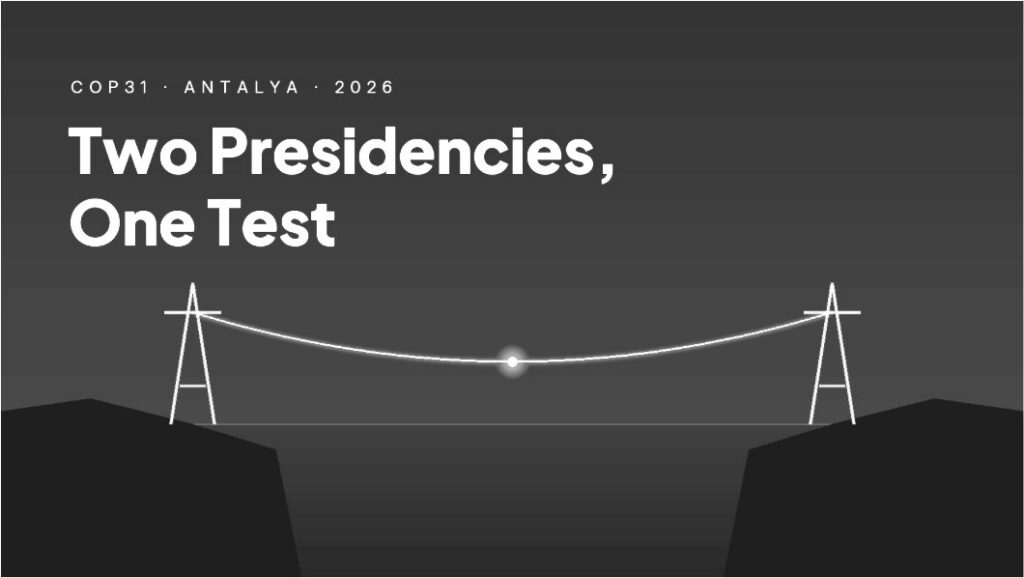
Two presidencies, one test
The shared presidency is an experiment, and experiments can fail. Coordination between Ankara and Canberra will be tested, and consensus among 198 Parties remains as hard as it has ever been. But for the first time, the structure of a COP matches the stage the transition has reached. The easy phase, the naming phase, is behind us. What remains is delivery, and delivery finally has an address.
Two presidencies. One test: what actually gets implemented.
The window is open. Let’s make this count and let’s never forget. Action fuels hope, hope fuels action.
The views expressed in this article are solely my own and do not represent the positions of any employer, company, or institution with which I am or have been affiliated.