

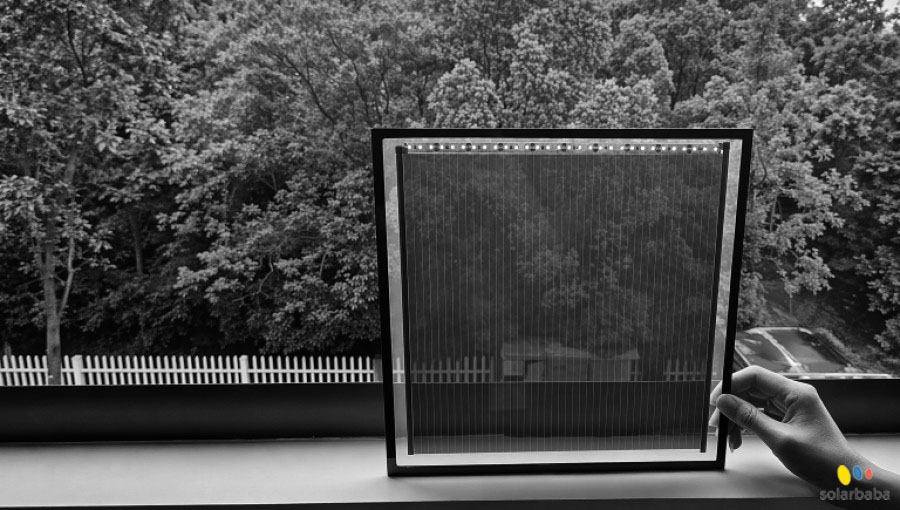
Perovskite solar cells, which are expected to replace silicon technology in the solar energy sector, are opening a new era in energy generation with transparent solar panel windows. Researchers at University College London (UCL) have achieved an important breakthrough by developing semi-transparent perovskite modules that both allow light to pass through and generate electricity. Similarly, US-based Sofab Inks has secured a $6 million investment to improve the durability of perovskite cells and move toward commercial-scale production. These innovative materials aim to turn buildings into energy-generating stations by reducing energy losses and enabling them to produce their own electricity.
Scientists at UCL demonstrated in a study published in Advanced Energy Materials that perovskite-based windows can both keep indoor spaces cooler and generate electricity. Allowing 30% of the light to pass through compared with conventional glass, these windows offer an impressive solar energy conversion efficiency of 14%. Researchers successfully produced scalable 30×30-centimeter modules using a specialized electrode structure made of gold and molybdenum oxide layers, along with molecular additives that stabilize the crystal structure. The technology aims to improve energy savings, particularly in hot climates where air conditioning use is high.
Another significant development in the sector comes from Kentucky-based Sofab Inks. The company has replaced the C60 fullerene layer, one of the major weaknesses of perovskite cells and a source of voltage loss, with metal oxide nanoparticles to develop more durable and efficient solutions. With this new formulation, Sofab achieved an efficiency of 22.3% in 30-centimeter modules. The company plans to use its $6 million seed investment to increase production capacity and bring perovskite technology to an industrial scale.
The lightweight and flexible structure of perovskite solar cells makes them ideal for applications such as curved surfaces and vehicle components, where conventional silicon panels cannot easily be used. Working with institutions such as Arizona State University, Sofab is addressing the mechanical challenges associated with fullerene-based materials and strengthening the commercial viability of perovskite technology. Industry stakeholders agree that these next-generation materials could play a critical role in meeting global energy demand.
Source: Solarbaba – In Turkish