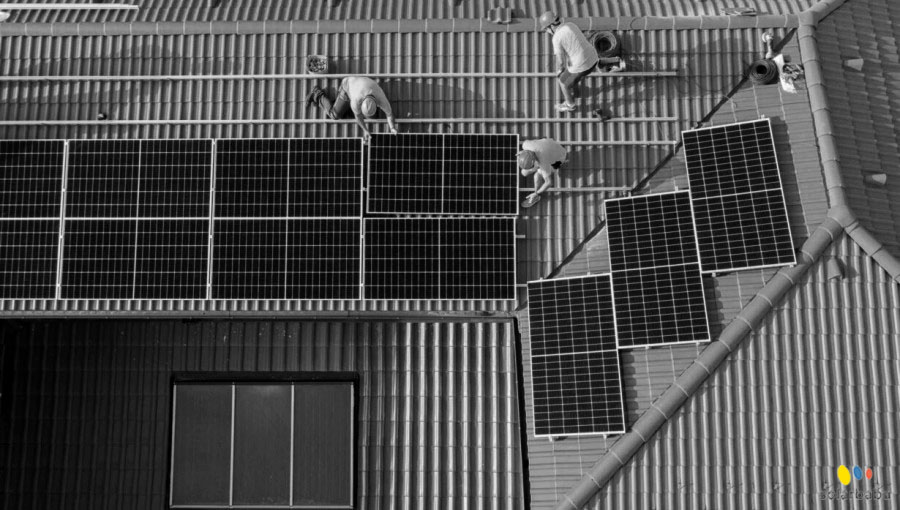
Australia has officially launched the “Solar Sharer Offer,” a program providing households with three hours of free electricity each day during peak solar generation periods. Introduced on July 1, 2026, across New South Wales, South Australia, and Southeast Queensland, the initiative covers both homeowners and renters. Households are not required to have rooftop solar panels, allowing a broader range of consumers to benefit from the country’s growing solar energy supply while helping make better use of excess electricity on the grid. Participants can receive up to 24 kWh of free electricity per day during the designated three-hour period.
The program is offered as an optional plan through energy retailers with more than 1,000 customers. Smart meters are required, and the free electricity period runs from 11:00 a.m. to 2:00 p.m. in New South Wales and Southeast Queensland, and from 12:00 p.m. to 3:00 p.m. in South Australia. The daily 24 kWh limit was established to protect retailers’ financial sustainability, as it roughly corresponds to the total daily consumption of an average five-person household according to data from the Australian Energy Regulator.
The main objective of the program is to balance the electricity system by shifting household consumption to midday, when solar generation can exceed demand. This approach is expected to reduce reliance on grid-scale batteries and help manage fluctuations in wholesale electricity prices. The government highlights that households can achieve significant savings by shifting energy-intensive activities such as using washing machines, dishwashers, dryers, or charging electric vehicles to the free electricity period.
Consumer advocacy group CHOICE estimates that running appliances such as dishwashers during the free period could save households approximately A$127 per year compared with using them during higher-priced evening periods. Households with home batteries can also charge their batteries during the free hours and use the stored electricity later in the evening. Although the program is currently limited to selected regions, its expansion to other areas, including Victoria and the Australian Capital Territory, is being considered.
Source: Solarbaba – In Turkish