

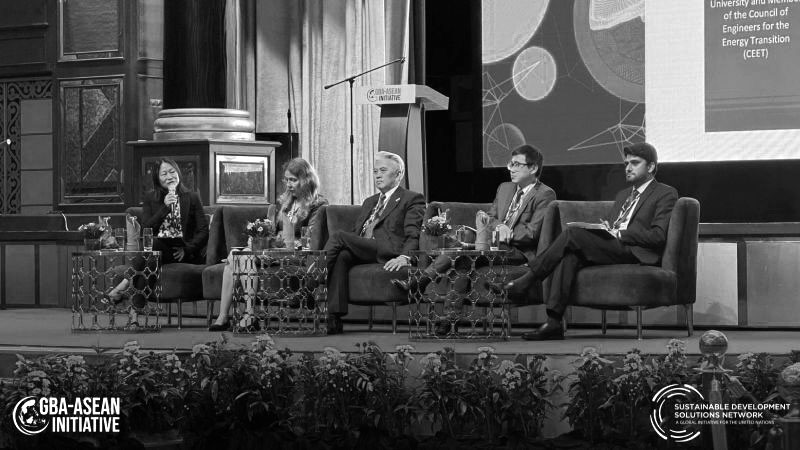
At the 2026 GBA–ASEAN Conference in Kuala Lumpur, the conversation moved beyond renewable energy targets to a more difficult question: how can finance, technology and regional cooperation be converted into infrastructure that improves people’s lives?
The energy transition is often presented as a race: more solar panels, larger wind farms, cheaper batteries and faster electrification. But in Southeast Asia, where energy demand is rising rapidly and national systems are becoming increasingly interdependent, the more important question may be whether countries can move forward together.
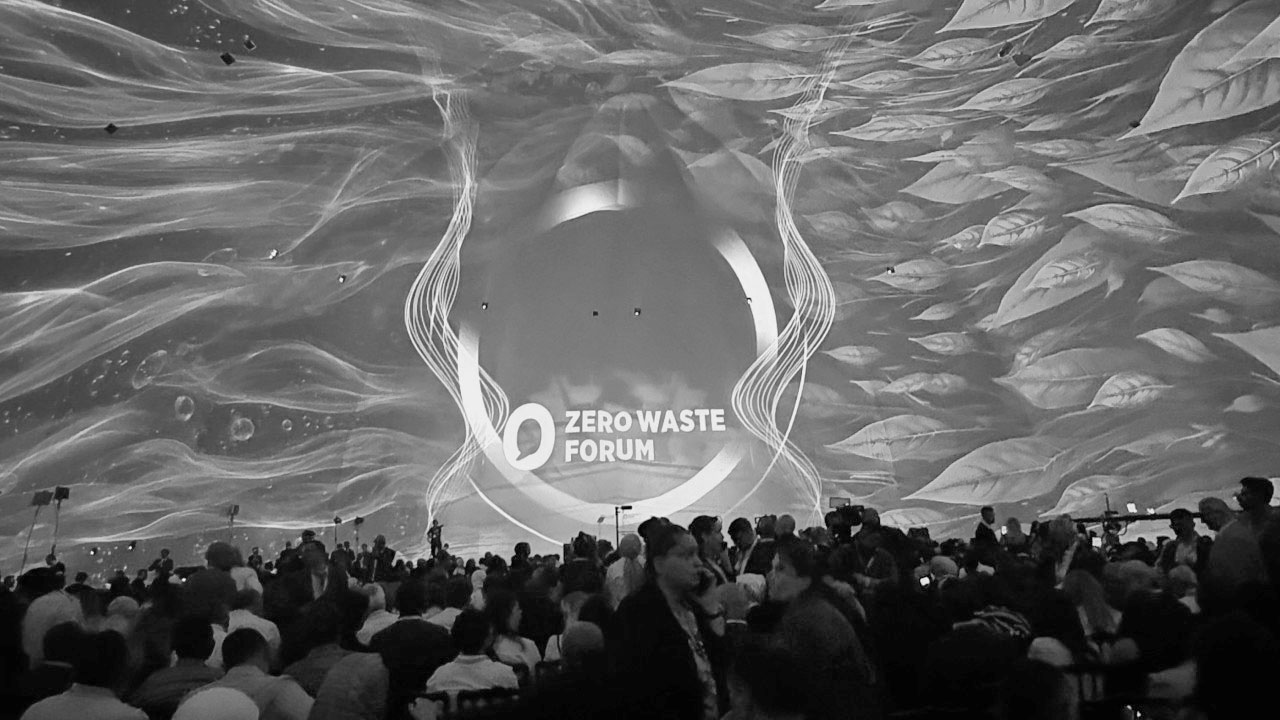
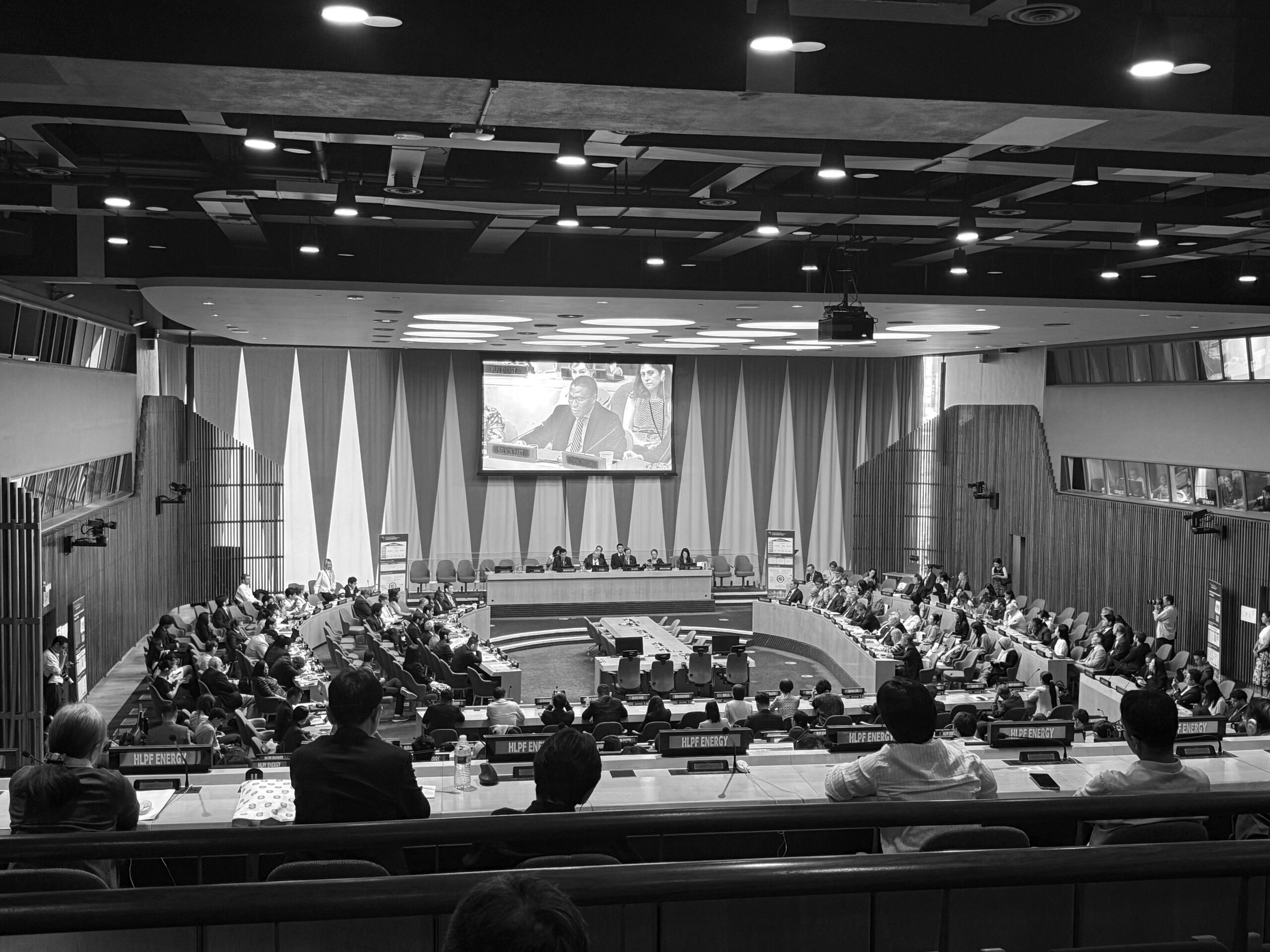
This was the central theme of the 2026 GBA–ASEAN Conference on Energy Transition and Integration, which I attended as a member of the Council of Engineers for the Energy Transition, CEET. Held on July 29 and 30 at the Sunway Resort Hotel in Kuala Lumpur, the conference brought together political leaders, investors, businesses, academics, international organisations and energy experts from the Guangdong–Hong Kong–Macao Greater Bay Area and Southeast Asia.
The gathering was jointly organised by the GBA–ASEAN Initiative and the United Nations Sustainable Development Solutions Network, SDSN, with support from TPC Group, the No. 17 Foundation, the ASEAN Chamber of Commerce in Hong Kong, the HK–ASEAN Foundation, the Asian Strategy and Leadership Institute, the Jeffrey Cheah Foundation and Sunway University.
Its purpose was explicitly practical: to strengthen regional partnerships, accelerate investment and innovation, and identify ways to translate cooperation into implementable energy projects. 2026 GBA–ASEAN Conference
The first day focused on finance, implementation, cross-sector collaboration and regional energy integration. The second moved from the conference room to the facilities of Unitrade Industries Berhad, where participants examined practical sustainability applications, including rooftop solar installations, rainwater harvesting and electric-vehicle-enabled warehouse operations.
It was a useful reminder that the transition ultimately takes place not in declarations, but in factories, logistics systems, buildings and power grids.
A Region Growing Faster Than Its Energy System Can Change
ASEAN is no longer a peripheral economic grouping. Following the admission of Timor-Leste in October 2025, it now comprises 11 member states.
According to the latest consolidated statistics published by the ASEAN Secretariat, the region’s population reached 684.1 million in 2024, representing 8.4 percent of the global population. Its combined economy was worth approximately $3.9 trillion, making ASEAN the world’s fifth-largest economy, while 56 percent of its population was of working age. ASEAN Key Figures 2025
Yet the region’s economic momentum is producing an equally dramatic increase in energy demand.
The International Energy Agency’s latest regional outlook, published in June 2026, estimates that Southeast Asia will account for nearly 20 percent of global energy-demand growth through 2035 under current policy settings, despite representing approximately 9 percent of the world’s population and 4 percent of global GDP.
Regional energy consumption is already around 40 percent higher than in 2015. Electricity demand has grown by approximately 6 percent annually over that period, twice as quickly as the IEA’s reported growth in overall energy use. Over the next decade alone, Southeast Asia’s additional electricity demand is expected to be equivalent to Japan’s entire electricity generation today. IEA Southeast Asia Energy Outlook 2026
This growth has supported industrialisation, urbanisation and improved access to modern energy. But it has also increased the region’s exposure to imported fuels, volatile international prices and concentrated supply routes.
Before the latest Middle East energy crisis, around 60 percent of Southeast Asia’s crude-oil imports and one-third of its gas imports came from the Middle East. Without structural change, the region’s fossil-fuel import bill could rise from more than $80 billion in 2024 to approximately $245 billion by 2035. Achieving announced climate commitments could reduce the latter figure by roughly half.
These numbers explain why clean energy is no longer only a climate-policy instrument. It has become a central part of economic resilience and energy security.
Progress, but Not Yet a Structural Shift
Renewables are expanding rapidly, particularly solar and wind, but fossil fuels continue to dominate the system.
Between 2015 and 2024, Southeast Asia’s electricity generation increased by around 60 percent. Coal met most of that growth, raising its share of regional electricity generation from 37 percent to approximately 47 percent. Coal demand across the wider energy system grew by around 8 percent annually, increasing its share of total energy demand from 20 percent in 2015 to 30 percent in the latest available regional data.
Renewable energy capacity stood at approximately 120 gigawatts in 2024. Under existing policies, it is projected to almost triple by 2035; if governments achieve their announced targets, it could increase fivefold. In 2025 alone, almost 19 gigawatts of renewable capacity were awarded through competitive auctions.
The benefits are already measurable. According to the IEA, investment in renewables, electrification and energy efficiency saved Southeast Asia around $30 billion in fossil-fuel import costs in 2025.
But the transition remains far from complete. Air pollution contributed to an estimated 330,000 premature deaths in 2024, while approximately 120 million people, nearly one-fifth of the region’s population, still lack access to clean cooking.
These are not peripheral social indicators. They show why energy transition must also be understood as a public-health, affordability and human-development agenda.
Two Regions With Complementary Strengths
ASEAN is an intergovernmental organisation linking 11 countries with different political systems, economic structures, geographies, energy resources and levels of development. Its strength lies in its scale, growing markets, young workforce, manufacturing base and diverse renewable-energy resources.
The Greater Bay Area, or GBA, is something different. It is a highly integrated economic and innovation region in southern China comprising Hong Kong and Macao and nine cities in Guangdong Province: Guangzhou, Shenzhen, Zhuhai, Foshan, Huizhou, Dongguan, Zhongshan, Jiangmen and Zhaoqing.
According to the latest official figures, the GBA had more than 88 million residents and GDP exceeding RMB 15 trillion in 2025. It combines Hong Kong’s international financial capabilities with Shenzhen’s technology ecosystem and Guangdong’s advanced manufacturing capacity. Greater Bay Area overview
The Shenzhen–Hong Kong–Guangzhou cluster also ranked first in the World Intellectual Property Organization’s latest available global innovation-cluster ranking, ahead of Tokyo–Yokohama and San Jose–San Francisco. WIPO Innovation Cluster Ranking 2025
The strategic logic of GBA–ASEAN cooperation is therefore compelling. ASEAN needs patient capital, lower financing costs, grid technologies, storage systems, digital infrastructure and industrial capability. The GBA offers an exceptional concentration of finance, engineering, manufacturing and technological innovation.
ASEAN, in turn, offers growing markets, renewable resources, critical minerals, industrial locations and opportunities to test solutions across very different economic and geographical conditions.
But this relationship should not become a one-way transfer of equipment. Its greater value lies in co-development: joint ventures, local manufacturing, research partnerships, workforce development, interoperable standards and financial structures adapted to the realities of ASEAN countries.
From Capital to Implementation
The conference’s first panel, moderated by Professor Jeffrey Sachs, examined private capital and implementation systems. Business and investment leaders including Chavalit Frederick Tsao, Zhang Chuanwei, Datuk Mohd Anuar Taib and Philip Hu discussed how private investment could be mobilised to move projects from ambition to execution.
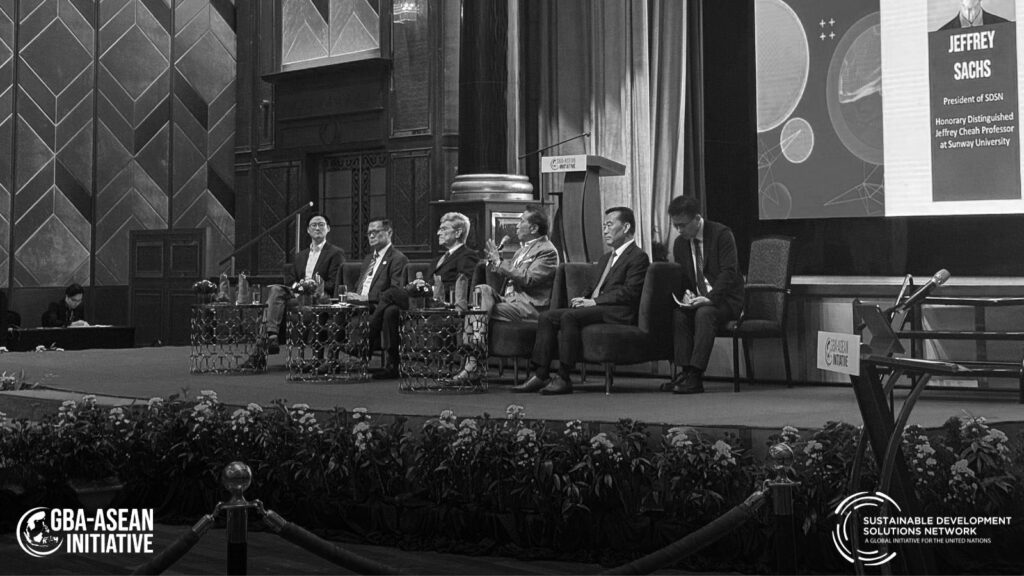
The underlying message was: capital exists, but projects must become investable.
That requires predictable regulation, credible long-term planning, well-prepared project pipelines, risk-sharing instruments and coordination among public authorities, investors, utilities and project developers.
This challenge is clearly visible in the latest numbers. Southeast Asia’s total energy investment increased by around 30 percent following the previous IEA outlook, exceeding $100 billion in 2025. However, the region still received only about 3 percent of global energy investment, far below its 9 percent share of the global population. Slightly more than half of its energy investment continued to flow into fossil fuels.
Financing conditions are another major barrier. Across much of Southeast Asia, the cost of capital can be around twice as high as in advanced economies and China. This weakens the risk-adjusted returns of renewable energy, grid, storage and energy-efficiency investments, even where the technologies themselves are competitive.
A second panel, moderated by Professor Emi Gui, also a member of CEET, turned to cross-sector and multilateral cooperation. Contributions from representatives of the United Nations, the ASEAN Chamber of Commerce in Hong Kong, the Global Energy Interconnection Development and Cooperation Organization and Asian Strategy & Leadership Institute emphasised that the transition cannot be delivered by one sector or institution alone.
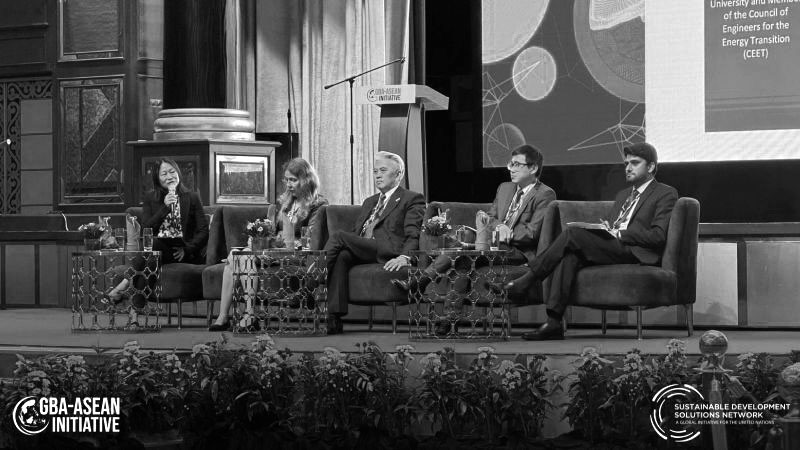
Regional institutions can help harmonise rules. Development institutions can reduce investment risks. Universities can provide research, data and skills. Engineers and businesses can convert policy objectives into operating assets. Each is necessary, but none is sufficient on its own.
The Grid as Regional Infrastructure
The afternoon discussion on an ASEAN-led pathway towards an integrated regional energy system placed the ASEAN Power Grid at the centre of the conversation.
Regional interconnection allows countries to share electricity across borders, balance different demand profiles and connect renewable-rich areas with major consumption centres. It can also reduce the need for every country to build and balance its power system entirely in isolation.
The Laos–Thailand–Malaysia–Singapore Power Integration Project has already demonstrated that multilateral electricity trade is possible. The next challenge is to move from individual cross-border projects towards a more coordinated regional market supported by modern grids, storage, compatible regulations and bankable transmission investments.
According to the IEA’s 2026 outlook, Southeast Asia’s transmission and distribution networks will need to more than double in length by 2050. Investment in grids and storage must rise from around $13 billion today to $50 billion by 2050 if announced commitments are to be met. Planned cross-border interconnections under the ASEAN Power Grid alone are expected to require approximately $27 billion by 2040.
ASEAN’s new regional energy blueprint reflects this urgency. The ASEAN Plan of Action for Energy Cooperation 2026–2030 aims for renewables to reach 30 percent of total primary energy supply and 45 percent of installed power capacity by 2030. It also targets a 40 percent reduction in energy intensity from 2005 levels.
Its wider ambition is to build a secure, resilient, interconnected and low-carbon regional energy system. ASEAN Plan of Action for Energy Cooperation 2026–2030
Energy Transition as Security and Justice
Malaysia’s Prime Minister, Anwar Ibrahim, placed the conference within the wider context of geopolitical instability, disrupted supply chains and volatile energy prices.
His argument was that clean energy is no longer only an environmental preference. It is also a matter of national security and economic competitiveness. Solar farms, battery storage, grid modernisation and workforce development require sustained and structured capital that governments cannot provide alone. Public institutions, private investors and project developers must work together.
He also emphasised Malaysia’s role in sustainable finance, including its early leadership in green sukuk, and the potential to combine Malaysian financial experience with the GBA’s technological and industrial capacity.
In his conference address, the Prime Minister referred to Malaysia’s pathway towards 40 percent renewable energy capacity by 2035 and 70 percent by 2050, together with its commitment to avoid new coal plants and gradually retire the existing fleet. More recent Malaysian energy planning has also set out the objective of reducing coal-fired capacity by 50 percent by 2035 and retiring all coal-fired power plants by 2044.
But the most important part of the Prime Minister’s message concerned people. A transition that succeeds technologically while deepening social inequality cannot be considered successful. Prime Minister Anwar Ibrahim’s keynote address
That distinction matters. Energy integration must ultimately produce affordable power, cleaner air, decent employment and more resilient communities. Otherwise, regional cooperation will be measured in megawatts while missing its human purpose.
Beyond 2030
The conference concluded its first day with the in-person launch of the Sustainable Development Report 2026, followed by perspectives on ASEAN priorities, the blue economy, agri-food systems, sustainability metrics and education.
The latest report carries an uncomfortable warning: only 16 percent of the Sustainable Development Goal targets are projected to be achieved by 2030. Yet it also finds that East and South Asia have made greater SDG progress since 2015 than any other world region.
Its prescription is increasingly relevant to the energy transition: long-term investment plans, stronger regional cooperation, better governance, science-based implementation and financing mechanisms capable of carrying projects from public ambition to operating reality. Sustainable Development Report 2026
For me, this was the conference’s most important conclusion. The transition cannot be reduced to a catalogue of technologies. It is a process of institution-building, engineering, finance and social negotiation.
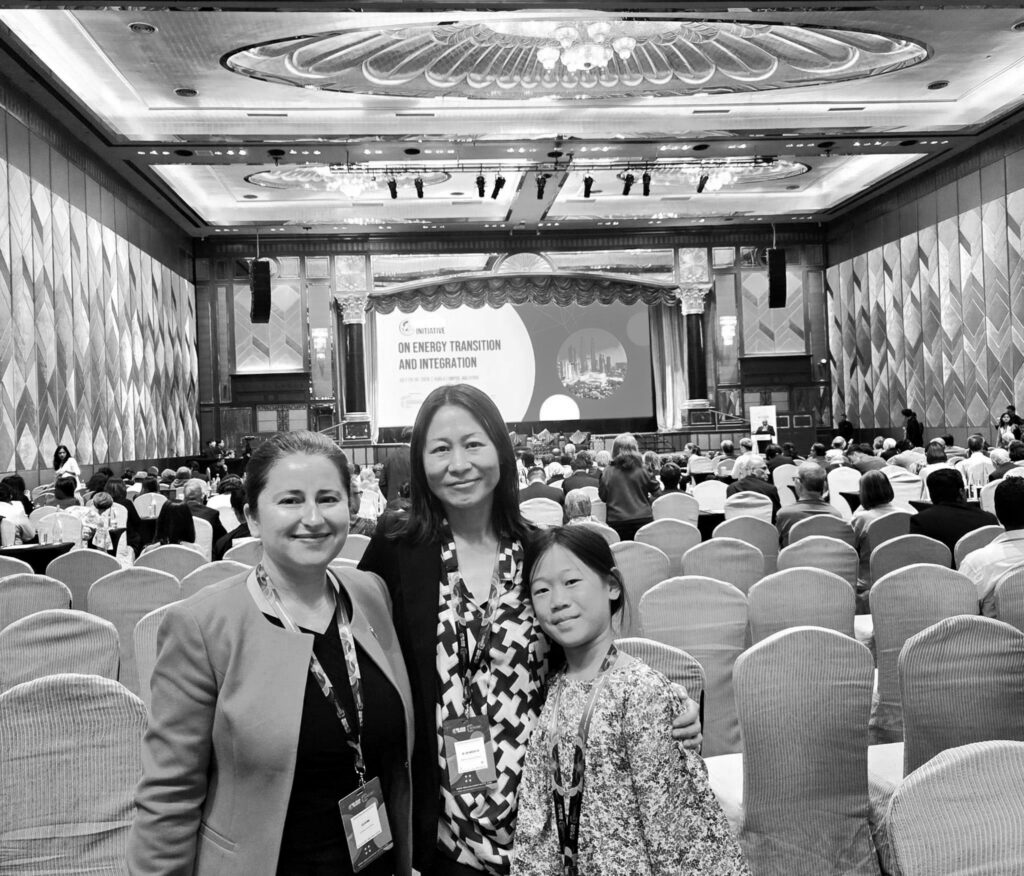
The GBA–ASEAN partnership brings together two of the most dynamic parts of Asia. One offers concentrated technological, manufacturing and financial capability. The other represents a vast and diverse region where the next chapter of global energy demand, urbanisation and industrial development is already being written.
Their cooperation will matter only if it produces projects that can be financed, grids that can be connected, technologies that can be localised and benefits that can be widely shared.
The real measure of energy integration will not be the number of agreements signed or panels convened. It will be whether the resulting system is cleaner, more secure and more affordable, and whether it expands the well-being of the hundreds of millions of people whose future depends upon it.