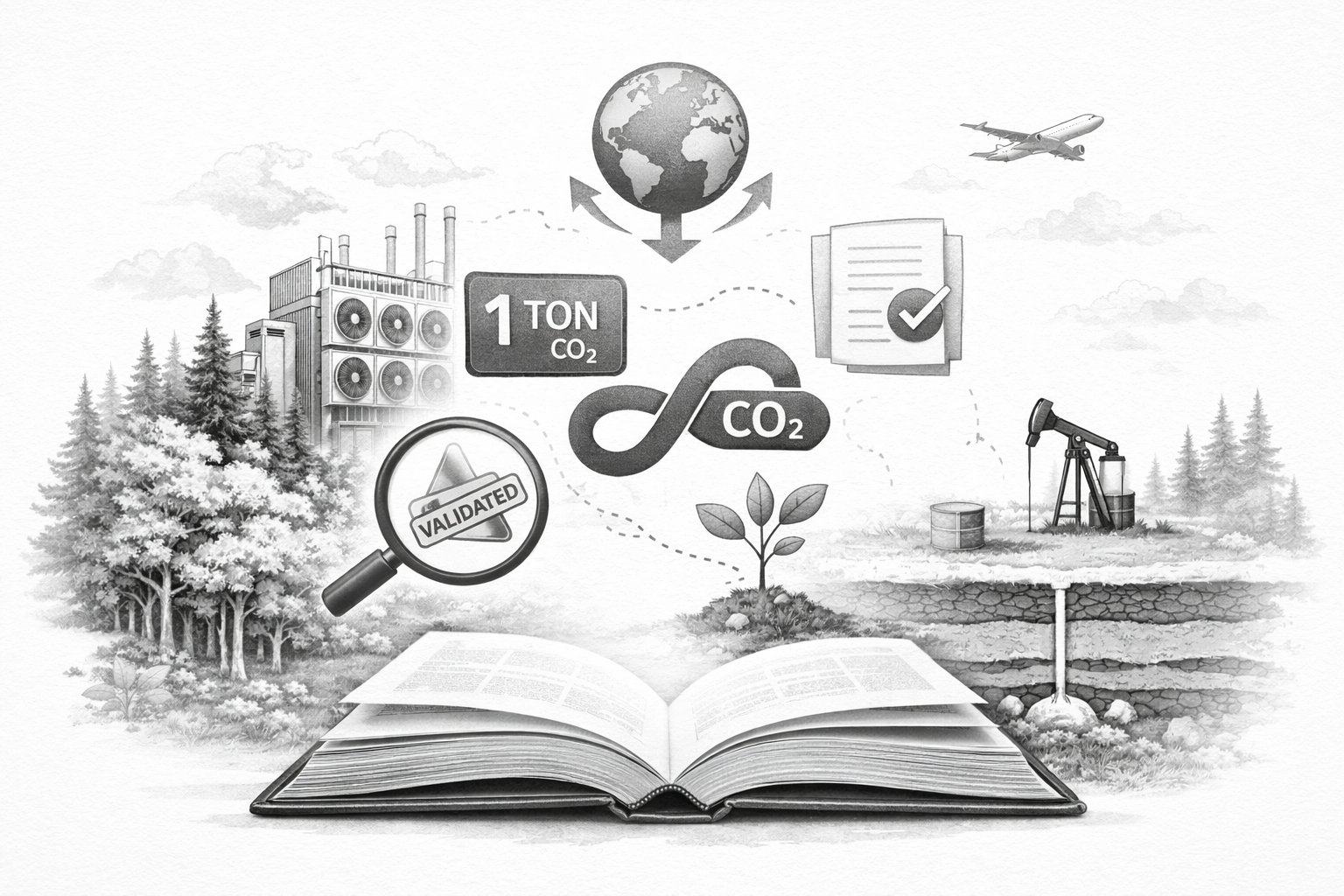
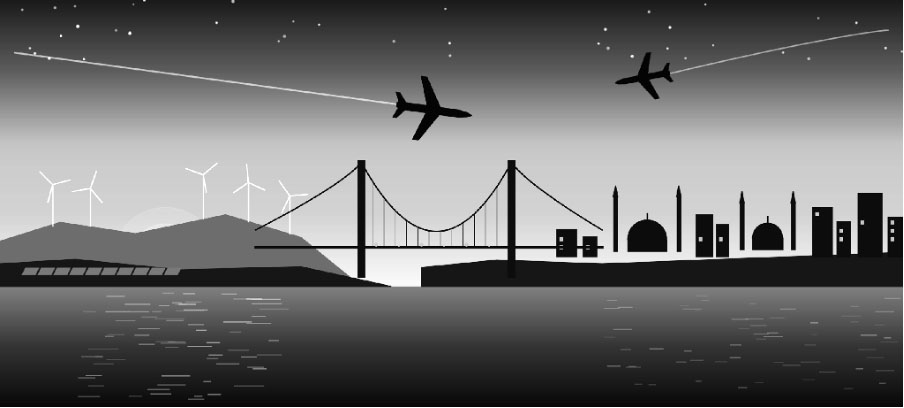

Carbon prices are arriving. Handled well, they could seed an industry, not just a bill.
Carbon emissions are about to stop being free for Türkiye’s economy. Two prices are arriving at once. At home, the new Turkish Emissions Trading System is starting to put a price on emissions from the country’s largest industrial plants: power generation, steel, cement, aluminium and fertilizer. At the border, the European Union’s Carbon Border Adjustment Mechanism is starting to price the carbon embedded in Türkiye’s key industrial exports to Europe. While Europe buys close to half of Türkiye’s total exports, CBAM directly targets its most carbon-intensive sectors first, including steel, aluminium, and cement. This is no distant debate. It is a bill, and it is coming.
The reflex will be to treat that bill as a burden. That would be a mistake. Türkiye is one of the few economies that can turn the same pressure into an industry that gets paid to remove carbon, not only to avoid it.
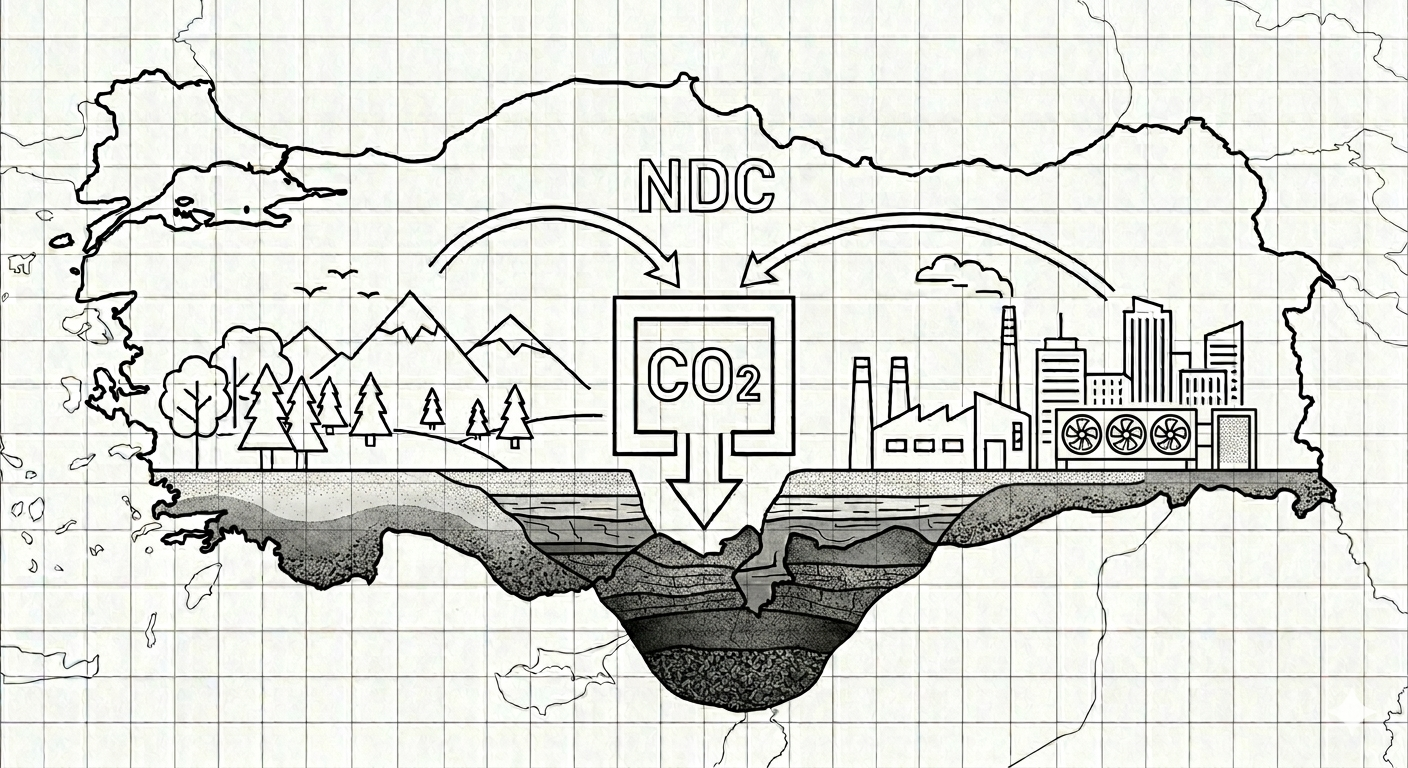
Türkiye industrialised late. Its share of the world’s cumulative emissions is under 1%, and its emissions per person have only recently caught up with Europe’s. Yet beneath its feet, and across its farmland, lies the capacity to store and remove far more carbon than it produces. That gap is the opportunity: a small historic footprint, a large removal potential.
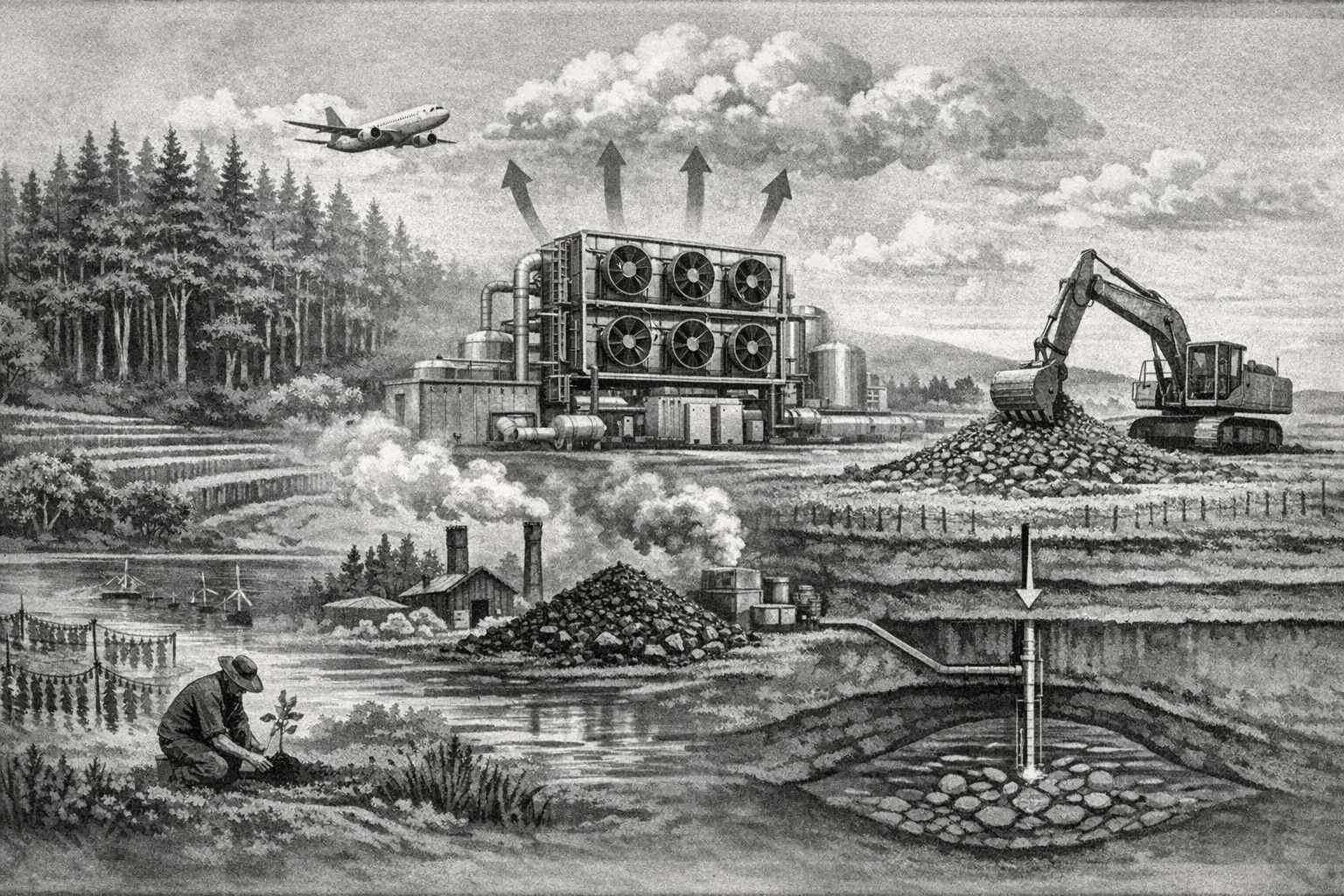
Geology does much of the work. Türkiye’s olivine-rich rock can turn CO₂ permanently into stone, whether injected underground or reacted with industrial waste such as steel slag. Spread as crushed rock on farmland, the same mineral would remove carbon while improving soils, and the country farms 24 million hectares. Its crop and forestry residues can feed biochar and bioenergy. Its expanding clean power could one day run direct air capture. For durable storage, early estimates give 210 million tonnes in depleted oil fields, far more in the deep saline formations of Thrace and Anatolia, and unusually favourable conditions in the Black Sea.
Now the market. The carbon price that stings is also the signal that pays. A well-designed Turkish ETS can reward verified removals, not just penalise emissions. That turns a compliance cost into demand for a home-grown service. Beyond the border, the channels are opening. Under the Paris Agreement’s Article 6, countries trade removals directly. And from 2036 the EU plans to meet up to 5% of its 2040 climate target with high-quality international durable CDR credits. That is a removal-export market forming on Türkiye’s doorstep.
Here Europe offers a lesson worth learning the easy way. The EU built its carbon market first and added removals slowly, retrofitting rules onto a system designed for a different job. Türkiye is starting fresh. It can design removals into its market from the outset: the accounting, the certification, the verification. That would leapfrog a decade of European catch-up. Doing it right the first time is cheaper than doing it twice.
The prize is more than clean air. Heavy industry is a pillar of Türkiye’s economy, making the country a major global producer of cement, steel, and chemicals. Because these hard-to-abate sectors cannot fully eliminate their emissions through clean power alone due to process emissions, durable carbon dioxide removal (CDR) will be essential to bridge the final gap to net zero. Moreover, Türkiye’s industrial capacity itself can fuel this solution using industrial byproducts like steel slag for permanent mineral carbonation. Building the technology, monitoring systems, and storage infrastructure for CDR at home creates a brand-new clean-tech sector. It carries skilled jobs, homegrown innovation, and a foothold in a market forming worldwide. Türkiye could export these carbon removal technologies and expertise, rather than import them.
Geography seals the case. Türkiye sits between Europe, the Gulf and Central Asia. Its neighbours share the problem and have less room to solve it: Europe needs storage beyond its borders, the Gulf is building capture hubs, and the Caucasus and Central Asia have carbon-heavy industry but lack the infrastructure, regulatory frameworks, and transport networks to store their CO₂. Whoever builds the pipelines, ports and storage that carbon needs will shape how it moves across the region. As host of COP31, Türkiye has the platform to convene that conversation and help set the standards a trusted market depends on.
None of this is automatic. The next moves fall to the government, above all to the Carbon Market Board, chaired by the Minister of Environment, Urbanisation and Climate Change, which now sets the rules of the carbon market. It should map the country’s storage and removal potential, de-risk the first projects with finance and tax credits, and recognise removals so investors have demand to count on. Türkiye has long treated waste as a resource. Its Zero Waste principle is national policy. Carbon is simply the largest waste stream of all.
The loop is there to be closed. The first carbon bills fall due from 2027. Türkiye’s economy will pay to emit carbon; with the right moves, it can be paid to remove it instead.
This piece draws on the authors’ policy brief, “Closing the Loop”. The authors’ views are their own.
Written by: Atilla Yücel, Pınar Öncel, Göker Avcı