



Why climate strategies need orchestration, not just ambition
Many companies now have climate commitments, ESG roadmaps and regulatory workstreams. Fewer have the execution architecture to deliver them.
Targets may have been approved. Emissions may be measured. Sustainability reports may be published. Regulatory developments may be monitored by legal, compliance or ESG teams. Individual decarbonisation, energy efficiency, renewable energy, supplier engagement and data projects may also be under way.
Yet these activities frequently remain fragmented.
They operate under different functions, budgets, governance structures and reporting cycles. Dependencies are not always visible. Investment decisions may not reflect regulatory timelines. Operational projects may not be connected to corporate climate targets. Sustainability teams may be accountable for outcomes that depend on decisions owned by finance, operations, procurement or technology.
This is the climate execution gap: the distance between the transition a company describes and the transition it is organisationally equipped to deliver.
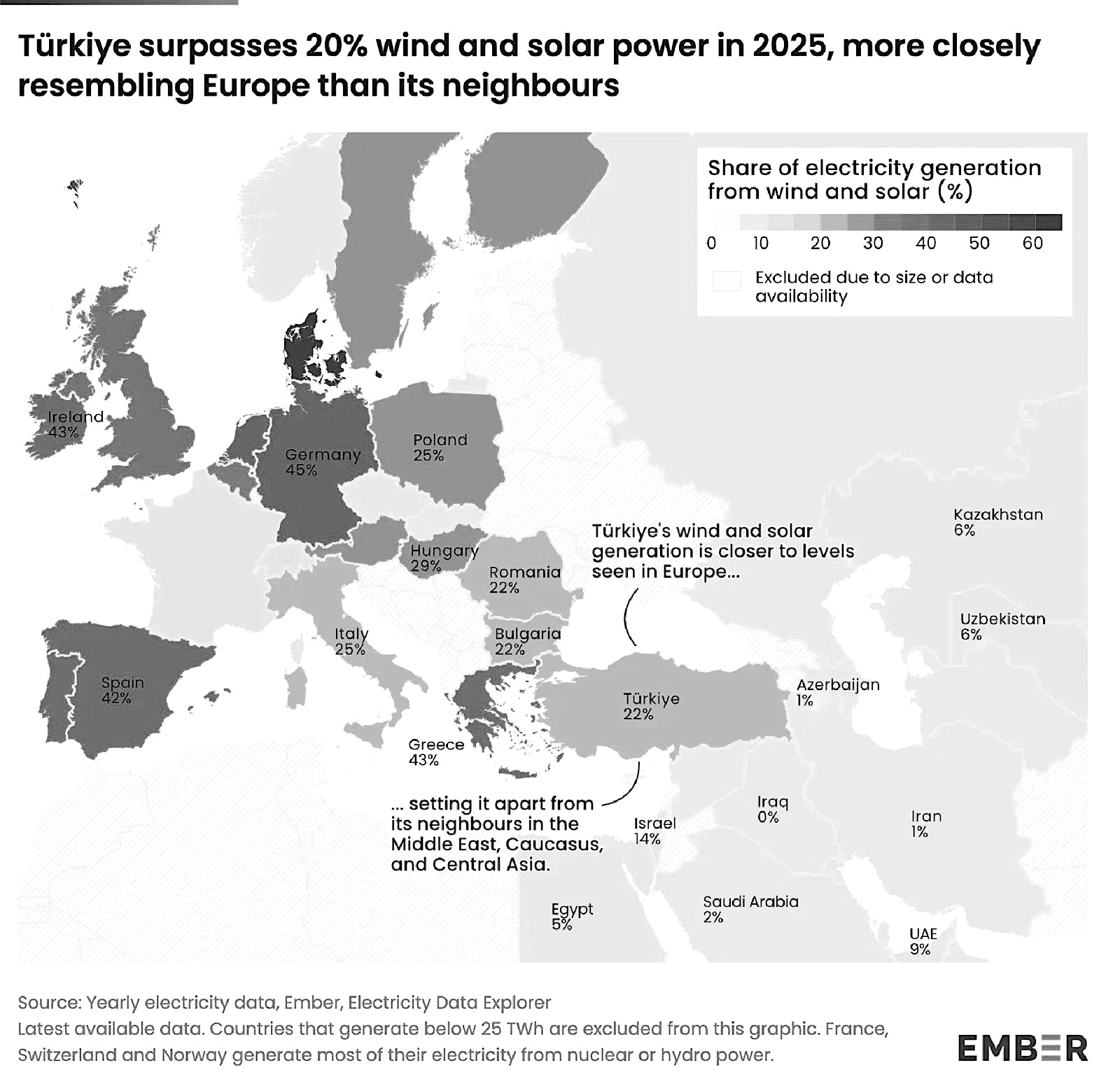
As companies prepare for COP31 in Antalya, the climate discussion is increasingly moving from ambition towards implementation. The official road to COP31 is already framed around practical ways to support climate action on the ground and translate the Paris Agreement policy cycle into delivery. With COP31 taking place in Antalya, Türkiye, attention is turning to the structures required to convert commitments into coordinated programs, investment decisions and measurable outcomes.
This same implementation challenge exists within companies. Climate strategies may define the destination, but delivering them requires an execution architecture capable of coordinating decisions across the enterprise.
For businesses, this implementation agenda raises a fundamental management question:
Who is responsible for turning climate strategy into a coordinated portfolio of funded projects, accountable owners, measurable progress and executive decisions?
In many companies, there is still no clear answer.
That is where the Transition PMO becomes relevant.
The Transition PMO is not another layer of bureaucracy. It is the operating system that turns climate ambition into funded projects, accountable owners, measurable progress and board-level decisions.
Climate transition is not an ESG project
Climate transition is often coordinated by sustainability or ESG teams, but it cannot be delivered by those functions alone.
It affects how a company allocates capital, operates its facilities, selects suppliers, designs products, manages data, enters markets, structures contracts and evaluates long-term risk. It can also reshape the economics of assets, the resilience of supply chains and the conditions under which companies access customers and finance.
Strategy must connect the transition to growth, competitiveness and market positioning.
Finance must assess capital expenditure, operating costs, funding requirements, asset values and financial exposure.
Operations must deliver energy efficiency, electrification, process transformation and emissions-reduction projects.
Procurement must manage supplier data, traceability, responsible sourcing and value-chain emissions.
Legal and compliance teams must translate regulatory developments into obligations, contracts, controls and implementation deadlines.
Sustainability functions must coordinate targets, methodologies, reporting frameworks, stakeholder expectations and data integrity.
Technology and data teams must build the systems required to collect, integrate, validate and report transition-related information.
Human resources may need to address new skills, responsibilities, incentives and organisational capabilities.
No single function can deliver this transformation independently. But without an integrating mechanism, each function may manage only the part it can see.
If everyone is affected but no one owns the whole transition, execution becomes fragmented.
This fragmentation has practical consequences.
Two departments may launch overlapping data projects. A regulatory deadline may be treated as a reporting matter even though it requires operational changes years in advance. A decarbonisation project may remain outside the investment plan. A supplier programme may be designed without the systems needed to verify supplier information. A board-approved target may have no corresponding budget, business owner or implementation schedule.
The problem is therefore not necessarily a lack of activity.
It is a lack of orchestration.
What is a Transition PMO?
A Transition PMO is a cross-functional execution mechanism that connects climate strategy, regulatory obligations, investment priorities and operational delivery.
It does not replace sustainability, finance, strategy, operations or compliance teams. Nor does it take ownership of every transition initiative.
Its purpose is to establish a common execution architecture across them.
A well-designed Transition PMO can provide seven essential capabilities.
1. Integrated roadmap ownership
Most companies do not have only one climate roadmap.
They may have separate programmes for net zero, energy management, renewable electricity, climate risk, sustainability reporting, supply-chain due diligence, product compliance, digital traceability, circularity and green financing.
The Transition PMO brings these initiatives into a single portfolio view.
This makes it possible to identify dependencies, conflicting timelines, duplicated efforts and capability gaps. It also helps management distinguish between isolated compliance tasks and initiatives that enable several strategic or regulatory outcomes at once.
2. Transition portfolio management
Climate execution should be managed as a portfolio rather than as a collection of unrelated projects.
The portfolio may include factory-efficiency investments, renewable energy procurement, electrification, supplier engagement, product carbon footprint systems, emissions-data platforms, regulatory readiness projects and workforce transformation.
Managing these initiatives together enables the company to compare their strategic relevance, regulatory urgency, emissions impact, investment requirement and value-creation potential.
It also creates a basis for prioritisation when capital, management attention or internal resources are constrained.
3. Clear business ownership
The sustainability function may coordinate the overall agenda, but it should not become the default owner of every climate-related outcome.
Energy efficiency should have an operational owner. Supplier transformation should have a procurement owner. Climate-related capital allocation should have finance and business ownership. Data infrastructure should have technology and data owners. Regulatory implementation should be shared by legal, compliance and the functions whose processes must change.
The role of a Transition PMO is not to own the climate agenda alone, but to make sure every business owner owns their part of it.
This distinction is critical. Coordination without distributed accountability creates dependency. Distributed accountability without coordination creates fragmentation.
The Transition PMO is intended to solve both problems.
4. Decision gates
Not every issue should be escalated to the same governance body.
Some matters require operational resolution. Others require capital approval, a change in commercial policy, acceptance of regulatory risk or a board-level decision about strategic direction.
A Transition PMO establishes clear decision gates.
It defines which projects can proceed within existing budgets, which must go to an investment committee, which risks require executive attention and which strategic trade-offs belong on the board agenda.
This prevents transition programmes from becoming endless reporting exercises in which progress is discussed but the necessary decisions are repeatedly deferred.
5. Milestone and dependency tracking
Long-term climate targets are necessary, but they are not sufficient for execution.
A 2030 emissions target does not show whether a company has selected its data platform, completed energy audits, approved investment cases, engaged critical suppliers or updated procurement requirements.
Transition execution therefore requires milestones as well as key performance indicators.
Milestones can include:
- approval of a renewable energy sourcing model;
- completion of product carbon footprint calculations;
- supplier coverage and data-quality thresholds;
- investment approval for efficiency or electrification projects;
- integration of climate data into financial planning;
- implementation of regulatory controls;
- deployment of traceability or reporting systems;
- and completion of assurance-readiness activities.
KPIs tell management whether the desired outcome is being achieved. Milestones show whether the organisation is building the capabilities required to achieve it.
Both are needed.
6. Integrated risk and data governance
Climate-related projects create interconnected risks.
A delay in supplier data collection may create a reporting risk, a compliance risk and a customer-access risk. A postponed energy investment may affect emissions targets, operating costs and access to transition finance. An unverified data source may create assurance, reputational and management decision-making risks.
A Transition PMO makes these connections visible.
It can also clarify who produces, validates, approves and uses climate-related data. This becomes increasingly important as transition information moves beyond voluntary sustainability communication and into financial reporting, regulatory disclosure, customer requirements and investment decisions.
IFRS S2 requires companies applying the standard to provide information about climate-related risks and opportunities, including relevant information about climate-related transition plans. In 2025, the IFRS Foundation also published additional guidance to support disclosures about an entity’s climate-related transition, reflecting the growing need for decision-useful and connected transition information.
The implication is clear: transition plans cannot remain disconnected narratives. Companies need governance systems capable of supporting the information they disclose.
7. Decision-oriented executive reporting
Many executive and board sustainability reports remain dominated by scores, emissions charts, ratings and descriptions of completed activities.
These may be useful, but they do not necessarily support decisions.
A Transition PMO should instead bring management the matters that require intervention:
- Which regulatory deadline is at risk?
- Which transition project lacks funding?
- Which business unit has not assigned an accountable owner?
- Which supplier category creates the greatest data or emissions exposure?
- Which investment is essential for market access?
- Which target is no longer credible under the current capital plan?
- Which trade-off requires executive or board approval?
The purpose of reporting is not simply to demonstrate that activity is taking place.
It is to improve the quality and speed of transition decisions.
How is it different from a conventional PMO?
The word “PMO” can create the impression of a highly administrative function focused on templates, status meetings and delivery calendars.
That is not the model being proposed.
A conventional PMO generally monitors individual projects against scope, schedule and budget. A Transition PMO connects those delivery disciplines to wider questions of strategy, regulatory readiness, capital allocation, climate performance and enterprise value.
A conventional PMO may ask whether a project will be completed on time.
A Transition PMO must also ask:
- Does the project address a material climate or regulatory exposure?
- Is it aligned with the company’s transition strategy?
- Does it have an accountable business owner?
- Is it reflected in the capital plan?
- Does it depend on another data, operational or supplier initiative?
- Will it produce evidence that can support disclosure or assurance?
- Does it protect market access, resilience or long-term value?
Climate transition projects are not only about delivery. They are about strategic alignment, regulatory readiness and value protection.
This means that the Transition PMO must operate closer to corporate strategy, finance and executive governance than a traditional administrative PMO.
It should not become an additional approval layer. Its value comes from simplifying complexity, clarifying ownership and accelerating decisions.
Why does this matter before COP31?
COP31 will not eliminate the need for corporate climate commitments. But the credibility of those commitments will increasingly depend on evidence of implementation.
Investors, lenders, customers, regulators and business partners want to understand not only what a company intends to achieve, but how it intends to achieve it.
Credible corporate transition planning is generally understood as cross-cutting and time-bound, connecting targets to actions, progress and accountability mechanisms. The OECD has similarly emphasised the importance of climate ambition, climate action and accountability in transition planning, while describing credible plans as important foundations for mobilising transition finance.
This creates a higher standard for corporate readiness.
Companies need to demonstrate that:
- targets are supported by implementation pathways;
- regulatory obligations are translated into projects and controls;
- investment requirements are visible in financial planning;
- data is reliable and governed;
- supply-chain responsibilities are assigned;
- management reviews progress regularly;
- and boards are engaged in the decisions that shape transition outcomes.
Before COP31, companies do not only need stronger climate narratives.
They need stronger execution systems.
This is particularly relevant for companies operating in Türkiye.
As the host of COP31, Türkiye will be at the centre of international discussions about implementation, investment, industrial transition and climate action. For Turkish companies, this creates an opportunity to move beyond presenting climate commitments and demonstrate how transition priorities are being embedded into governance, operational planning and investment decisions.
The most credible corporate contribution to COP31 may therefore not be a new target.
It may be a clearer explanation of how an existing target is being delivered.
Where should companies start?
A Transition PMO does not need to begin as a large permanent department.
It can start as a focused governance mechanism built around five steps.
Create a single transition portfolio
Map all material climate, energy, ESG, regulatory, data and supply-chain initiatives in one place.
For each initiative, identify its objective, regulatory relevance, emissions impact, budget, timing, dependencies, business owner and governance route.
The first benefit of this exercise is often not control, but visibility.
Assign accountable business owners
Every initiative should have an owner in the function responsible for delivering the required business change.
The sustainability team may coordinate and challenge, but operational accountability must sit where budgets, systems and processes are controlled.
Establish a decision cadence
Create a regular rhythm for execution and escalation.
This could include monthly portfolio reviews, quarterly investment and risk assessments, and scheduled board discussions on strategic priorities, material risks and capital requirements.
The cadence should reflect the speed of implementation, not merely the annual sustainability reporting calendar.
Separate KPIs from milestones
Measure both outcomes and delivery readiness.
Emissions reductions, renewable energy shares and supplier coverage rates are important KPIs. But system implementation, investment approvals, data validation, regulatory readiness and capability development must also be tracked as milestones.
Bring decisions, not only reports, to the board
Boards do not need to manage individual transition projects.
They do need to make informed decisions about capital allocation, strategic exposure, risk appetite, business-model resilience and market positioning.
Transition reporting should therefore identify where board direction is required and what the consequences of delay may be.
Questions for boards and executive teams
As companies assess their climate execution readiness, leaders should ask:
Who owns climate execution beyond the sustainability function?
Do we have a single portfolio view of all transition-related projects?
Are climate targets connected to investment decisions, budgets and accountable business owners?
Which regulatory deadlines require project governance today, rather than reporting later?
Can we identify the dependencies between our operational, supplier, data and compliance programmes?
Does our transition information support management decisions as well as external disclosure?
Is the board receiving information, or is it being asked to make the right transition decisions?
Climate execution is becoming a management discipline.
Companies now need a transition operating system, not only a climate strategy.
The companies that move fastest in the transition will not be those with the longest climate reports, but those with the strongest execution rhythm.