
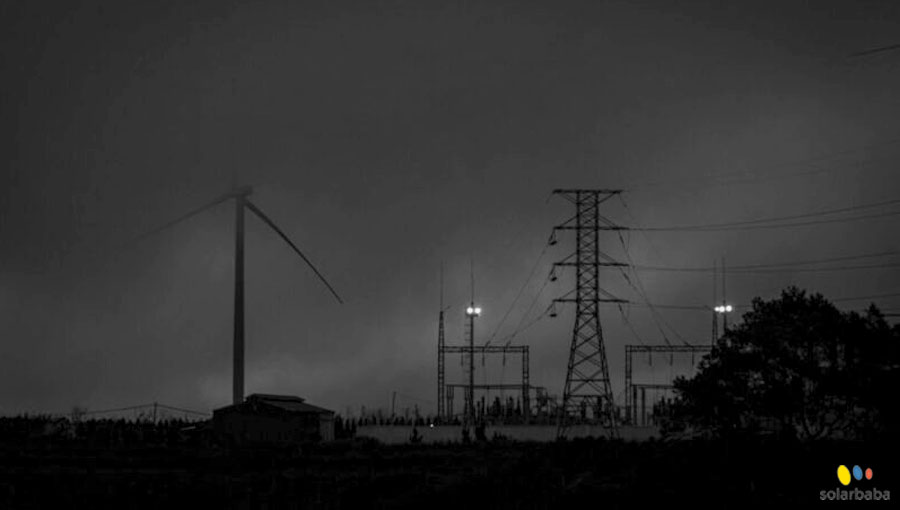
One year after the massive nationwide blackout that struck Spain in 2025, the country’s energy storage capacity has surged by a record 589%. The outage exposed structural weaknesses within Spain’s renewable energy-dominated power system and prompted a complete reassessment of energy security strategies, accelerating investments in battery storage technologies. Although installed battery capacity has now reached 193 MW, Spain still trails several European counterparts in large-scale energy storage deployment. Meanwhile, increased reliance on natural gas to maintain grid stability has led to an unexpected rise in CO₂ emissions.
The blackout on April 28, 2025, which plunged the entire country into darkness, highlighted the challenges associated with Spain’s energy transition. Expert reports showed that the crisis began with the loss of 15 GW of generation capacity within seconds, demonstrating the critical importance of frequency and voltage control in a grid dominated by renewable energy sources. As non-synchronous resources such as solar and wind have expanded, providing ancillary services like inertia and frequency regulation has become increasingly difficult. At the time of the outage, Spain had only 28 MW of battery storage capacity, which proved insufficient to absorb the shock and stabilize the system.
Following the crisis, Spain witnessed rapid growth in Battery Energy Storage Systems (BESS). Installed battery capacity increased from 28 MW in April 2025 to 193 MW within a year. In addition, energy storage demand in the self-consumption segment rose by 119%, reaching 339 MWh. Residential and commercial battery adoption gained remarkable momentum. Despite this progress, Spain remains significantly behind countries such as Germany, Italy, and the United Kingdom, which already operate storage capacities on the gigawatt scale.
To prevent similar disruptions in the future, the government and regulatory authorities introduced major operational reforms. The Ministry for Ecological Transition (MITECO) launched a €13.6 billion investment plan aimed at increasing the share of renewables in electricity generation to 81% by 2030. New regulations require renewable power plants to incorporate grid-forming capabilities, while measures such as five-year validity limits for grid access rights were introduced to prevent speculative practices.
Despite the acceleration of the energy transition, Spain’s dependence on fossil fuels remains above 70%. Grid constraints forced part of the renewable electricity generated in 2025 to be curtailed, resulting in wasted clean energy. Consequently, natural gas plants had to operate more frequently to ensure grid stability, causing CO₂ emissions from the power sector to increase by 2.44 million tons within a year. Weak interconnections with neighboring countries continue to leave Spain functioning as an “energy island,” although planned submarine links with France and Ireland aim to address this issue.
On the legal front, the National Commission on Markets and Competition (CNMC) has expanded its investigation into the blackout. Proceedings have been launched against grid operator Red Eléctrica and major energy companies including Endesa, Iberdrola, and Naturgy. Expected to conclude within 18 months, these investigations will examine the responsibilities and operational shortcomings of key players in maintaining system security. While Spain seeks accountability for past failures, it is simultaneously investing in storage technologies and infrastructure to build a more resilient energy future.
Source: Solarbaba – In Turkish