

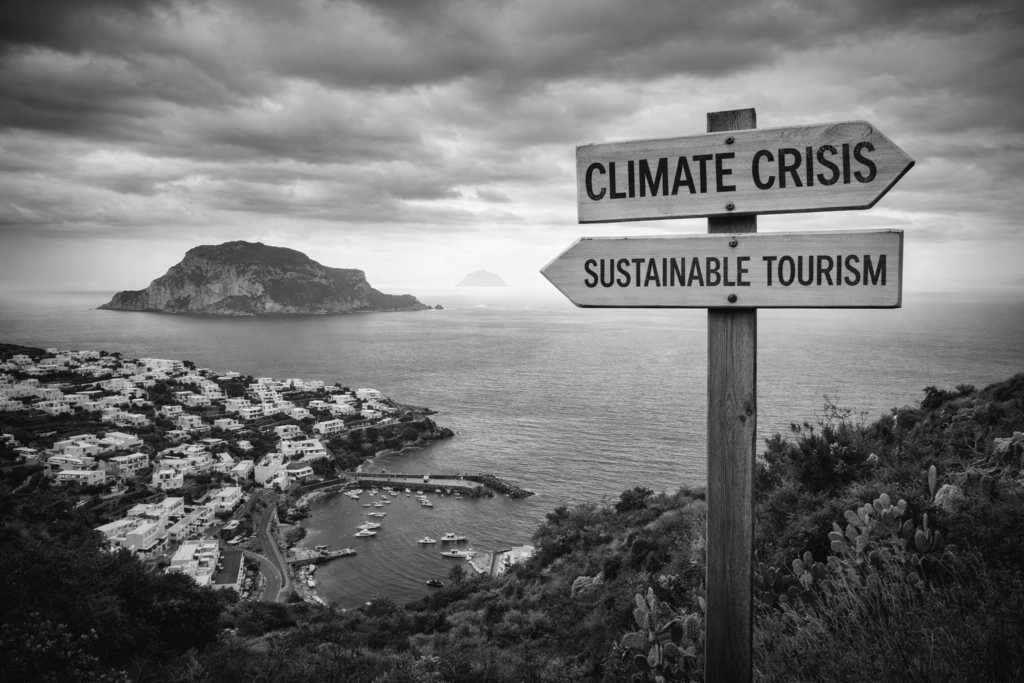
For years, Europe’s small Mediterranean islands were treated as postcard economies: beautiful, seasonal, fragile, and too often peripheral to serious policymaking. A new white paper argues the opposite. These islands are not the edge of the climate crisis. They are its proving ground.
The report, White Paper on Sustainable Tourism – Small Islands as Hubs for Climate Resilience and Sustainable Tourism in the Mediterranean, developed under the Interreg Euro-MED Sustainable Tourism Mission, makes a pointed case that islands should be understood as “living laboratories” for a more resilient tourism model. Their constraints are stark: limited freshwater, dependence on imported fuel, overstretched waste systems, seasonal population surges, coastal erosion, biodiversity loss, and growing exposure to heatwaves and sea-level rise. But precisely because they are small, exposed, and manageable in scale, islands can test integrated solutions faster than many mainland destinations can.
The paper’s central argument is simple: tourism on islands can no longer be managed as a volume game. In places where beaches shrink, rainfall declines, and infrastructure buckles under seasonal pressure, resilience has become an economic strategy, not just an environmental one. The report notes that Mediterranean islands face a convergence of ecological and socio-economic risks, while also carrying some of the region’s highest tourism intensities. In that environment, “business as usual” is not a model. It is a liability.
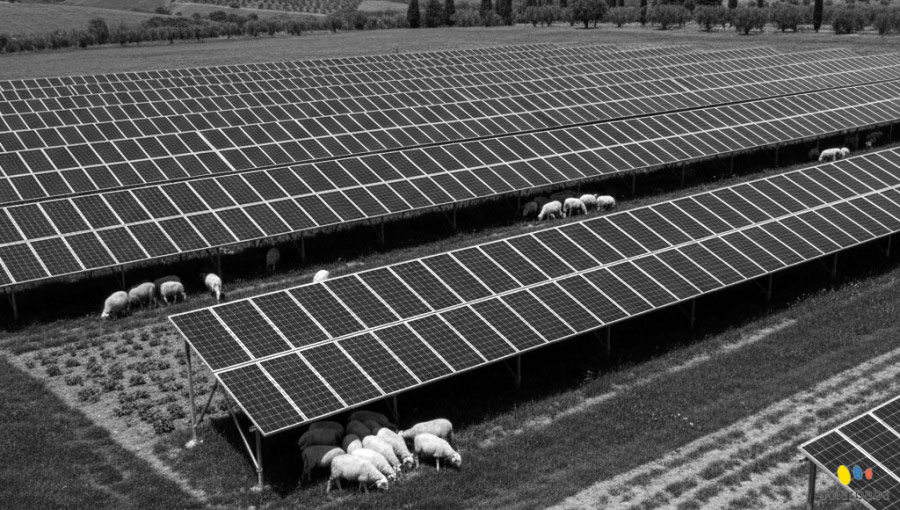
What emerges instead is what the paper calls an “Island Model” — a framework that links renewable energy, circular economy practices, water security, biodiversity protection, and community-centered tourism planning. The ambition is not only to reduce environmental damage, but to redesign island economies so that local communities retain more value, public systems become more robust, and visitor pressure no longer overwhelms the very landscapes tourism depends on.
The document is especially strong when it moves from diagnosis to example. Across the Mediterranean, projects are already experimenting with practical responses. In Malta and other water-stressed islands, the AQUAMAN project is advancing non-conventional water sources such as rainwater, stormwater, and treated wastewater, while pairing technical solutions with policy reform and local training. In Greece and Italy, nature-based tourism planning is being tested through regional climate action strategies. Elsewhere, islands are piloting low-plastic zones, smart waste systems, eco-nautical routes, and data-driven destination management tools that aim to reduce the ecological costs of mass tourism.
Some of the report’s most compelling cases come from islands that are trying to move beyond symbolic sustainability. Gozo is presented as a model of data-driven transition, using indexed assessments across energy, water, waste, mobility, and environment to guide policy and investment decisions. Rhodes is highlighted for its effort to become a holistic sustainable destination, with targets tied to climate neutrality, plastics reduction, accessibility, and local production. Pantelleria offers a more community-rooted version of the same story: traditional water systems, modern recycling, plastic-free campaigns, and renewable-energy planning working in tandem.
The underlying message is that climate adaptation cannot sit in a silo. It has to be woven into tourism licensing, infrastructure design, land-use planning, transport, and local economic development. The report repeatedly stresses the need for governance that is cross-sectoral rather than fragmented. It calls for local climate adaptation plans, regional coordination units, stronger destination management organizations, and financial tools that can mobilize both public and private capital for island resilience.
That matters because islands are often governed through systems designed elsewhere. The paper describes how dependence on mainland decision-making can delay action and produce policies poorly matched to local realities. In that sense, resilience is also a governance question: who plans, who decides, who benefits, and whether island communities are treated as active architects of transition rather than passive recipients of outside policy.
There is also a sharper economic warning embedded in the report. Tourism remains one of the dominant income sources for many islands, but it is increasingly destabilizing the systems that support it. Water stress, plastic waste, housing pressure, seasonal labor volatility, and degraded coastlines all threaten long-term destination value. The paper argues that stronger local value chains, more year-round tourism models, and tighter links between community wellbeing and tourism revenue are essential if island economies are to remain viable.
In the end, the white paper offers a broader lesson for climate policy. Mediterranean islands may be small, but they are not marginal. They reveal in concentrated form what much of the world will soon face: how to keep places livable, economies functioning, and ecosystems intact under mounting environmental stress. Their future may well preview everyone else’s.