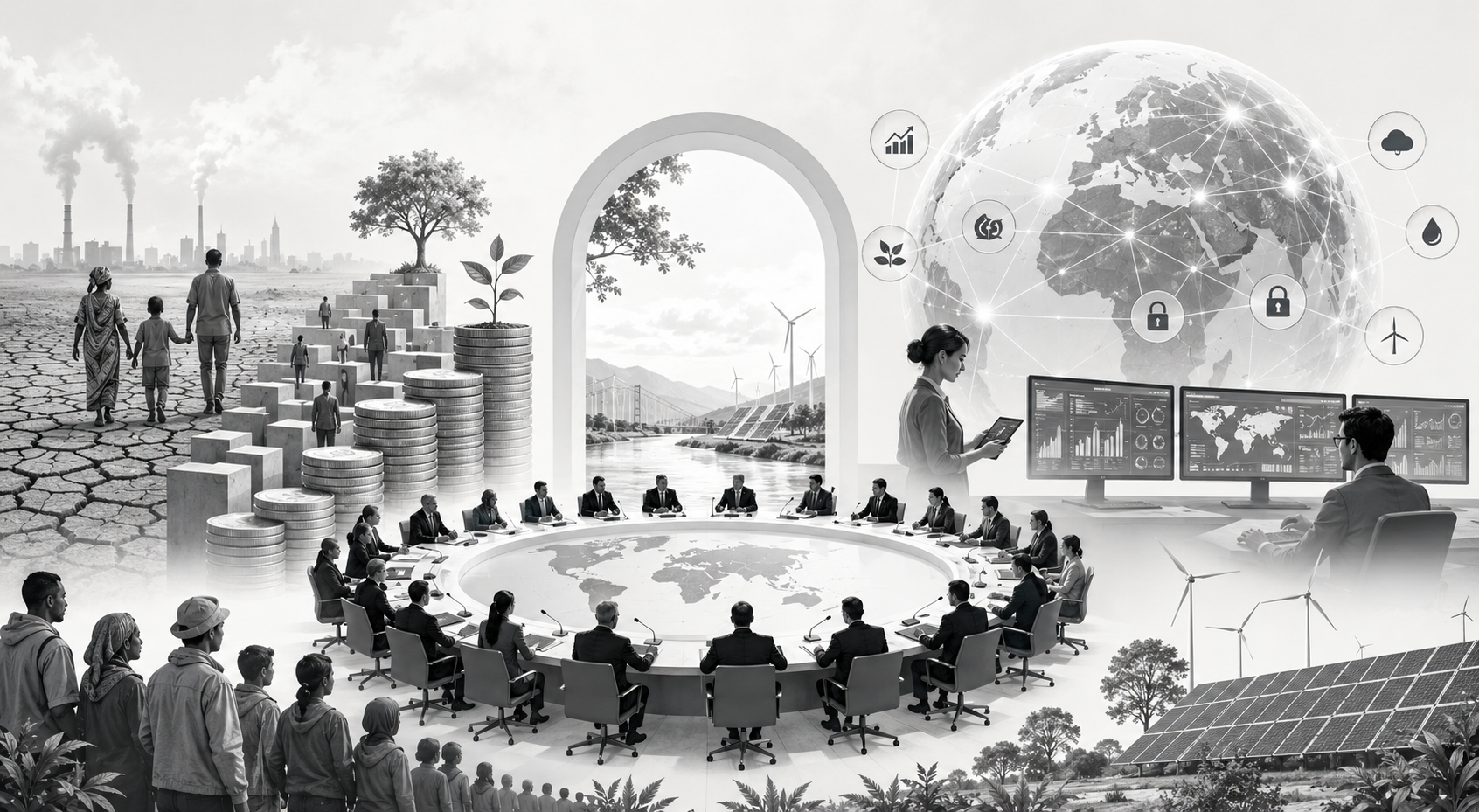


In the first piece of this series, I argued that the global climate finance gap is not a technical problem — it is a political one. Rich countries have promised far less than what poorer countries actually need to deal with climate change, and the money that does exist rarely reaches the places that need it most. I ended with one blunt point: the whole system is betting on private investors stepping in to fill the gap. They won’t. This piece explains why — and what would have to change.
The Idea
The basic pitch goes like this: Governments and international banks put in a chunk of money and agree to take the hit first if a project goes wrong. That makes the investment safer for private investors — banks, pension funds, companies — who then add their own money on top. The result, in theory, is that one government dollar brings in five or ten private dollars. Everyone wins: governments stretch their limited funds, private investors get decent returns, and more clean energy gets built.
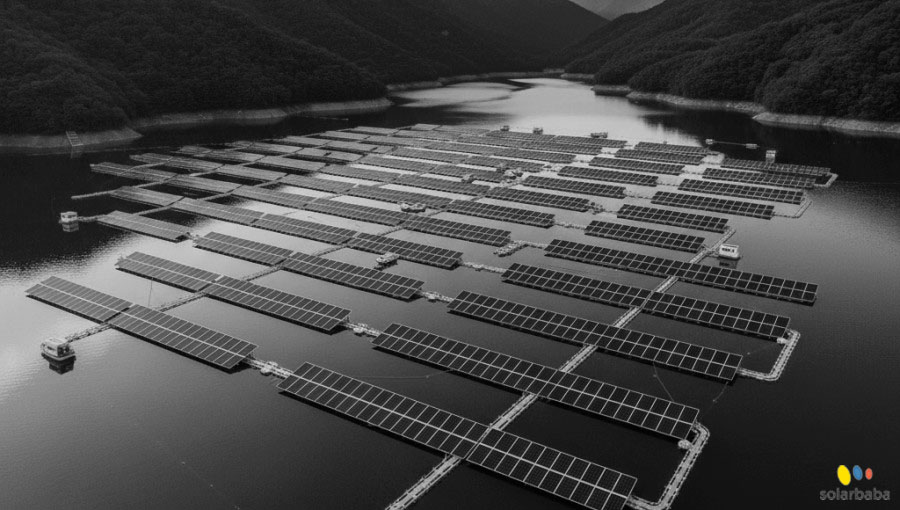
It has worked. Morocco built one of the world’s largest solar power plants using exactly this model — public banks carried the risk, private money followed, and the project was a success. The question is why that story has not been repeated dozens of times across Africa, Asia, and Latin America.
The Promises That Didn’t Pay Out
At recent UN climate summits, wealthy countries announced enormous packages to help poorer nations move away from coal and fossil fuels. The numbers were eye-catching. The reality has been far more disappointing.
Table 1: What Was Promised — and What Happened
| Country | Money Promised | What Actually Happened |
| South Africa | $8.5 billion (2021) | Most of it still hasn’t arrived. Donors demanded sweeping changes to the electricity grid before releasing funds — changes that take years and face fierce domestic opposition. |
| Vietnam | $15.5 billion (2022) | The deal effectively stalled after a change of government. Disagreements over energy prices and who controls the grid remain unresolved. |
| Indonesia | $20 billion (2022) | Moving slowly. The timeline donors set for reforming state energy companies doesn’t match the pace of real politics on the ground. |
Sources: JETP Country Reports, OECD, Bloomberg NEF
The pattern is the same in each case. The money was announced. Conditions were attached — the recipient country had to reform its energy sector, change its laws, restructure state companies. Those reforms turned out to be slow, contested, and politically painful. The money sat waiting. Years passed.
The Real Reasons Money Gets Stuck
The standard explanation is that poorer countries simply aren’t ready: they don’t have good enough projects, the right laws, or the systems to prove that climate goals are being met. That’s true. But it misses the point. These aren’t accidents. They are the predictable result of a system that asks countries to do the hard work first, then promises to pay later.
Take project preparation. Before any international lender will consider funding a wind farm or solar plant, someone has to spend years doing surveys, environmental assessments, financial modelling, and legal work. That costs millions. And there is no guarantee at the end of it that the funding will actually come through. So governments and developers in poorer countries rationally decide not to bother — the risk is too high and the reward too uncertain.
Or take the demand for measurable results. Rich countries increasingly want to release money only after seeing hard evidence that emissions have actually fallen. That sounds reasonable. But most of the countries being asked to provide that evidence don’t yet have the tools to track and measure emissions in the first place. The system is asking for proof before providing the means to gather it.
Table 2: Why the Money Gets Stuck
| The Problem | What It Means in Practice |
| No ready projects | Preparing a project for international funding takes years and costs money — with no guarantee the funding will come. So governments and developers don’t bother. |
| No way to measure results | Rich countries now want to pay only after seeing proof that emissions actually fell. But most poorer countries don’t yet have the systems to track and verify that. |
| Contracts don’t hold up | International lenders require airtight legal agreements. Many countries don’t have the legal infrastructure to produce them. |
| Wrong conditions, wrong timeline | Donors set reform deadlines based on what’s politically comfortable at home — not on what’s actually possible in the recipient country. |
Sources: World Bank, Convergence, OECD
More Schemes, or Better Rules?
There are two schools of thought on how to fix this. One says we need new and more creative financial tools — bigger guarantee funds, automatic triggers that release money when disasters hit, smarter ways of pooling risk across many countries at once. The other says the tools we already have would work fine if the rules around them changed.
The evidence points toward the second view. The problem with South Africa’s $8.5 billion package was not that the financial structure was wrong. It had grants, cheap loans, guarantees — everything a textbook deal should have. What killed it was the conditions attached: a list of reforms that donors needed politically but that the South African government couldn’t deliver on the donor’s timeline. Designing a new financial instrument won’t fix that.
Three changes would make a real difference. First, pay for the groundwork before a deal is agreed — fund the studies, designs, and legal work that make a project ready for investment, instead of expecting cash-strapped governments to finance that themselves. Second, stop evaluating every small project one by one; group them together and cover an entire portfolio of wind or solar farms with a single guarantee, which is faster and cheaper. Third, invest in the tracking systems that countries need to measure emissions before demanding that they prove results.
Table 3: Three Changes That Would Actually Help
| Fix | Why It Would Work |
| Fund project preparation upfront | Pay for the groundwork — studies, designs, legal work — before a deal is agreed. Right now countries have to fund this themselves, which most can’t afford. |
| Back groups of projects, not just one at a time | Evaluating every small solar farm individually is too slow and expensive. Bundle them together and cover the whole portfolio with one guarantee. |
| Build tracking systems before demanding proof | You can’t ask a country to prove emissions fell if it has no tools to measure them. Invest in those tools first. |
Sources: OECD, Convergence State of Blended Finance 2024, World Bank
What This Means for Türkiye
Türkiye has managed to attract international co-financing for some of its renewable energy projects. But scaling that up runs into a specific wall: the EU is about to charge a carbon price on Turkish steel, cement, and aluminium exports. To avoid that cost, Türkiye needs its own carbon pricing system at home — but building one takes time it may not have. The international funding tools exist. The domestic policy foundation they depend on is still under construction.
This is the deeper problem with blended finance everywhere. The model is not dishonest. It is a genuine attempt to make limited public money go further in a world where governments won’t simply write bigger cheques. But it has been sold as a solution capable of raising the trillions that climate change actually requires — and it is not that. Not yet, and not the way it currently works.
Money follows reliable conditions: clear rules, enforceable contracts, trustworthy measurements. Building those conditions takes time, political will, and upfront investment. The countries that have attracted serious climate investment — Morocco, Chile, Germany — didn’t do it by finding the cleverest financial structure. They did it by building the foundations that made investment predictable. That is what COP31 in Antalya should be honest about: the finance gap will not close until the groundwork is laid. And laying that groundwork is a political choice, not a technical one.
A Proposal for Antalya
COP31 in Antalya has been billed as an “implementation COP” — the moment climate finance moves from pledge to delivery. That cannot happen without agreeing first on what delivery actually means. Türkiye and Australia, as co-presidents, should push for a binding definition of what counts toward the $300 billion floor: grants and concessional loans at one end, market-rate debt and private finance at the other. Without that taxonomy, every progress report will be contested, every headline number will be disputed, and the Antalya outcome will repeat the same cycle as Baku.