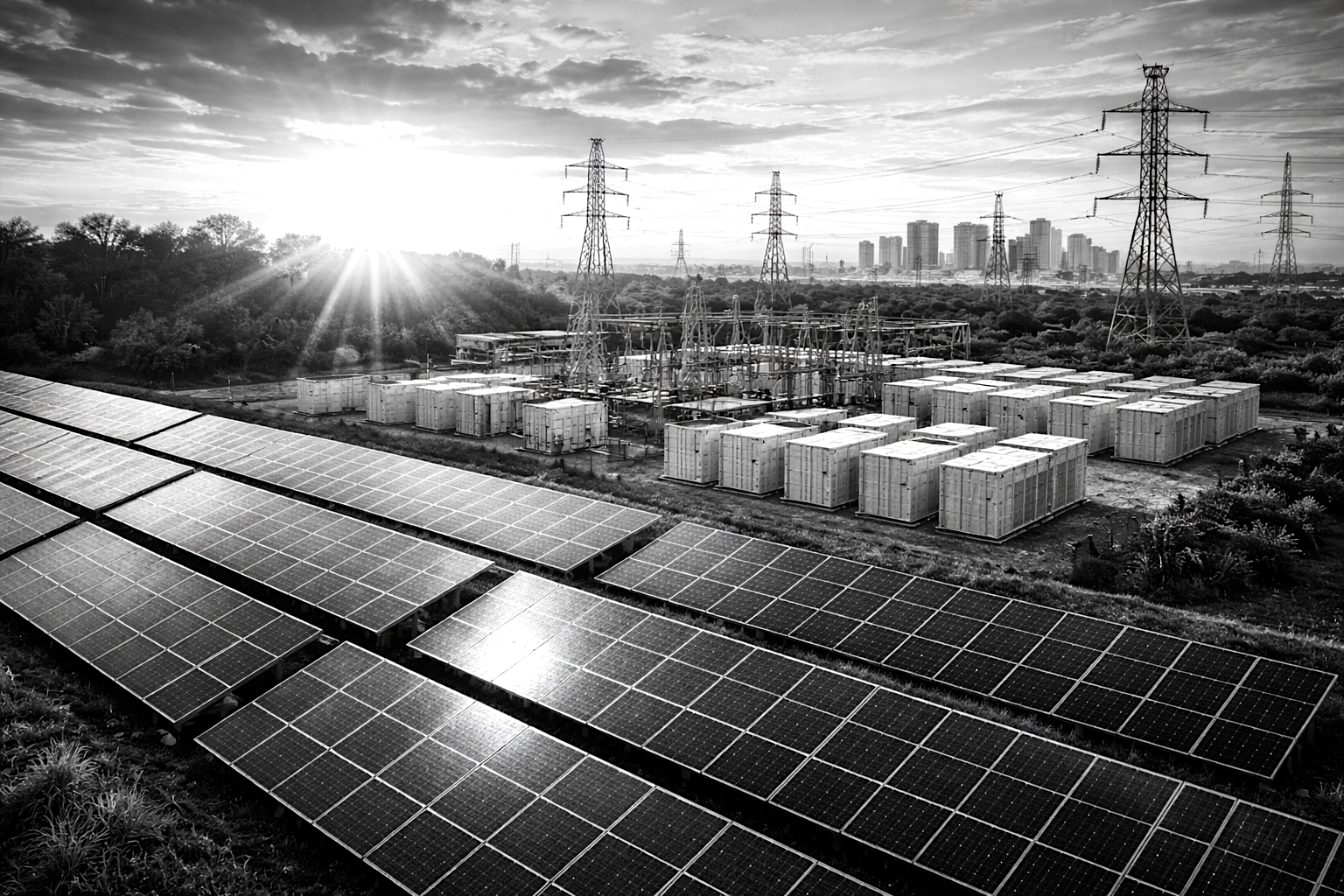

The world’s energy innovation engine did not stall in 2025. It changed direction. According to the International Energy Agency’s The State of Energy Innovation 2026, the center of gravity is shifting away from climate ambition alone and toward a harder trio of priorities: competitiveness, security and industrial advantage. That shift is now shaping what gets funded, what gets patented and which technologies stand the best chance of scaling.
The report’s central message is both encouraging and cautionary. Innovation activity remains broad and visible: the IEA tracked more than 150 significant energy innovation highlights in 2025, recorded 50 upgrades in technology readiness, identified more than 80 new innovation policies, and found that over 320 energy start-ups raised first-time funding. Yet this momentum sits on shakier financial ground. Public energy R&D spending globally in 2025 is estimated at USD 55 billion, down a further 2% from 2024. Corporate energy R&D growth slowed to 1 percent in 2024, reaching USD 160 billion. Venture capital for energy start-ups fell for the third consecutive year, to USD 27 billion.
That contradiction defines the moment. The technologies are moving. The capital is hesitating. In the IEA’s survey, 80 percent of respondents ranked energy security among the top three drivers of innovation in 2025, ahead of affordability, emissions reductions and national economic performance. Climate has not disappeared from the agenda, but it is increasingly being forced to justify itself in the language of resilience, domestic manufacturing and strategic control.
The report shows how public money still matters, often long after the headlines fade. It argues that government-backed research helped lay the groundwork for today’s breakthroughs in batteries, floating LNG and next-generation geothermal. In some retrospective assessments, the economic returns from public energy R&D were several times, and sometimes several hundred times, larger than the initial cost. At a moment when private investors are becoming more selective, that finding lands as both evidence and warning: markets may commercialize innovation, but states still underwrite the frontier.
Some of the strongest signals came from the lab and the factory floor. In 2025, researchers and firms pushed forward with a 33 percent efficient silicon-perovskite solar cell, the first kilowatt-scale elastocaloric cooling system, the commercial launch of a 100 MWh industrial heat battery, successful geological hydrogen storage testing in France, and the first commercial CO2 terminal and storage hub begins operations in Norway. The point is not that every one of these technologies will dominate. It is that the field remains unusually fertile, even as investors grow more cautious.
The geography of innovation is also diverging. China became the world leader in energy technology patenting in 2021, and Chinese companies now account for 60% of corporate R&D in energy supply and infrastructure. Europe is spending more public money and producing a growing share of first-funded energy start-ups, even as patenting in some major economies softens. The United States remains the venture capital heavyweight, capturing nearly half of global energy VC in 2025, but it is also reordering federal priorities and cutting parts of its R&D budget. Japan, meanwhile, is holding its ground in advanced batteries and other strategic technology niches.
One statistic captures the changing industrial logic of the sector: energy storage accounted for 40 percent of all energy patenting in 2023, an unprecedented share. Battery innovation is no longer a subfield. It is becoming the organizing backbone of the energy economy, linked not just to electric vehicles but to grids, critical minerals, industrial policy and national security. At the same time, AI is beginning to pull capital and attention away from energy start-ups, with AI’s share of venture funding rising to nearly 30 percent in 2025 while energy’s share shrank.
The IEA’s conclusion is not that innovation is failing. It is that the system financing it has entered a more political, more fragmented phase. The report highlights three priorities for the year ahead: align innovation policy with competitiveness and resilience, tailor public funding to today’s financing gaps, and strengthen the partnerships and networks that connect researchers, entrepreneurs and first-of-a-kind projects. In other words, the next chapter of energy innovation may depend less on discovering what is possible than on deciding what is worth backing through uncertainty.