



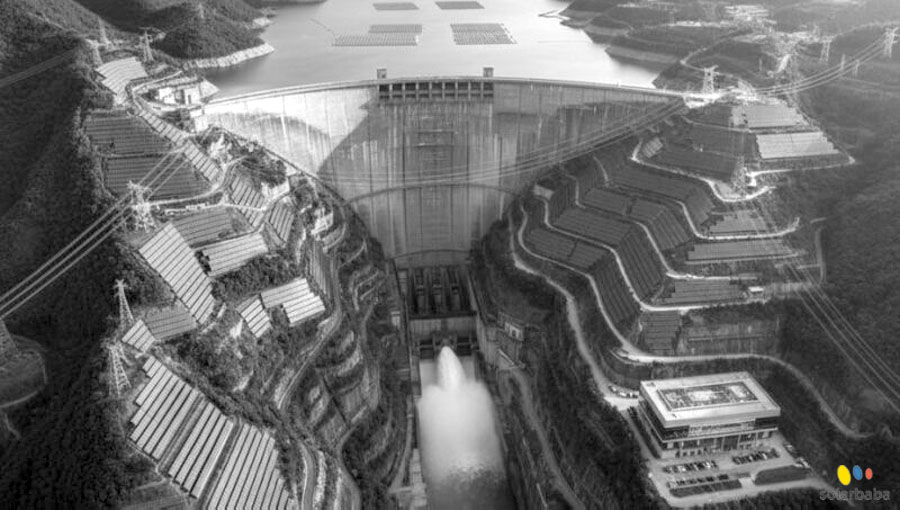
Chinese energy giant Huaneng Group has officially commissioned the Xiaowan Hybrid Hydro-Solar Project in Yunnan Province, with a total capacity of 5.43 GW. The project combines an existing 4.2 GW hydropower facility with an additional 1.23 GW of solar capacity, marking a significant milestone in renewable energy development. Through advanced smart coordination systems, the intermittent nature of solar power is balanced using the dam’s massive reservoir, ensuring a stable and reliable energy supply to the regional grid while supporting China’s strategy of building large-scale clean energy hubs.
Managed by Huaneng Lancang River Hydropower Co., Ltd., the project integrates data from 16 separate solar power sites with the Xiaowan Hydropower Station through a sophisticated centralized control system. Electricity generated by the solar farms is transmitted via dedicated collection stations and synchronized with hydropower generation before being fed into the grid. One of the project’s most remarkable features is its ability to use the hydropower station’s millisecond-level response capability and the reservoir’s vast storage capacity to function as a large-scale “natural battery.” This approach effectively smooths fluctuations in solar generation and ensures continuous energy delivery.
Huaneng Group emphasized that the project achieved full domestic sourcing for its key infrastructure components. Monitoring systems, protection devices, and Static Synchronous Compensators (STATCOMs) used in the solar facilities were all developed and manufactured within China. At the heart of the operation stands the 292-meter-high Xiaowan Dam, located on the Lancang River and recognized as one of the world’s tallest double-curvature arch dams. Completed in 2010, the facility is equipped with six Francis turbines, each with a capacity of 700 MW.
With a reservoir volume of approximately 15 billion cubic meters, the massive dam serves not only as a power generation asset but also performs critical functions such as water flow regulation, sediment management, and flood control across the river basin. Its ability to balance large-scale renewable energy inputs has made Xiaowan a cornerstone of energy infrastructure in southwestern China. The hybrid model provides a global example of how renewable energy sources can be integrated efficiently without compromising grid stability.
Source: Solarbaba – In Turkish