


As the world prepares for COP31 in Antalya, Türkiye, a new initiative is drawing attention to one of the most urgent challenges of our time: the interconnected crises of water scarcity, food insecurity and climate change.
Launched in June 2026 by Türkiye’s Ministry of Agriculture and Forestry in collaboration with the Food and Agriculture Organization of the United Nations (FAO), the Turquoise Nexus Initiative (TNI) aims to connect policy, knowledge and climate finance to strengthen resilience.
But for Central Asia, where water shortages and environmental degradation are already affecting millions, the question is straightforward: will this initiative deliver real projects or remain another international commitment?
Central Asia: Where the Nexus Is Already a Reality
The Aral Sea is perhaps the most striking example of what happens when agricultural development and water management are disconnected. Decades of unsustainable irrigation transformed one of the world’s largest lakes into an environmental disaster, affecting ecosystems, livelihoods and public health.
Today, Central Asia faces increasing pressure from climate change, agricultural water demand and energy transition challenges. Yet the region also possesses enormous renewable energy potential.
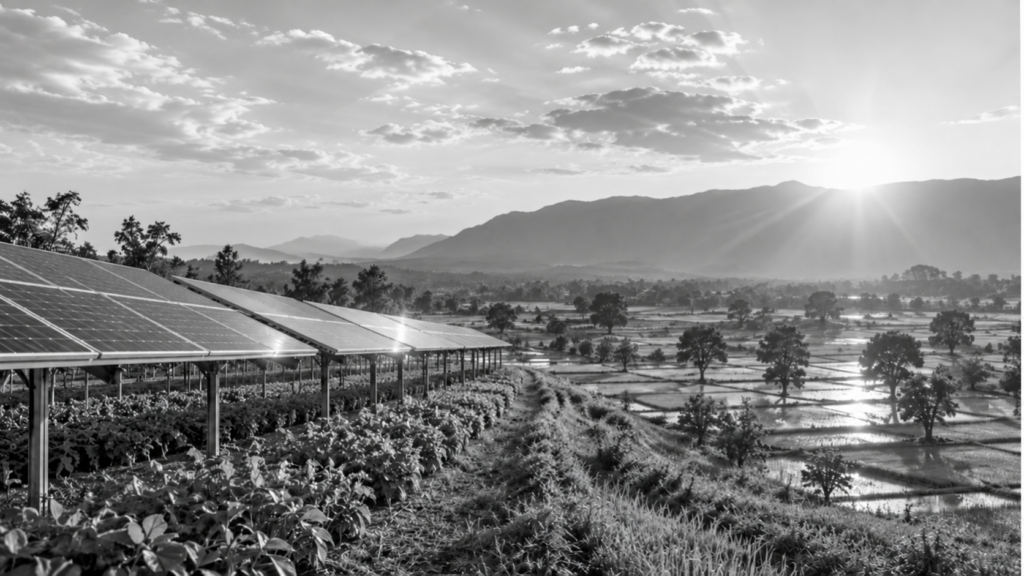
Agrivoltaics, using the same land for solar electricity generation and agriculture could become a practical solution for Central Asia. Properly designed systems can provide shade for crops, potentially reduce water evaporation and generate clean electricity for irrigation and rural communities.This is particularly relevant for arid regions, where every hectare of productive land and every cubic metre of water matters.

A Green Energy Corridor That Goes Beyond Electricity
One opportunity worth exploring is the connection between the Turquoise Nexus Initiative and the emerging green energy cooperation between Central Asia and the European Union.
The ongoing development of regional green energy corridors creates an opportunity to move beyond electricity transmission and support integrated climate solutions.
My proposal is to establish a Central Asia–EU Agrivoltaics and Water-Smart Energy Programme, linking renewable energy investments with sustainable agriculture, efficient irrigation and climate adaptation.
Such cooperation could bring together European financing, Central Asian renewable energy resources, local agricultural expertise and emerging ClimateTech solutions.
For instance, solar installations could support agricultural production while powering water-efficient irrigation systems. Energy storage and digital forecasting could help manage electricity supply and irrigation demand.
The European Union, development banks, FAO and regional governments could jointly support pilot projects, particularly in water-stressed areas.
However, success would require more than technology. It would demand bankable projects, accessible financing and clear indicators measuring water savings, agricultural productivity and economic benefits.
From International Declarations to Local Impact
The Turquoise Nexus Initiative identifies investment readiness as one of its priorities. This is encouraging, but its credibility will ultimately depend on implementation.
COP31 offers an opportunity to address the existing barriers.
I would encourage the initiative’s partners to prioritize agrivoltaic demonstration projects, establish financing mechanisms for integrated water–energy solutions and involve young researchers and entrepreneurs directly in implementation.
Central Asia could serve as a demonstration region, where the lessons of the Aral Sea inform a new generation of climate-resilient investments.
A Test for COP31
The Turquoise Nexus Initiative has the potential to connect international climate ambitions with practical solutions. But its success should not be measured by the number of declarations or conferences.
It should be measured by how much water is saved, how much agricultural land becomes more resilient and how many communities benefit from sustainable energy.
The opportunity is clear: transform the emerging green energy corridor into a corridor of climate resilience, where clean electricity, food security and water conservation advance together.
COP31 should be the moment when this vision moves from discussion to implementation.
References and further reading
- Food and Agriculture Organization of the United Nations (FAO). (2026, June 25). Meet the Turquoise Nexus Initiative: Advancing food security, water management and climate resilience. https://www.fao.org/food-agriculture-sustainable-transformation-partnership/news-and-events/news/detail/meet-the-turquoise-nexus-initiative–advancing-food-security–water-management-and-climate-resilience/en
- COP31 Türkiye Presidency. Official COP31 website. https://cop31tr.com/
- FAO. Food and Agriculture for Sustainable Transformation (FAST) Partnership. https://www.fao.org/food-agriculture-sustainable-transformation-partnership/
Author’s note: The recommendations and proposals presented in this article reflect the author’s independent professional perspective and do not constitute official commitments by the COP31 Presidency, FAO, the European Union or Central Asian governments.