


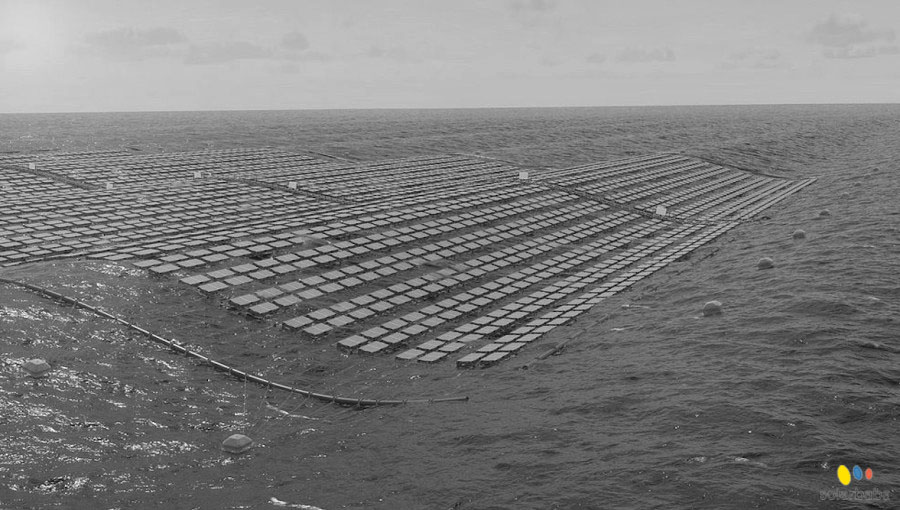
Floating solar technologies are moving beyond traditional calm-water applications and adapting to increasingly challenging environmental conditions. Developed by Norwegian company Fred. Olsen 1848, the “Brizo” floating solar system is designed to withstand waves up to 3.5 meters high. Following the completion of technical verification by DNV, the innovative system is considered an important milestone for the sector. Having successfully passed hydrodynamic load analyses and structural tests, the technology aims to expand the renewable energy market by enabling solar projects to be deployed on open and wave-exposed water surfaces previously considered unsuitable.
For many years, floating solar systems remained a niche technology primarily used in sheltered and calm waters. However, growing energy demand and land constraints have created a need to deploy these systems in more challenging environments. Norwegian engineering company Fred. Olsen 1848 has responded to this need with its Brizo system, significantly increasing the durability limits of floating solar technology.
The independent technical review conducted by DNV covered critical processes including design methodologies, structural behavior, and physical model testing. Verification carried out in accordance with the DNV-RP-0584 standard demonstrates that the system is ready for use in commercial projects. Experts suggest that technologies of this kind can increase confidence among investors and project developers while accelerating the maturation of the floating solar energy sector.
The key difference of the Brizo system is its flexible rope network and tensioning mechanism. This structure enables the system to withstand wave loads of up to 3.5 meters. Unlike conventional floating solar systems, the design is expected to perform effectively in wave-exposed inland waters and nearshore areas. DNV officials emphasize that this development could create significant opportunities for regions facing land-use pressures and increase the scalability of the floating solar market. Pilot projects using the new technology are expected to be launched in the near future.
Source: Solarbaba – In Turkish