
A first-week dispatch from the 2026 UN High-Level Political Forum on Sustainable Development
New York in July is full of contrasts. Inside the United Nations, the language is global: transformation, coordination, innovation and equity. Outside, the city moves at its own relentless pace. Between the two, one question stayed with me throughout my first week at the 2026 High-Level Political Forum on Sustainable Development (HLPF): how do we turn the language of ambition into systems that work for people?
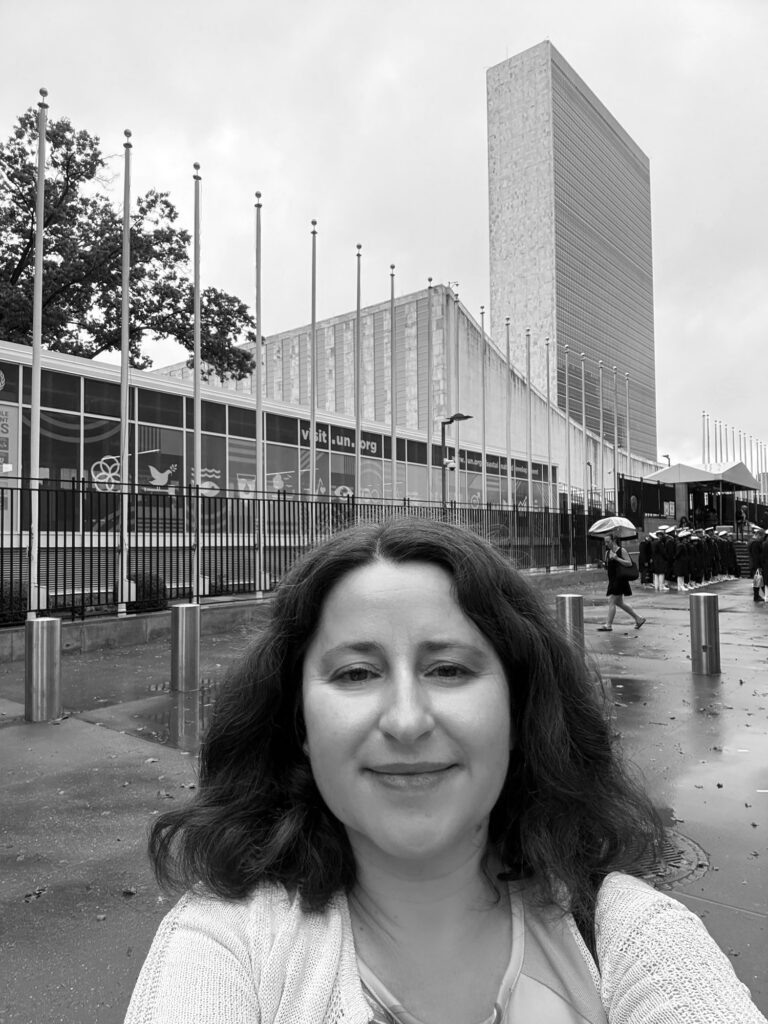
I attended HLPF 2026 as a member of the Council of Engineers for the Energy Transition (CEET), a global body of engineers and energy systems experts working under the auspices of the UN Secretary-General and co-chaired by UNIDO and the UN Sustainable Development Solutions Network. For me, this role carries a clear responsibility. Engineering must help translate political commitments into infrastructure, investment choices and practical pathways that can deliver a net-zero future. But technical solutions are not enough on their own. The transition must also be affordable, inclusive and accountable.
That is why this year’s HLPF mattered.
The Forum, held at UN Headquarters from 7 to 15 July, focused on “Transformative, equitable, innovative and coordinated actions for the 2030 Agenda for Sustainable Development and its Sustainable Development Goals for a sustainable future for all.” With only four years remaining until 2030, it conducted in-depth reviews of SDGs 6, 7, 9, 11 and 17: water and sanitation; affordable and clean energy; industry, innovation and infrastructure; sustainable cities; and partnerships.
These are presented as separate goals, but they describe one system. Energy powers water services, industry, mobility, buildings and digital infrastructure. Industry produces the technologies needed for decarbonisation. Cities concentrate both climate risk and the opportunity for action. Partnerships determine whether finance, expertise and technology reach the places where they are needed.
HLPF 2026 was also especially important for energy because it marked the third — and most likely final — in-depth review of SDG 7 before 2030. This made New York more than another checkpoint. It was a test of whether the international community is prepared to move from describing the energy-access gap to closing it.
From Call to Count: What the energy transition does not measure, it cannot fix
6 July 2026 | UN Headquarters, Conference Room 9
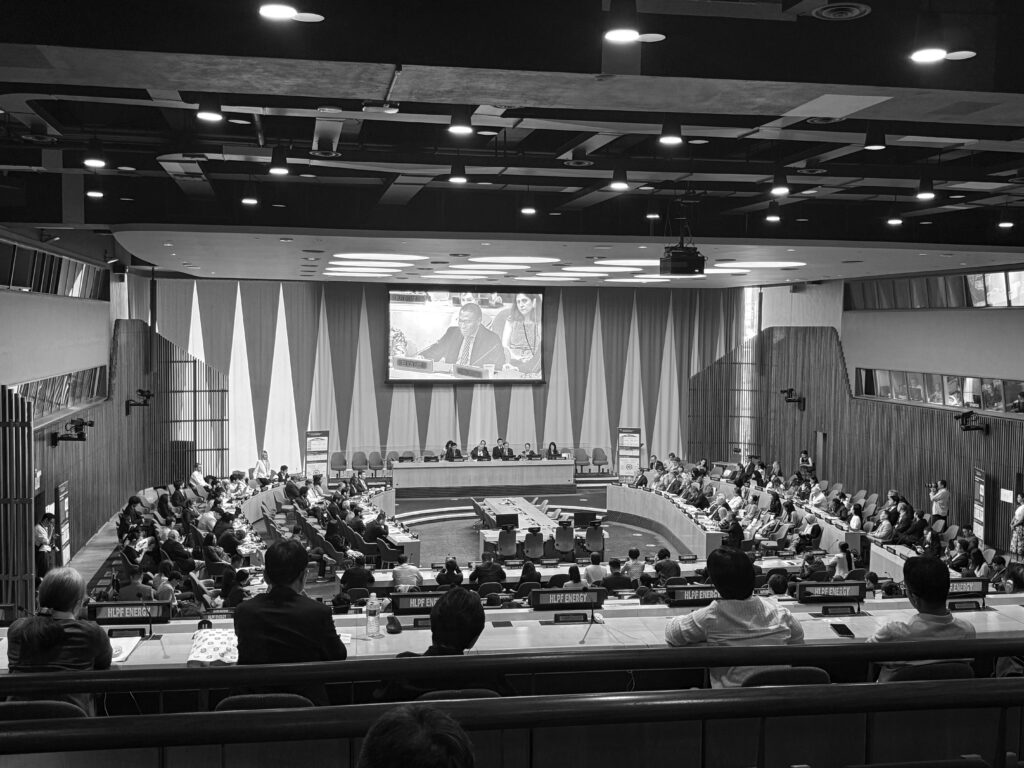
My week began on 6 July in Conference Room 9 at UN Headquarters with “From Call to Count: Gender-Responsive Energy Actions for the Final Mile”, a session organised by Iceland, Kenya, the World Bank’s Energy Sector Management Assistance Program (ESMAP) and ENERGIA, in collaboration with the Working Group on Gender Indicators in Sustainable Energy and the co-conveners of the Gender and Energy Compact.
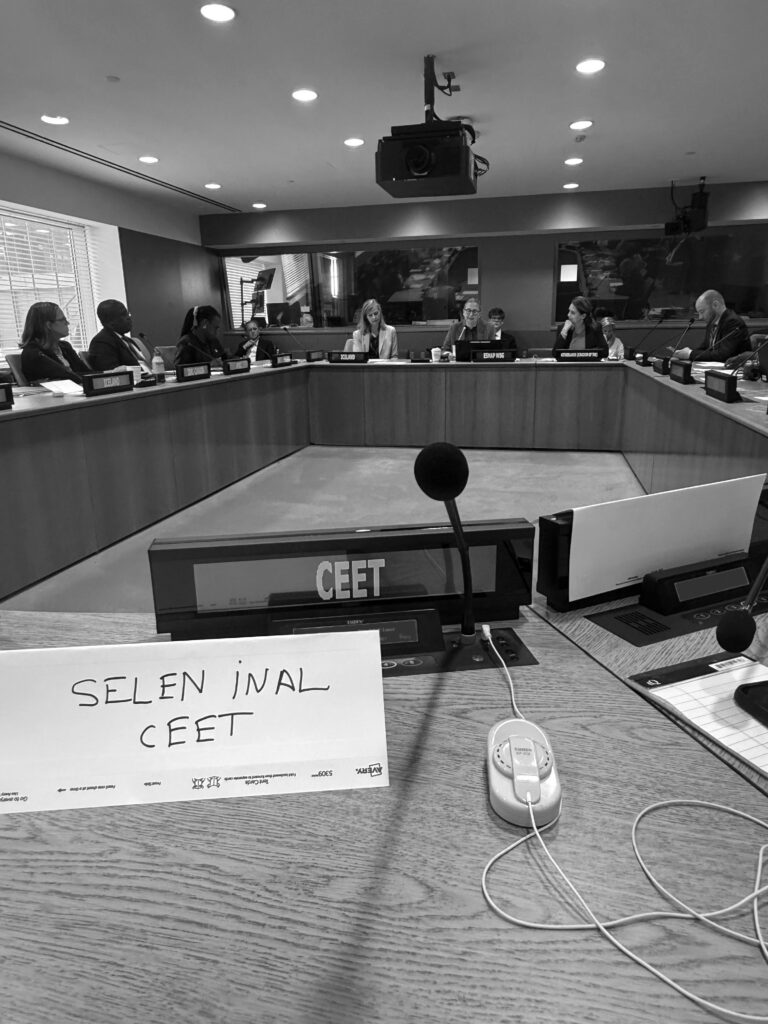
The title captured the challenge precisely. For years, the energy community has called for a gender-responsive transition. But a call is not yet a commitment, and a commitment cannot be implemented or evaluated unless it can be counted.
The session built on the 2025 policy brief Gender Indicators for Sustainable Energy: A Call to Action and introduced its 2026 update. Its central finding should concern every policymaker working on SDG 7: despite the well-established relationship between energy and gender equality, SDG 7 still has no dedicated gender indicator.
This omission is not merely statistical. What we do not measure is easily excluded from policy design, investment decisions and accountability systems.
Women and girls continue to carry a disproportionate share of energy poverty. The concept note prepared for the session warned that, on the current trajectory, 321 million women could still lack electricity in 2030 and 896 million could remain without access to clean cooking fuels and technologies. These gaps translate into lost time, health risks, constrained education and fewer economic opportunities. Energy shocks deepen the problem, as rising costs and supply disruptions can push households back towards polluting fuels and increase unpaid labour.
At the same time, women are still underrepresented as engineers, entrepreneurs, skilled workers, regulators and decision-makers in the energy sector. This is not only an equality failure. It is a loss of talent, knowledge, innovation and market insight at precisely the moment the transition needs all four.
The 2026 policy brief identifies what it calls a “data paradox.” National systems already collect a great deal of relevant information, but it often remains invisible in high-level energy reporting. Data may exist without the disaggregation, analysis, standardisation or institutional pathways needed to make it useful.
The shift from call to count therefore requires three things: a robust methodology, national statistical capacity and sustained political commitment. The dedicated Working Group has begun mapping data across countries and developing a practical roadmap. This is meaningful progress. The next step is to ensure that the work shapes national energy plans, investment frameworks and international reporting rather than remaining at the margins of them.
For COP31, the lesson is direct: gender-responsive energy policy must be visible in both climate plans and delivery systems. Nationally Determined Contributions, transition finance, clean-energy programmes and industrial strategies should not treat gender as a paragraph added at the end. They should use measurable indicators to show who gains access, who gets jobs, who participates in decisions and who remains exposed to cost, health and reliability risks.
The official SDG 7 review: The last mile is where ambition becomes credible
7 July 2026 | UN Headquarters, Conference Room 4
On 7 July, I returned to Conference Room 4 for the official HLPF meeting on “SDG 7 and interlinkages with other SDGs — Affordable and clean energy”. The discussion reinforced how much the energy agenda has changed. The challenge is no longer simply to add renewable capacity. The real test is to build energy systems that are reliable, affordable, resilient and capable of supporting wider development.
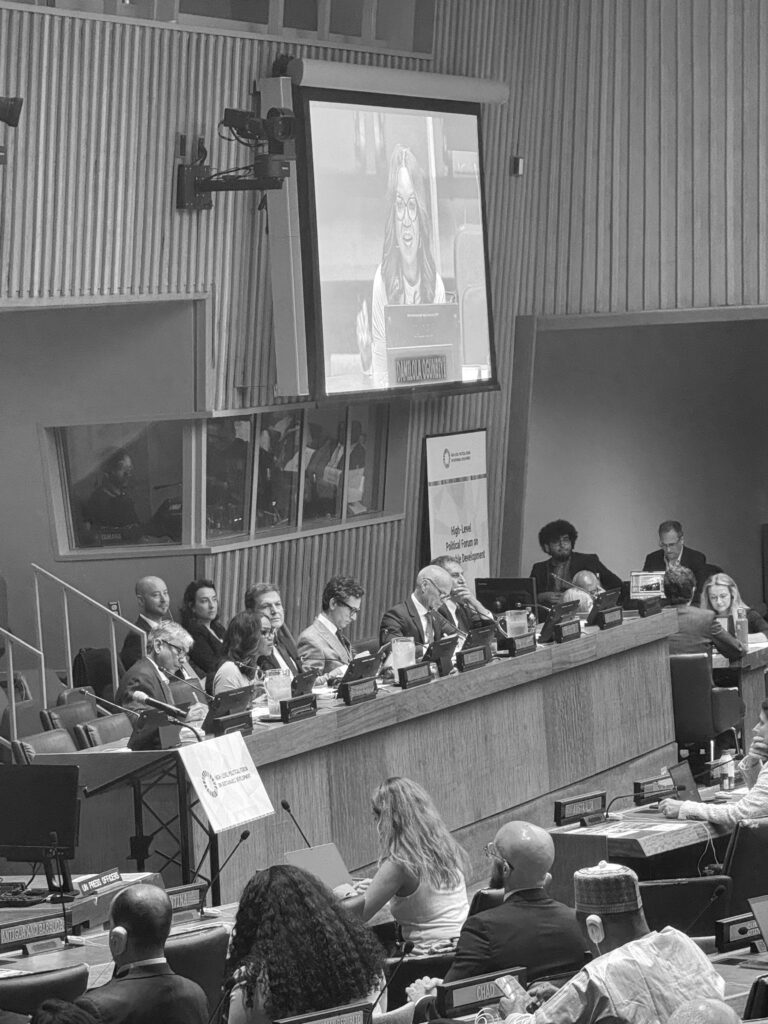
This is where the engineering perspective becomes essential. Targets must be translated into grids, storage, clean cooking solutions, energy-efficiency measures, industrial systems and business models that can operate at scale. Last-mile access cannot be an afterthought. Nor can system reliability. A transition that expands generation without strengthening networks, flexibility and affordability will remain incomplete.
I was particularly pleased to see my CEET colleague Professor Vijay Modi contribute to the session. His participation reflected the value of bringing engineering knowledge into multilateral policy discussions. The distance between a global commitment and a functioning energy service is filled with technical choices — but also with questions of institutions, finance, local capacity and public trust.
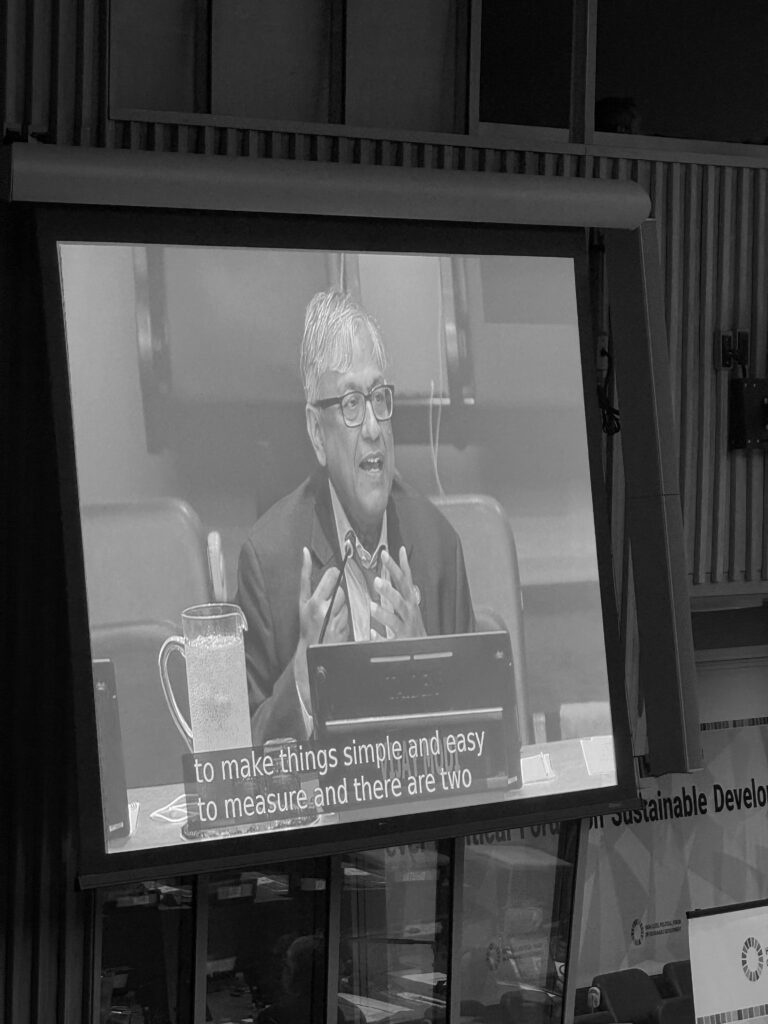
For Türkiye and the road to COP31, this matters greatly. Clean-energy ambition must be matched by credible implementation: stronger grids, faster renewable integration, energy efficiency, electrification, storage, resilient infrastructure and finance that can move projects from plans to operation. It also means recognising that energy access and energy affordability are part of climate credibility. People experience the transition not through targets, but through bills, jobs, air quality, transport, heat, cooling and the reliability of everyday services.
The official SDG 9 review: The transition will be won or lost in infrastructure
8 July 2026 | UN Headquarters, Conference Room 4
The following day, 8 July, I was again in Conference Room 4 for the official meeting on “SDG 9 and interlinkages with other SDGs — Industry, innovation and infrastructure”. If SDG 7 describes the energy future we need, SDG 9 asks whether we have the industrial and physical capacity to build it.
The energy transition is an infrastructure transformation. It depends on transmission lines, distribution networks, ports, railways, digital systems, storage, efficient buildings, low-carbon industrial processes and resilient supply chains. It also depends on manufacturing capacity for the technologies that will carry the transition.
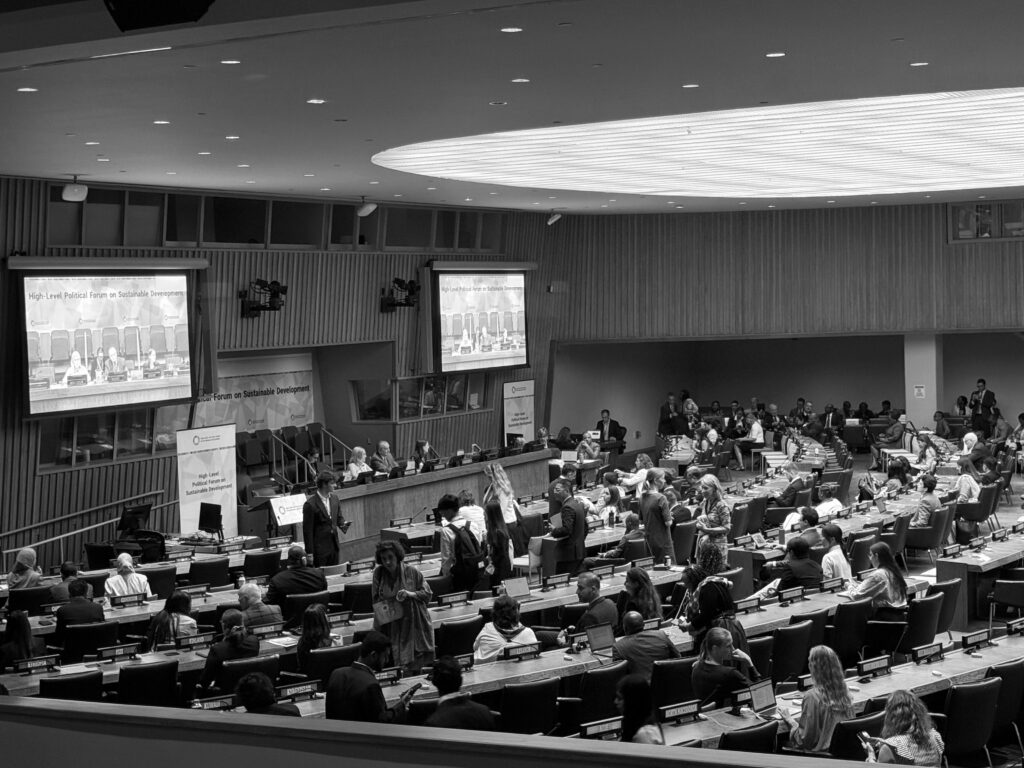
This makes industrial policy and climate policy increasingly inseparable. Countries are not only deciding how to reduce emissions. They are deciding where clean technologies will be developed, manufactured and financed; how workers will acquire new skills; how small and medium-sized enterprises will participate; and how critical supply chains will remain secure.
Innovation is vital, but innovation alone does not guarantee inclusion. A technology can be advanced and still fail to reach the communities that need it. Infrastructure can be low-carbon and still reproduce inequality. Industrial growth can create value without distributing opportunity fairly. The measure of success must therefore extend beyond installed capacity or investment volume. We must ask who participates, who benefits and whether new systems are resilient enough for a changing climate.
For Türkiye, this intersection is especially strategic ahead of COP31. The country has a substantial industrial base, a dynamic clean-technology ecosystem and a critical location between regions. COP31 can help connect Türkiye’s climate diplomacy with a practical agenda for industrial decarbonisation, grid modernisation, clean-technology manufacturing, skills and inclusive innovation. The opportunity is not simply to host a global conversation, but to demonstrate what implementation can look like.
XDGs — What Should the World Measure Next?: Measurement is a choice about the future
9 July 2026, 8:30–10:00 AM | Permanent Mission of the United Arab Emirates to the United Nations
On the morning of 9 July, I attended “XDGs — What Should the World Measure Next?” at the Permanent Mission of the United Arab Emirates to the United Nations. Hosted by the UAE SDG Secretariat and the UAE Mission, the session brought together experts and practitioners to consider the future of development measurement in an era of rapid technological, societal and environmental change.
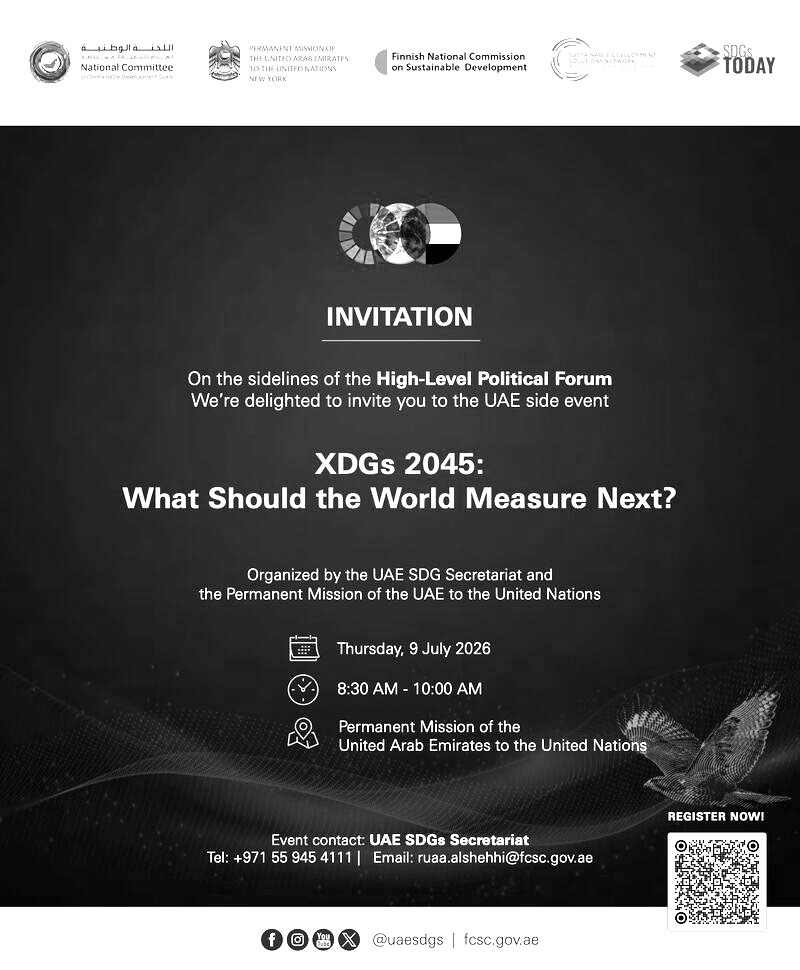
The question could not have been more timely. The 2030 deadline is approaching, but the forces reshaping development are moving faster than many of the systems designed to measure it. Climate impacts, artificial intelligence, demographic change, new forms of inequality and growing pressure on natural resources are altering what progress looks like and how it should be assessed.
The discussion also connected directly with the gender-and-energy session earlier in the week. Indicators are never merely technical. They influence what governments see, what institutions prioritise, where finance flows and which outcomes become politically visible. If an issue is absent from the measurement framework, it can too easily remain absent from implementation.
I left the UAE Mission thinking that the next generation of development metrics cannot simply extend the current framework with a longer list of indicators. It must become better at capturing interdependence, distribution and resilience. It must tell us not only whether an economy is growing or a technology is being deployed, but who benefits, who carries the cost, whether progress can withstand shocks and whether it is compatible with planetary limits.
This is equally relevant to COP31. Climate diplomacy is rich in targets, pledges and headline numbers. The harder task is measuring the quality of delivery: whether finance reaches implementation, whether communities become more resilient, whether clean energy remains affordable and whether the transition reduces rather than reproduces inequality. What we choose to measure next will shape what the world chooses to do next.
The official SDG 11 review: Cities are where the transition becomes everyday life
9 July 2026, 3:00–6:00 PM | UN Headquarters, Conference Room 4
Later on 9 July, I attended the official HLPF meeting on “SDG 11 and interlinkages with other SDGs — Sustainable cities and communities.” This session brought the week’s discussions into the places where most people experience sustainable development directly: their homes, neighbourhoods and cities.
Cities are where the interconnections between the SDGs become impossible to ignore. Urban life depends on reliable energy, resilient infrastructure, accessible transport, adequate housing, clean water, effective waste systems and public spaces that are safe and inclusive. Cities are also major centres of energy demand and emissions, while standing on the front line of extreme heat, flooding, air pollution and other climate impacts.
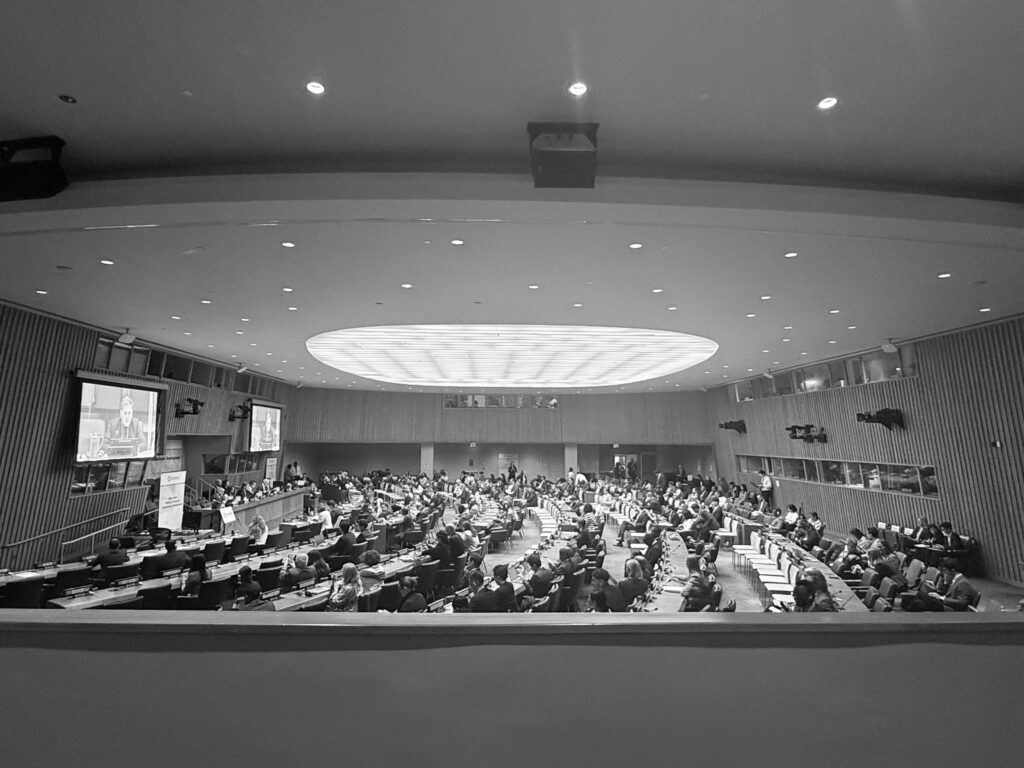
The global picture remains deeply concerning. The SDG 11 Global Report 2026, launched during HLPF, concluded that the world is off track on sustainable cities and communities. More than three billion people lack access to adequate housing, including over 1.1 billion people living in informal settlements and slums. These figures show why urban climate action cannot be separated from housing, public services and social inclusion.
For me, the central message was that a sustainable city is not defined by technology alone. Smart systems, efficient buildings, electric mobility and digital services can all contribute, but they must improve daily life. Urban transformation should be judged by whether people can reach work and essential services, afford safe housing, breathe cleaner air and remain protected during climate shocks.
This has particular importance for Türkiye, a highly urbanised country where cities will be central to the credibility of COP31. Municipal climate action, building efficiency, public transport, distributed energy, circular waste systems and heat resilience are not secondary local issues. They are essential components of national climate delivery. COP31 offers an opportunity to bring cities more fully into the implementation agenda and to connect national commitments with the institutions responsible for delivering change on the ground.
Women Leading the Energy Transition: Who gets to shape the future?
9 July 2026 | UN SDG Media Zone
On 9 July, I joined the UN SDG Media Zone conversation “Women Leading the Energy Transition at HLPF 2026.” The recording was subsequently released by the United Nations. Moderated by Kathryn Clay, Lead Energy and Climate Analyst at Washington Post Intelligence, the discussion brought me together with Rana Ghoneim, Director of UNIDO’s Division of Energy and Climate Action, and Catherine Suttah, founder of Africa Climate Futures.
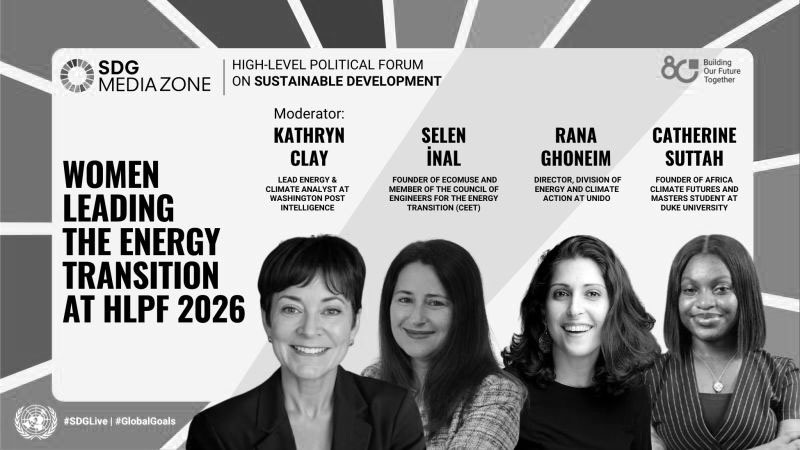
The conversation moved beyond representation as an abstract objective. Women are already leading clean-energy businesses, community initiatives, finance, policy and innovation. Yet structural barriers continue to limit access to capital, networks, technical careers and positions of authority.
The question is not whether women can contribute to the energy transition. They already do. The question is whether institutions are willing to redesign the conditions that determine whose expertise is recognised, whose businesses receive investment and whose experience shapes policy.
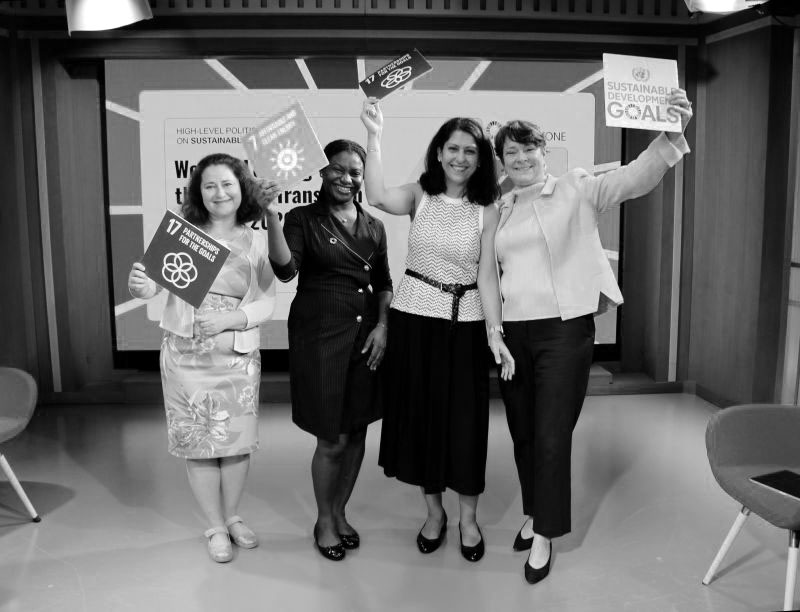
This was one of the strongest threads connecting my week in New York. Gender data, women’s leadership, last-mile energy access, industrial capacity and infrastructure may appear to belong to different conversations. In reality, they are different parts of the same implementation challenge.
Accelerating Energy System Innovation and Transition: The transition needs networks, not islands
10 July 2026, 3:00–5:30 PM | ECOSOC Chamber, UN Headquarters
My first week concluded with “Accelerating Energy System Innovation and Transition for Equity and Resilience to Advance Global Sustainable Development”, a high-level thematic event organised by the Global Energy Interconnection Development and Cooperation Organization (GEIDCO).
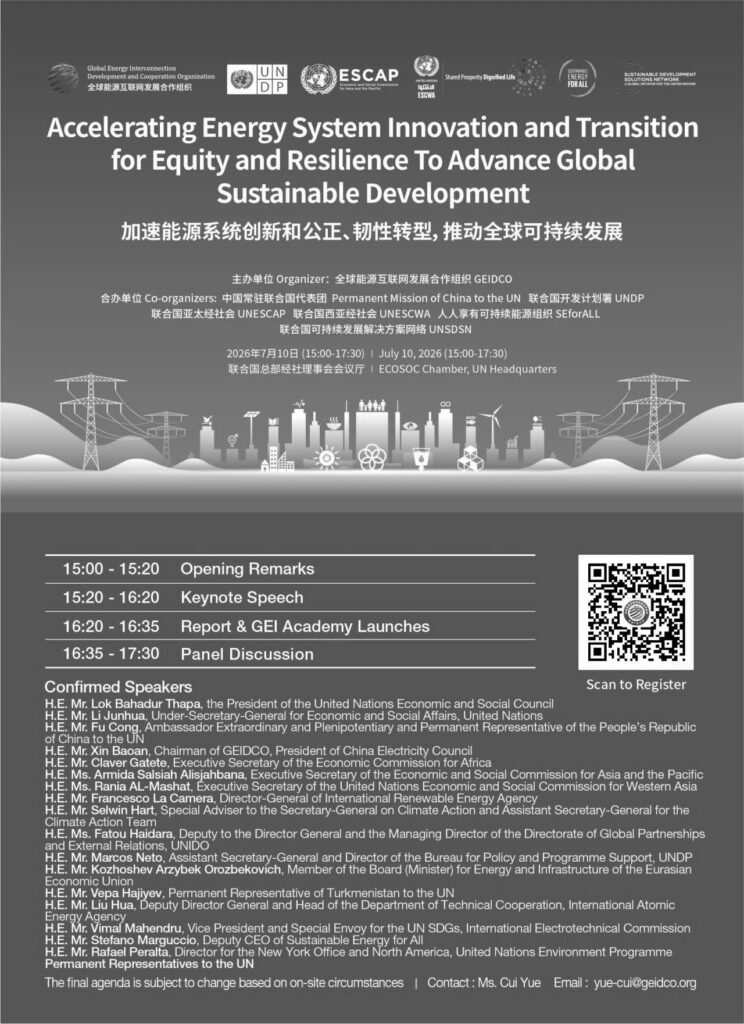
The event was co-organised by the Permanent Mission of China to the United Nations, UNDP, UNESCAP, UNESCWA, Sustainable Energy for All and the UN Sustainable Development Solutions Network. It brought together senior representatives from the UN system, international organisations, diplomatic missions and the energy community to consider how energy-system innovation can support both sustainable development and greater resilience.
The scale and composition of the meeting reflected an important truth: the energy transition cannot be delivered by individual technologies, institutions or countries working in isolation. Renewable generation must be connected to demand. Power systems must be able to balance variable resources across larger areas. Regions with abundant clean-energy potential need infrastructure, investment and cooperation capable of turning that potential into reliable and affordable electricity.
The programme moved from high-level remarks to concrete institutional steps. It included the launch of the Global Electricity Development Index 2026, the establishment of the Global Energy Interconnection Academy, the signing of a memorandum of understanding between GEIDCO and UNESCAP, and a panel on practical actions and best practices for accelerating the Sustainable Development Goals.
What stayed with me was the emphasis on energy innovation as a system-wide task. Innovation is not limited to a more efficient solar module, a larger wind turbine or a new storage chemistry. It also includes grids, market design, digital coordination, finance, regional institutions and the rules that allow electricity systems to cooperate across borders.
This perspective is especially important as global electricity demand accelerates. Electrification, industrial transformation and the rapid growth of data centres are placing new pressure on power systems. Meeting that demand with clean energy will require not only more generation but stronger, smarter and more climate-resilient networks.
The themes of equity and resilience were equally significant. Interconnection should not be understood only as a large-scale engineering ambition. Its value must be judged by whether it expands affordable access, improves reliability, supports development in emerging economies and strengthens the ability of communities and industries to withstand shocks.
For Türkiye, situated between Europe, Asia, the Middle East and the Caucasus, the discussion has strategic relevance. Grid modernisation, renewable integration and regional electricity cooperation can strengthen energy security while supporting decarbonisation and industrial competitiveness. As COP31 approaches, Türkiye can help advance a conversation in which energy connectivity is treated not simply as infrastructure, but as a platform for climate cooperation, shared resilience and sustainable development.
The GEIDCO event completed the arc of my week. The gender session asked who remains invisible in energy policy. The official SDG reviews examined the systems that must deliver access, industry and sustainable cities. The XDG dialogue asked how progress should be measured. The SDG Media Zone focused on who gets to lead. GEIDCO then brought these questions together at the scale of the power system: how can technology, infrastructure and international cooperation turn ambition into reliable and equitable outcomes?
What I bring back from New York
My first week at HLPF 2026 left me with five clear conclusions.
First, implementation must now outrun rhetoric. With 2030 only four years away, plans must be converted into investable programmes, built infrastructure and measurable outcomes.
Second, data is part of the transition’s infrastructure. If our data cannot show who has access, who pays, who works, who leads and who is left behind, policy will remain incomplete.
Third, energy, industry, infrastructure and cities must be planned as one implementation system. Renewable capacity without grids, clean technology without industrial capability, innovation without deployment and national targets without local delivery will not produce the scale of change required. Regional interconnection and international cooperation will also be essential to making clean power systems more flexible and resilient.
Fourth, gender equality is not a side agenda. It is central to energy access, workforce development, entrepreneurship, better decision-making and the credibility of a just transition.
Finally, COP31 should be treated as a delivery milestone, not only a diplomatic event. Türkiye has an opportunity to connect global climate ambition with the practical systems beneath it: energy, industry, cities, finance, skills, data and institutions.
The phrase I carried from New York was simple: from call to count.
We have made the calls. We know the gaps. We understand many of the solutions. The next phase must be about counting what changes — not only megawatts installed or finance announced, but people connected, women employed and promoted, households protected, industries transformed and communities made more resilient.
That is how the energy transition becomes real.
And that is the standard we should carry from HLPF 2026 to COP31 in Türkiye.