
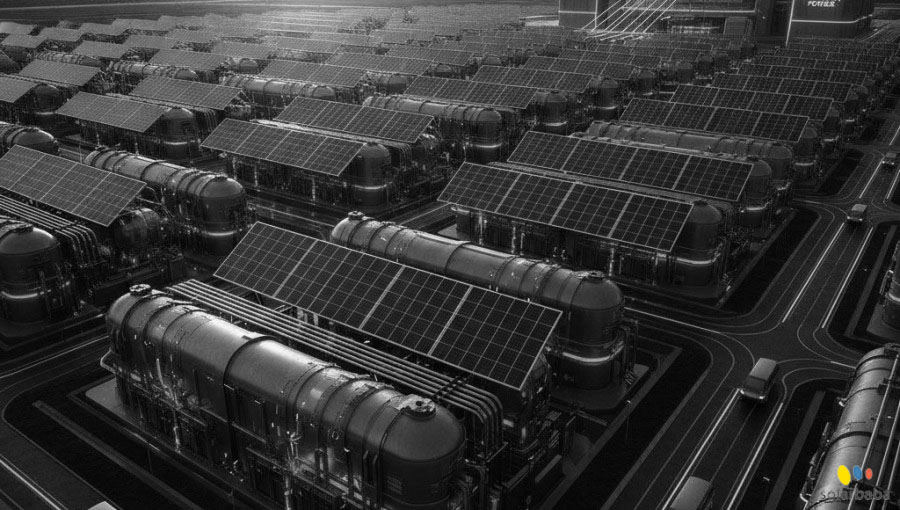




General Motors has announced a strategic partnership with U.S.-based startup Peak Energy to develop grid-scale energy storage solutions. As the rapid growth of artificial intelligence data centers drives unprecedented electricity demand, GM is looking beyond conventional lithium-ion technology by focusing on the cost advantages and durability of sodium-ion batteries. With abundant raw materials and a lower environmental footprint, sodium-ion technology is becoming a key component of GM’s strategy to diversify its energy storage portfolio. Through this collaboration, the company aims to build a more flexible, resilient, and longer-lasting energy infrastructure.
Sodium-ion batteries stand out for their ability to deliver strong performance across a wide temperature range while offering long cycle life. Unlike many conventional battery systems, they can operate without active cooling systems, simplifying system design and reducing maintenance costs. Peak Energy has already demonstrated the technology’s potential for stationary energy storage through its passive-cooled, grid-scale battery system deployed in Colorado.
Although lithium iron phosphate (LFP) batteries currently dominate the energy storage market, General Motors believes sodium-ion technology is still in the early stages of its development curve and has significant long-term performance potential. To compete with the current leadership of Chinese manufacturers in this field, GM plans to integrate sodium-ion cells alongside its existing LFP and lithium manganese-rich (LMR) battery platforms. The company emphasizes that no single battery chemistry can meet every application, reinforcing its commitment to a diversified battery strategy.
GM is also expanding its energy storage capabilities through multiple parallel initiatives. Through its Ultium Cells joint venture with LG Energy Solution, the company is preparing to manufacture LFP batteries. In collaboration with Redwood Materials, GM is repurposing retired electric vehicle batteries for use in AI data centers and stationary energy storage applications. The company is also utilizing second-life battery packs at its Michigan facilities to reduce electricity costs. By investing in emerging technologies such as sodium-ion batteries, General Motors aims to remain flexible and competitive in the rapidly evolving energy market.
Source: Solarbaba – In Turkish