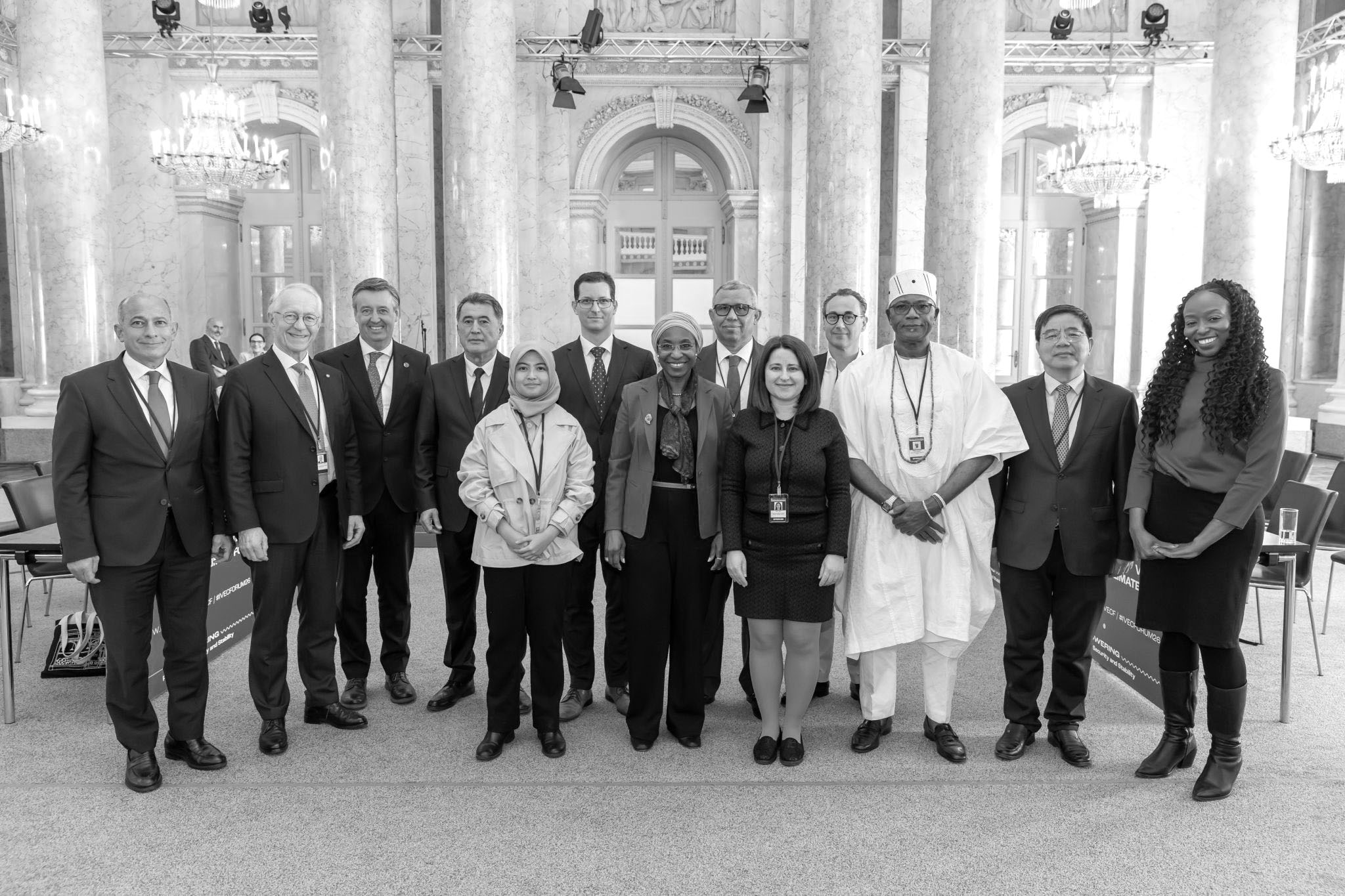
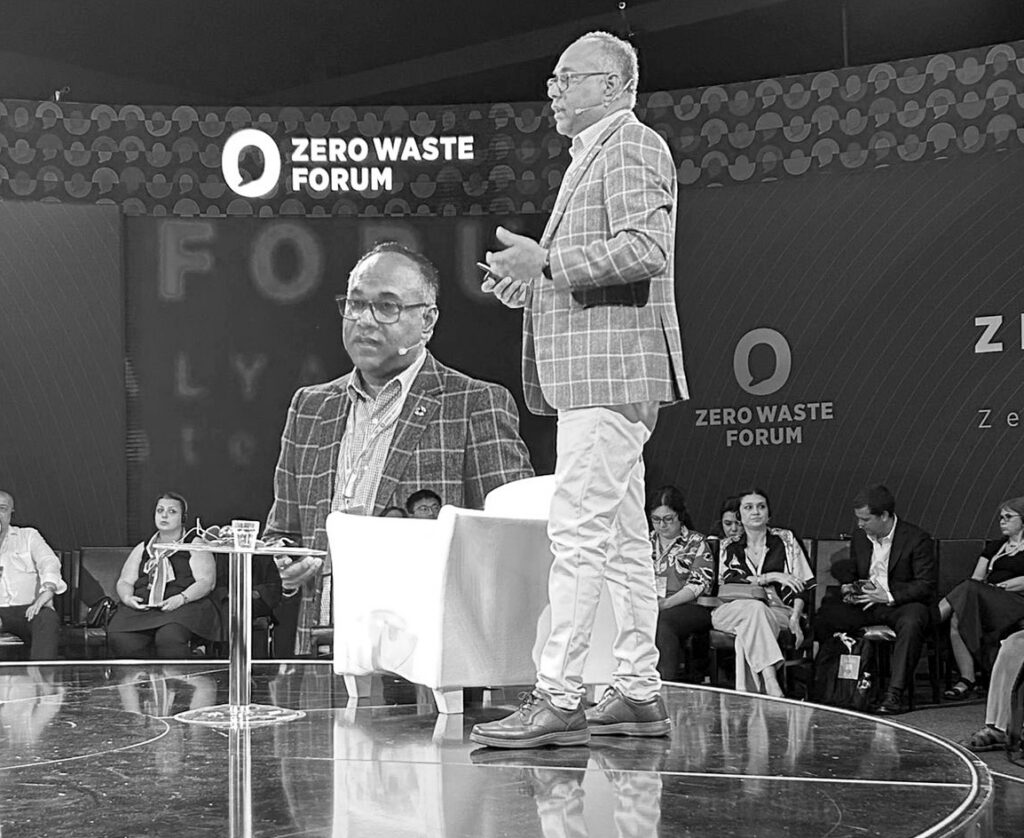
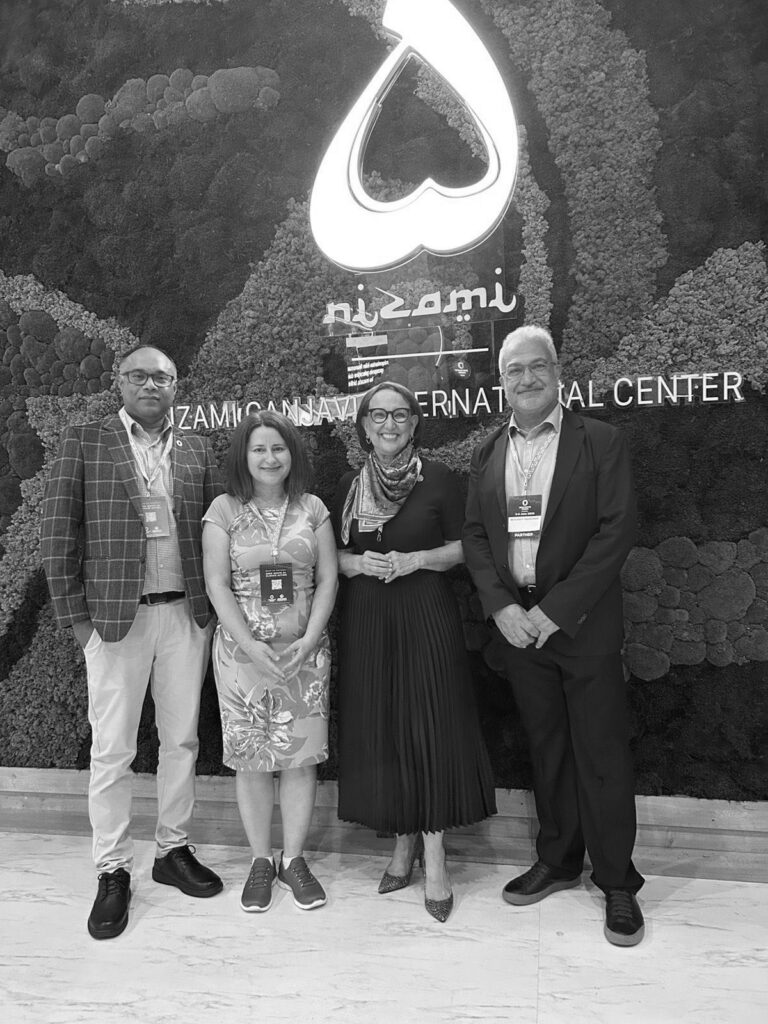
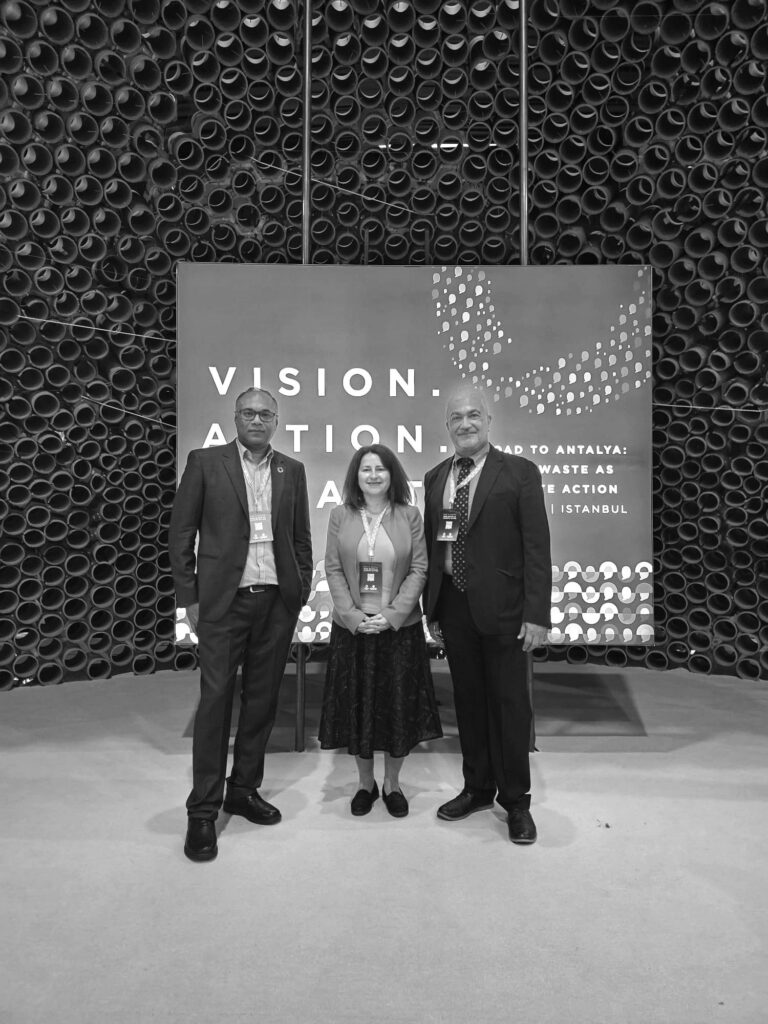
It would be a lie to say I did not expect to be invited to the Zero Waste Forum, given that I have dedicated the past 15 years of my career to zero waste and the circular economy. Still, I was over the moon when the invitation arrived, particularly as it came through referrals from many esteemed colleagues who know me and my work.
Honestly, after many years, it felt refreshing to attend a conference where I truly felt at home—where the conversations, debates, and aspirations aligned closely with the work I have been pursuing for almost two decades.
Let me unpack a few reflections from the Zero Waste Forum 2026.
Zero Waste and Climate: The Biggest Win
This year’s slogan, “Road to Antalya: Zero Waste as Climate Action,” could not have been more timely.
One of the biggest challenges facing the zero waste movement is that the term “waste” immediately leads many people to think about waste management. This perception is fundamentally flawed. Zero waste is not about waste management; rather, it is a systems approach to eliminating waste and pollution through better design, reuse, repair, and recycling, while also addressing the conditions under which waste is created in the first place.
For example, even when products are designed for reuse, valuable resources can still be wasted if there is no collection, return, or recovery system in place.
One of the greatest achievements of this year’s Forum was the effort to clearly establish and communicate the relationship between zero waste and climate change.
Why Does This Matter?
Traditionally, waste management has been viewed as a cost centre rather than an investment opportunity. Across the world, governments often see waste management as a sector that consumes public resources rather than generates value. As a result, waste infrastructure is frequently underfunded and overlooked. In many Global South countries, the situation is even more challenging, with basic waste collection services still unavailable to large portions of the population.
The climate community has historically paid limited attention to waste because emissions from end-of-life waste management account for only around 3–5% of global greenhouse gas emissions. Compared with energy, transport, or industry, waste appeared relatively insignificant.
However, the emergence of zero waste and circular economy thinking has fundamentally changed this narrative.
Zero waste is not about managing waste at the end of a product’s life. It is a whole-of-system approach that spans resource extraction, product design, manufacturing, consumption, and material recovery. The more effectively we design systems to retain material value, the less dependent we become on extracting virgin resources.
This understanding forms the foundation of the Zero Waste Index, which I developed and published in 2013. The Index measures the potential for virgin material substitution through waste avoidance, reuse, and recycling. It also quantifies associated energy savings, water savings, and greenhouse gas emission reductions.
In doing so, the Zero Waste Index helped establish a scientific basis for linking zero waste with climate action, energy security, and resource conservation.
Several years later, the Ellen MacArthur Foundation reported that approximately 45% of global greenhouse gas emissions are linked to the production and consumption of materials and products. This reinforced what many of us in the field had long argued: zero waste and circular economy strategies are directly connected to some of the largest sources of global emissions.
The significance of the Forum is therefore not simply that it acknowledged the relationship between zero waste and climate change—it actively mainstreamed this relationship ahead of COP31.
I would love to see the development of a globally agreed Zero Waste Pledge aligned with international net-zero commitments. Transforming centuries of inefficient systems shaped by complex economic, political, and governance structures will not happen overnight. But every transition begins with a vision. Without a shared vision, meaningful change is unlikely to occur.
Youth: The Strongest Reason for Optimism
Another major success of the Forum was bringing together diverse voices, particularly young people.
Whether it was Sally Higgins from Australia, Timothy Sitanya from Zambia, Mike Bwondera from Kenya, or many others, youth were not simply present—they were leading conversations.
They will inherit many of the challenges we discuss in policy forums, research centres, and boardrooms. Their passion, creativity, and commitment gave me confidence that the future of zero waste is in capable hands.
One message repeatedly emerged throughout the Forum:
Make zero waste the default.
Make it the default in product design, business models, policy frameworks, procurement systems, education, and governance. Once we establish the right expectations, the technologies, regulations, and markets will follow.
For decades we have been told that reuse systems are difficult and impractical. Yet session after session demonstrated real-world examples where reuse systems are already succeeding and competing effectively with conventional linear models.
Innovation Is Thriving
I was particularly fascinated by sessions on product-as-a-service models, reuse businesses, and advanced resource recovery systems.
One standout was the Zero Waste Demo Day Startups session.
It was inspiring to see entrepreneurs and innovators thinking beyond conventional solutions—developing business models that simultaneously address waste challenges, social needs, and environmental outcomes while remaining commercially viable.
This is precisely the type of innovation we need more of.
The Role of Science
Science should be the lighthouse that guides decision-makers through complex transitions.
I would like to see even greater participation from academia—not only presenting research findings, but actively engaging in policy debates, co-designing solutions, and working alongside governments and practitioners.
Many global negotiations, including the Global Plastics Treaty, have struggled partly because scientific evidence has not always received the attention it deserves relative to political interests and short-term considerations.
Evidence-based decision-making remains essential if we are serious about achieving meaningful and lasting change.
The Bad and the Ugly?
To be honest, I struggled to find any truly “bad” or “ugly” aspects of the Forum.
Like any large international event involving high-profile delegates, there were a few instances of logistical and organisational challenges. But these were minor and understandable given the scale of the event.
Overall, the Forum was exceptionally well organised and delivered.
Looking Ahead
As I leave Istanbul, I do so with a renewed sense of optimism.
The challenge now is to ensure that the conversations, commitments, and collaborations emerging from the Forum translate into tangible outcomes—particularly as we move towards COP31.
I am hopeful that when we gather again, we will not only be discussing ideas and ambitions, but also celebrating measurable progress in advancing zero waste as a climate solution.
My sincere thanks go to the Zero Waste Foundation, particularly H.E. Emine Erdoğan, First Lady of Türkiye and Honorary President of the Zero Waste Foundation, and Mr Samed Ağırbaş, President of the Zero Waste Foundation, for their bold leadership and generous invitation to be part of this journey.
I also extend my appreciation to the organising committee, whose dedication made the Forum such a success.
Finally, I would like to thank my esteemed colleagues from the UN Council of Engineers for the Energy Transition (UNCEET), particularly Ms Selen İnal and Prof Nicolaos Theodossiou, as well as Ms Sally-Anne Vincent, Australian Ambassador to Türkiye, and Ms Sally Higgins, Australia’s Youth Climate Champion for COP31, for their support and encouragement throughout the Forum.The journey towards zero waste is far from over, but after Istanbul, I am more convinced than ever that the world is moving in the right direction.