

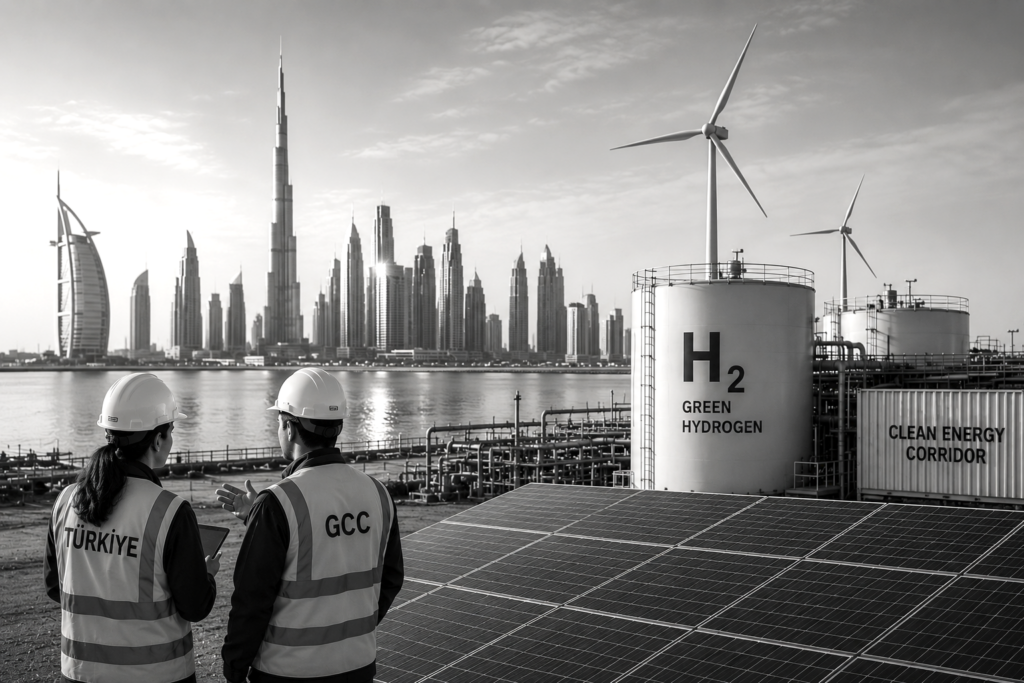
The most consequential climate partnerships of the next decade will not be between countries that share geography. They will be between countries that share complementarity where one side’s strengths fill the other’s gaps, and where the flow of value runs in both directions. The Türkiye–GCC relationship, if structured with clarity, is precisely that kind of partnership.
Two Transitions, One Corridor
Both Türkiye and the GCC are in the middle of significant energy and economic transitions but they are running them from very different starting points, with different assets, and under different external pressures. Understanding that asymmetry is the foundation of a serious partnership.
The GCC countries particularly the UAE and Saudi Arabia have made some of the world’s most ambitious climate commitments, backed by sovereign wealth funds, development finance institutions, and national champions like Masdar, ACWA Power, and NEOM. They have capital in abundance, international credibility in clean energy investment, and an acute strategic need to diversify their economies before fossil fuel revenues structurally decline. What they are actively building is the technology and talent ecosystem to execute at scale—the engineers, integrators, software platforms, and advisory infrastructure to turn investment into measurable emissions reduction.
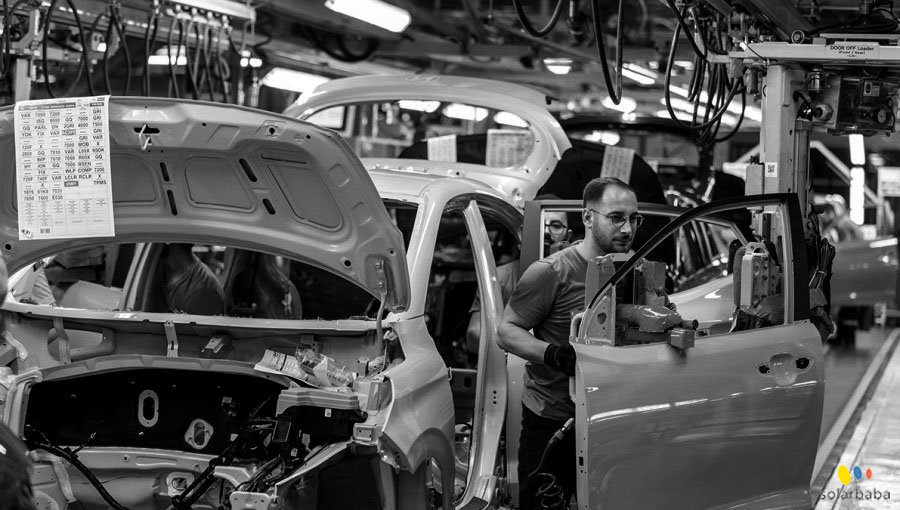
Türkiye brings a different package. It has a large, cost-competitive industrial manufacturing base—relevant for solar panels, wind components, and green steel. It has engineering talent at scale. It has accumulated two decades of experience deploying renewable energy in a complex regulatory and grid environment. And critically, it has the geographic and logistical connective tissue linking Europe, the Middle East, Central Asia, and Africa—the corridors through which green electrons, low-carbon commodities, and climate finance will increasingly flow.
These are not mirror profiles. They are complementary ones. And complementarity, when institutionalised, becomes a corridor.
What a Real Partnership Looks Like
The GCC–Türkiye relationship in climate has so far produced a series of encouraging signals: Masdar’s interest in Turkish wind farms, Abu Dhabi’s International Holding Company taking a stake in Kalyon Enerji, and various MoUs signed in the margins of multilateral events. These are meaningful, but they remain transactional. A genuine green corridor requires something more structural.
On the technology side, the partnership logic is clear. Türkiye’s manufacturing capacity in renewable energy components particularly in wind turbine parts and solar mounting systems can serve GCC project pipelines directly, reducing supply chain exposure and costs. In return, GCC capital can finance the scaling of Turkish cleantech firms that currently lack access to growth-stage funding.
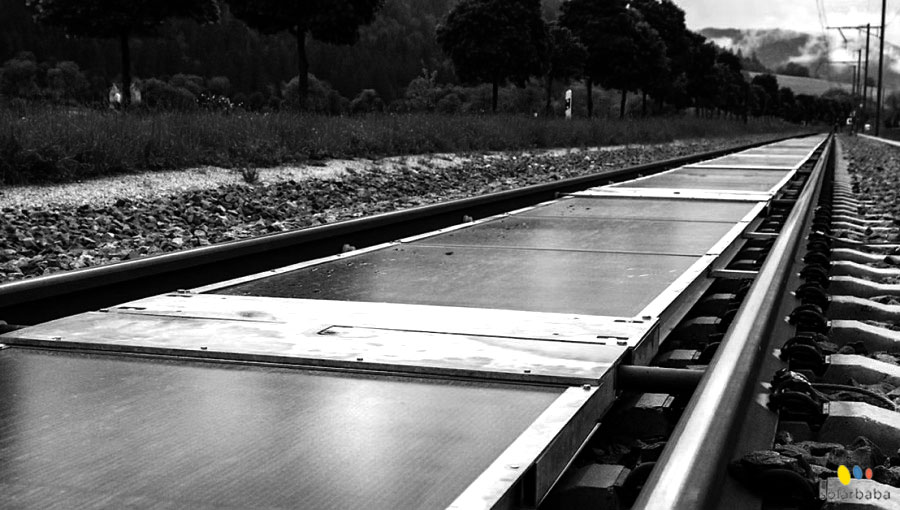
On the infrastructure side, the green electricity transmission corridor formalised in April 2025—connecting Azerbaijan, Georgia, Türkiye, and Bulgaria—is a preview of what is possible at scale. The same logic applies to green hydrogen: Türkiye’s renewable energy potential, particularly in wind-rich regions of the Aegean and Black Sea coasts, positions it as a credible hydrogen production location for both European and GCC-linked demand. GCC investors and developers, with their project finance expertise, are natural partners in structuring those assets.
The Policy Plumbing That Makes It Work
Corridors do not emerge from goodwill alone. They require policy plumbing: compatible carbon accounting standards, mutual recognition of green certification frameworks, bilateral investment treaties with climate provisions, and shared regulatory capacity on emerging technologies like carbon capture, green hydrogen, and digital MRV systems.
This is where the current relationship is underdeveloped—and where COP31 offers a specific opportunity. The conference’s Green Industrialization and Clean Energy Transition priorities create a natural forum for Türkiye and GCC countries to announce joint technology initiatives, harmonised standards work, or co-investment vehicles. Not as announcements for their own sake, but as institutional commitments that outlast the conference and generate the legal and financial architecture a real corridor needs.
The EU-GCC Cooperation on Green Transition project which has been building regulatory alignment and investment frameworks since 2023 is a model worth studying. Türkiye, currently navigating its own CBAM compliance architecture, has strong incentives to participate in or mirror that alignment work, and strong reasons to position itself as the regional node connecting European regulatory standards to GCC project execution capacity.
The Practitioner’s Honest Assessment
Having worked across both markets in sustainability, ESG, and climate technology, I want to be direct about what makes this partnership difficult in practice. Decision cycles in the GCC are long and relationship-dependent. Turkish firms looking to enter Gulf markets often underestimate the depth of due diligence required and overestimate the speed of procurement. Conversely, GCC investors entering the Turkish market face regulatory complexity, currency dynamics, and a domestic political environment that requires local navigation.
These are real frictions, not minor inconveniences. A serious green corridor absorbs them through institutional design: joint venture frameworks, localisation requirements that benefit both sides, and shared risk structures that make long-term commitment rational for both parties.
The window for Türkiye to position itself as the default regional hub for climate technology rather than a market that global players pass through on the way to somewhere else is open. COP31 is the most visible moment to claim it. The question is whether the institutional work, the policy plumbing, and the genuine bilateral ambition are in place when that moment arrives.
I believe they can be. The structural case is strong. What follows now is execution.