

The European Commission’s new energy measures put cities, households and local authorities at the centre of Europe’s affordability agenda.
For years, Europe’s clean energy debate has been framed in the language of grids, markets and megawatts. The European Commission’s latest package shifts the frame closer to everyday life: the bill on the kitchen table, the drafty apartment block, the local authority trying to turn climate targets into practical services.
On March 10, 2026, the Commission unveiled the Citizens’ Energy Package, aimed at making energy more affordable, secure and clean for Europeans. The package focuses on lowering bills, protecting vulnerable households, improving consumer information, supporting energy communities and helping citizens participate more actively in the clean energy transition. The measures are a clear reinforcement of the role of cities in delivering affordable and clean energy on the ground.
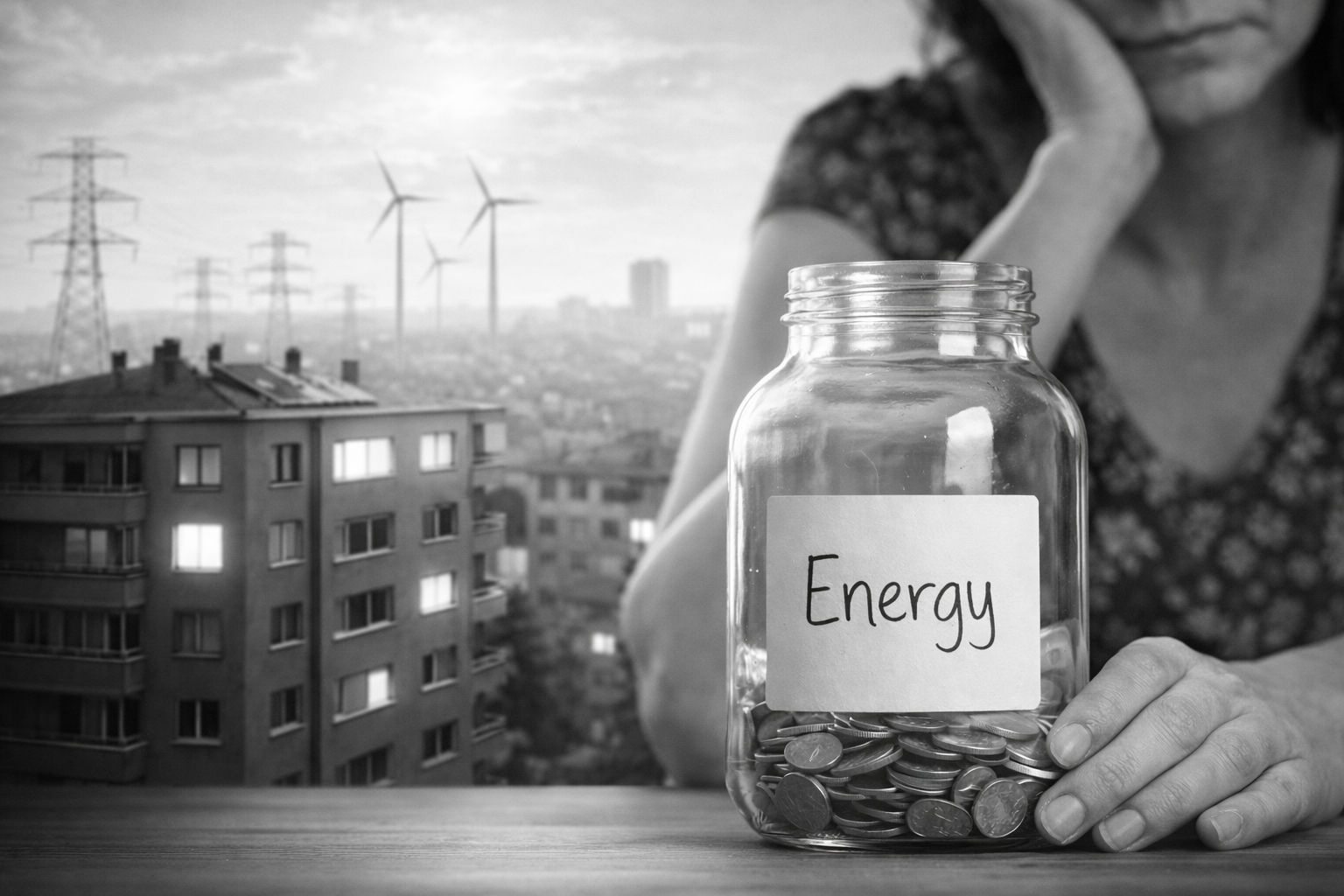
The political backdrop is simple but severe. EU retail electricity prices remain above pre-crisis levels, shaped by wholesale market pressures, weather-related supply shifts and winter demand spikes. The Commission notes that electricity taxes and levies account for about 25 percent of household electricity prices on average, and supports Member States in reducing them where possible. It also highlights that nearly one in ten Europeans cannot adequately heat their homes, while more than 30 million people struggle to pay utility bills on time.
But the more important signal may be institutional. Brussels is not treating affordability as a temporary subsidy problem. It is treating it as a delivery problem. That puts cities in a decisive position.
Cities concentrate Europe’s population, building stock and energy demand. They are also where energy poverty becomes visible: in poorly insulated apartments, ageing district infrastructure, inefficient heating systems and neighbourhoods where households have little capital to invest in renovation. The Commission’s measures therefore give local governments a stronger policy mandate to connect consumer protection, energy efficiency, renovation finance and citizen participation into one urban transition agenda.
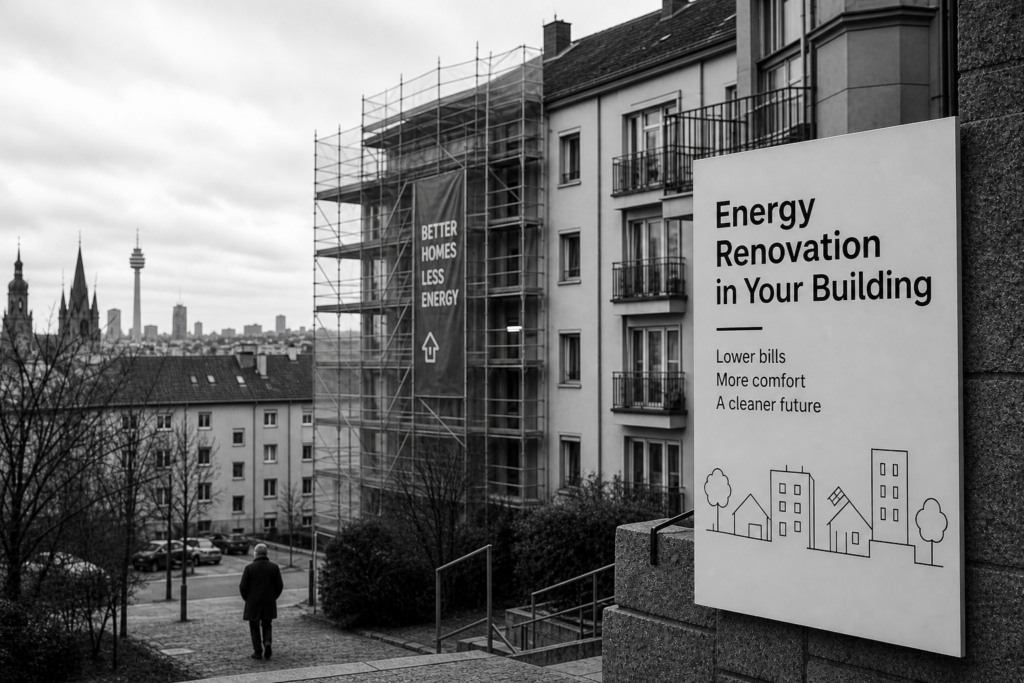
A second pillar of the package is energy efficiency financing. The Commission also announced a support package to accelerate investment in energy efficiency and building renovation, linked to the Clean Energy Investment Strategy. It includes a report on energy efficiency financing in Europe and recommendations on unlocking private investment and establishing one-stop shops for energy renovation. The aim is to reduce investment risks, expand financing options and make renovation easier for households and businesses.
This is where the policy becomes most tangible. One-stop shops are designed to offer technical, administrative, legal and financial assistance for renovation and energy efficiency. In practice, they can help homeowners and building managers identify cost-effective measures, access public aid and finance, and navigate a process that is often too fragmented for ordinary households. The Commission says revised EU energy rules require Member States to make such services available to citizens and enterprises.
For cities, this creates a practical delivery model. A municipality can use one-stop shops not simply as information desks, but as urban transition infrastructure: connecting energy audits, grants, loans, contractors, social housing priorities and vulnerable household support. In the best cases, they can turn scattered renovation incentives into a coherent local service.
The risk is that the policy remains technically sound but socially invisible. The Commission itself notes that, according to a 2025 report by the International Union of Property Owners, only one in ten property owners were aware of one-stop shops in their region or country. That is a warning sign. A service that citizens do not know exists cannot drive renovation at scale.
The new EU measures therefore point to a broader lesson: Europe’s energy transition will not be delivered by regulation alone. It will require local institutions capable of translating policy into trust, finance into action, and climate goals into lower bills.
The next phase of the energy transition is not only about piloting smart solutions. It is about scaling practical systems that households can actually use. Affordability, renovation, citizen participation and clean energy are no longer separate policy files. They are becoming the same urban agenda.