

Carbon. A silent, steady force, stitching together the fabric of life with her capacity to form a multitude of compounds. This microscopic architect forms the backbone of all known life on Earth, from invisible microbes to towering redwoods, from the smallest plankton to blue whales. Yet, in our modern world, carbon’s role has undeservedly transformed. It has gone from being the essential building block of life to being maligned as the primary culprit in climate change.
Following our first issue on the “Bathtub” physics of our atmosphere, we need to address the elephant in the room. Even as we recognize that Carbon Dioxide Removal (CDR) is necessary, there is significant confusion and a fair amount of skepticism about how it should be used. Becoming aware of the misconceptions about carbon removals and replacing them with knowledge backed up by science is crucial. Is it a “license to pollute” or is it the missing piece of our climate strategy? Let’s look at the reality behind the two major common beliefs about CDR.
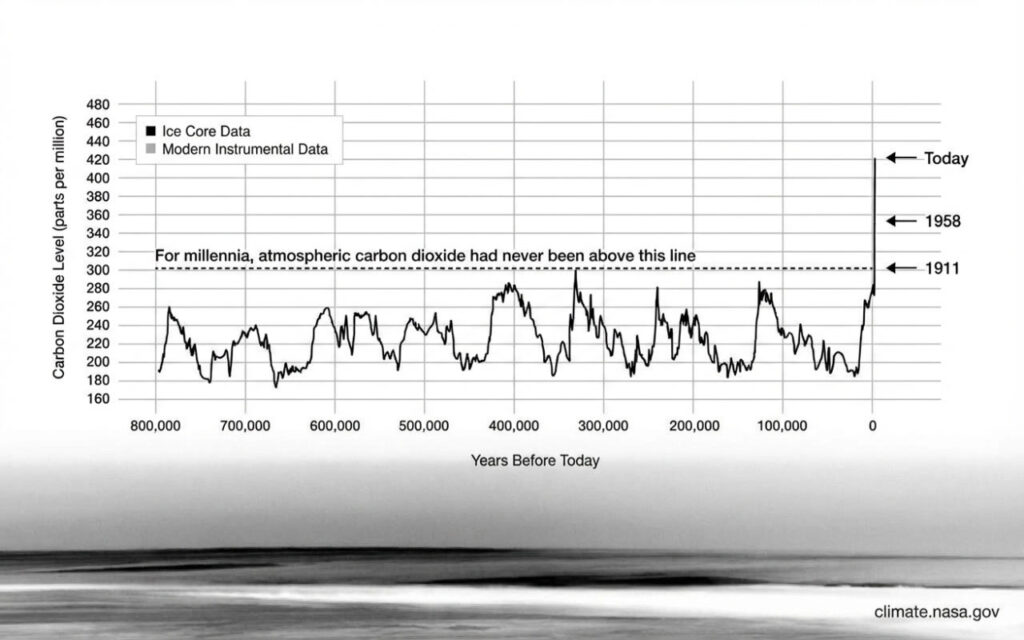
The Context: CO2 accounts for about 75% of total greenhouse gas emissions. We released too much of it to the atmosphere which had been stored in the biosphere and lithosphere for millions of years. Climate science is clear, there’s already 1,000 billion tons of excess CO2 in our atmosphere which we need to REMOVE. By the end of February 2026, the global atmospheric CO2 concentration reached 429.6 ppm, measured at the Mauna Loa Observatory in Hawaii, world’s primary benchmark for atmospheric monitoring. According to research published in Science “Toward a Cenozoic history of atmospheric CO2“ the last time carbon dioxide in the atmosphere consistently matched today’s human-driven levels was 14 million years ago.
While reducing emissions to almost zero is a must, it is not enough for reaching a well-below 2°C target with such an amount of CO2 already in the atmosphere. CDR is not optional and we have to scale it up on time to be able to reach climate targets. To do that, we must first clear the bias and confusion surrounding it.
Belief 1: “Carbon dioxide removals should only happen after reduction targets are achieved.” Fact: Waiting for decarbonization “first” is a risk we cannot afford!
The idea that removals should only occur after eliminating 90% of emissions is outdated. We simply don’t have time to wait for decarbonization to happen first.
CO2 removal takes time. The rate of growth required for CDR to meet 2030 and 2050 targets is huge. Integrating removals alongside emission reduction is crucial to remove enough CO2 in a timely manner. According to “Carbon credits: Permission to Pollute or Pivotal for Progress” report by Sylvera, data shows that companies using carbon offsets in their sustainability portfolio actually have an above-average decarbonization rate. They are doing both at the same time, not one instead of the other.
Belief 2: “Carbon removal is just greenwashing.” Fact: CDR is a climate necessity, not a “license to pollute”.
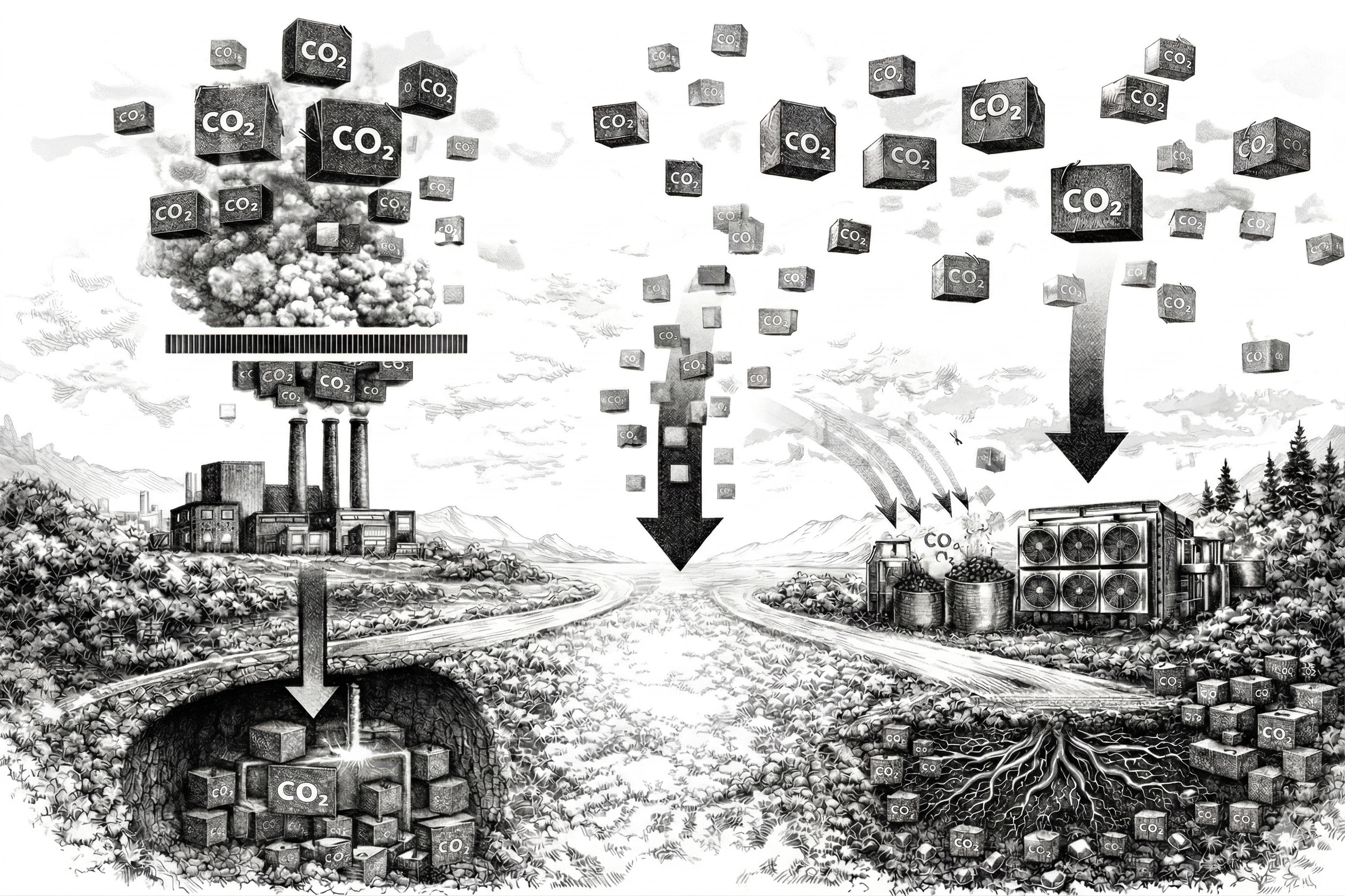
Greenwashing could be about HOW we handle the whole decarbonization and offsetting journey, not the CDR tool itself. This misconception comes from several reasons such as carbon neutrality claims without plans for reducing emissions significantly, double counting and transparency issues in the carbon market, the confusion between CDR and Carbon Capture and Storage (CCS) which is seen as a “license to pollute”. While CCS prevents new emissions at source, CDR cleans up what is already in the air.
According to the IPCC “CDR is a key element in scenarios that limit warming to 2°C (>67%) or 1.5°C (>50%) by 2100 (high confidence)” (TS.5.7 Carbon Dioxide Removal (CDR) section at the Technical Summary, The Working Group III (WGIII) contribution to the IPCC’s Sixth Assessment Report – AR6). We must remove the excess CO2 while reducing new emissions to almost zero. It is not an “either/or” situation; physics tells us it must be”both”.
Moving Forward CDR is set to be one of the biggest industries of the future if we are to live in a world with a stable climate. We just have to start planning, investing in, and realizing these projects now. We can pave the way for more effective CDR strategies for carbon offsetting, insetting and Beyond Value Chain Mitigation (BVCM), ensuring progress towards net-zero targets.