


Electrifying a bus fleet is one of the most practical climate moves a city can make. The carbon savings count, but the change people actually notice is cleaner air, quieter streets, and bills that stop swinging with the price of oil.
When we talk about climate action, the picture that comes to mind is usually a power plant or a wind farm. Yet some of the steps that matter most are taken on an ordinary city street, on a route people ride to work every morning. Electrifying a bus fleet is one of them. It cuts carbon, of course. It also does something you feel right away: it clears the air where children walk to school, takes the roar out of a busy avenue, and loosens the grip the oil market has on a city’s budget.
The shift is already happening. By 2024 there were roughly 780,000 electric buses on the road worldwide, almost all of them battery-electric, according to the World Resources Institute. More than nine in ten are in China, which moved early and moved hard. The turning point came in 2017, when Shenzhen became the first city anywhere to run a fully electric fleet: all 16,359 of its buses, backed by around 510 charging stations. Europe caught up quickly. Zero-emission models made up about 60% of the EU’s city-bus market in 2025, and the bloc has committed to cutting city-bus CO2 by 90% before 2030. In Latin America, Chile now runs more than 2,700 electric buses, about 2,500 of them in Santiago.
The benefit you notice first: cleaner air
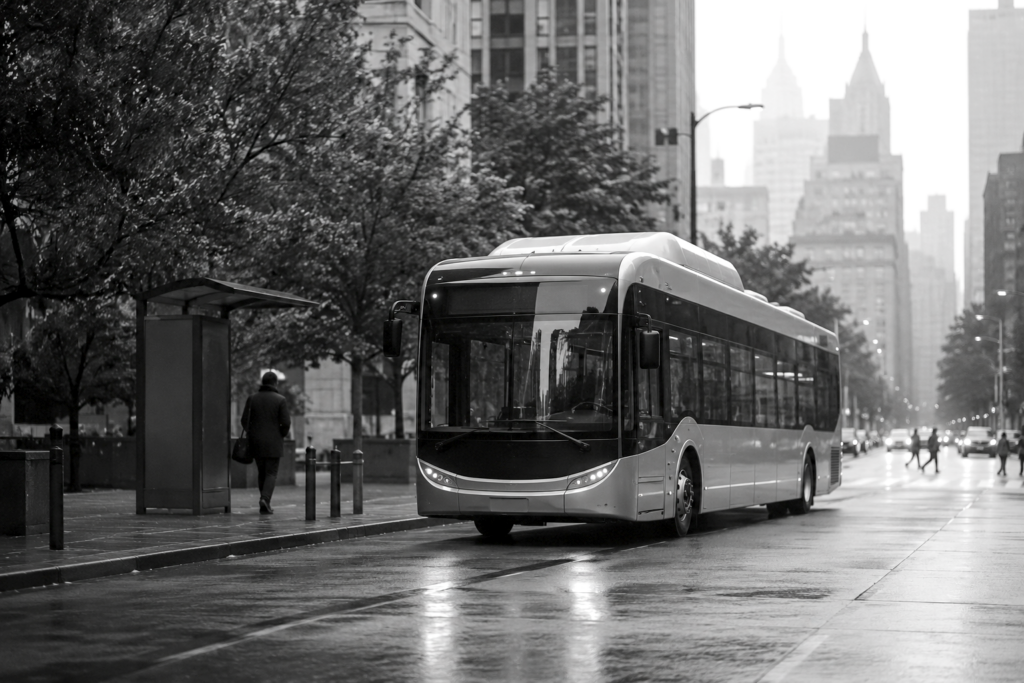
A diesel bus does its damage exactly where it lands, at street level, in crowded neighbourhoods, next to people waiting at the kerb. Its exhaust carries nitrogen oxides (NOx) and fine particulates (PM), both linked to asthma and to heart and lung disease. An electric bus has no exhaust pipe, so that street-level pollution is simply gone.
The figures bear this out. When Bogota ran the numbers on moving its TransMilenio buses from diesel to electricity, it found that CO2-equivalent emissions would fall by about 86% and fine particulates by about 88%. A study in PNAS put the value of swapping one average American diesel bus for an electric one at around $84,200, split almost evenly between health and climate benefits, alongside a cut of roughly 181 tonnes of CO2 over the bus’s life.
There is a fair objection to deal with here. Generating electricity is not clean, and on a full well-to-wheel basis some of the pollution does not disappear; it moves to the power plant. But power plants tend to sit well away from where people live and release their emissions high into the air, so the harm at street level still drops sharply. And the cleaner the grid becomes, the further the balance tips toward the electric bus.
Quieter, and cheaper to run
There is a benefit no emissions table captures, and residents pick up on it within days: the noise is gone. An electric bus pulling away from a stop is almost silent, and that quiet changes how a busy street feels to live on.
Cost is the harder conversation. An electric bus is more expensive to buy, usually between 1.2 and 1.5 times the price of a diesel, and that sticker price is what makes cities hesitate. It is also only half the story. Electric buses are far cheaper to run. With fewer moving parts and regenerative braking that spares the brakes, maintenance falls by something like 30 to 40%, and the fuel cost per kilometre is roughly half that of diesel. Battery prices keep sliding, from about $250 per kilowatt-hour a few years ago to around $175 today and lower still, and most analysts expect electric buses to match diesel on lifetime cost, even without subsidies, somewhere around 2030. The quieter advantage is stability. Electricity prices move far less than diesel, so a city that goes electric stops exposing its transport budget to every oil-price shock. Shenzhen got past the upfront barrier partly by leasing its buses rather than buying them, and by paying for the charging infrastructure itself, an approach others have borrowed since.
Where it gets tricky, and how cities handle it
None of this runs itself, and pretending otherwise helps no one. Electric buses lose range in the cold, when the battery delivers less and the heater draws power. Routes have to be built around range and charging windows. The biggest operational trap is the grid: if a whole depot plugs in at once in the early evening, it can trigger heavy demand charges and push the local network to its limit. Handled carelessly, “fuelling” an electric bus can cost twice as much per kilometre as diesel.
The fix is not more hardware. It is smarter operation. Charging software spreads the load across off-peak hours, keeps the depot inside its grid limit, and warms the batteries on grid power before a cold-weather run. The savings are concrete: New York’s transit agency expects to save around $420,000 a year at a single depot simply by choosing when its buses charge. The best depots go further and pair their chargers with on-site solar and battery storage, which cuts cost and emissions together, keeps the buses moving through grid outages, and increasingly feeds power back to the grid when demand peaks. An electrified depot, then, is not a car park with sockets. It is a small energy system, and treating it as one is what separates a fleet that saves money from a fleet that quietly drains it.
Where Türkiye stands
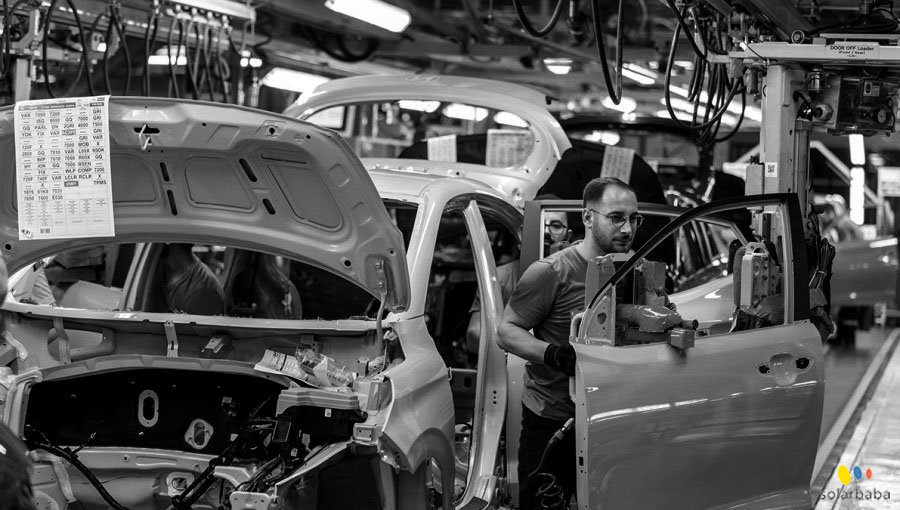
Türkiye is no frontrunner here, but it is not short of good examples either. It is already one of Europe’s largest bus manufacturers, and companies such as TEMSA, Karsan, Bozankaya and Otokar build electric models that ship across Europe and beyond. Cities are moving on the demand side too. İzmir’s ESHOT was an early mover in running electric buses, İstanbul’s IETT has put its first fully electric buses into service, and fleets are growing in Konya and Kayseri. Mersin is working to bring in electric buses, along with the charging and solar infrastructure behind them, under an EBRD-financed project. The domestic supply chain is deepening as well, with local lithium-iron-phosphate battery-cell production now coming on line. For a country that builds buses and also needs to clean up its city air, fleet electrification is one of those rare cases where industrial policy and climate policy point the same way.
What this means for COP31
Of all the levers of decarbonization, electric bus fleets are among the clearest and easiest to repeat. They are public and visible, and they deliver results a mayor can point to within a single term: less carbon, cleaner air, quieter streets, and a budget that no longer rises and falls with the price of fuel. They make a broader point as well. The transition is not only about producing clean power but about using it well, which is exactly why an ordinary bus depot, once you add smart charging and storage, becomes a piece of climate infrastructure in its own right. In Türkiye that loop can almost close: many municipalities are able to build their own solar plants, so the electricity a bus fleet draws from the grid can, in principle, come entirely from renewable sources.
The takeaway for cities is plain. The bus is the workhorse of urban transport, and electrifying it is one of the surest ways to make a city cleaner and more liveable at the same time. The technology is ready. What is left is the will to plan it properly, and the sense to treat every depot as the small power plant it has quietly become.