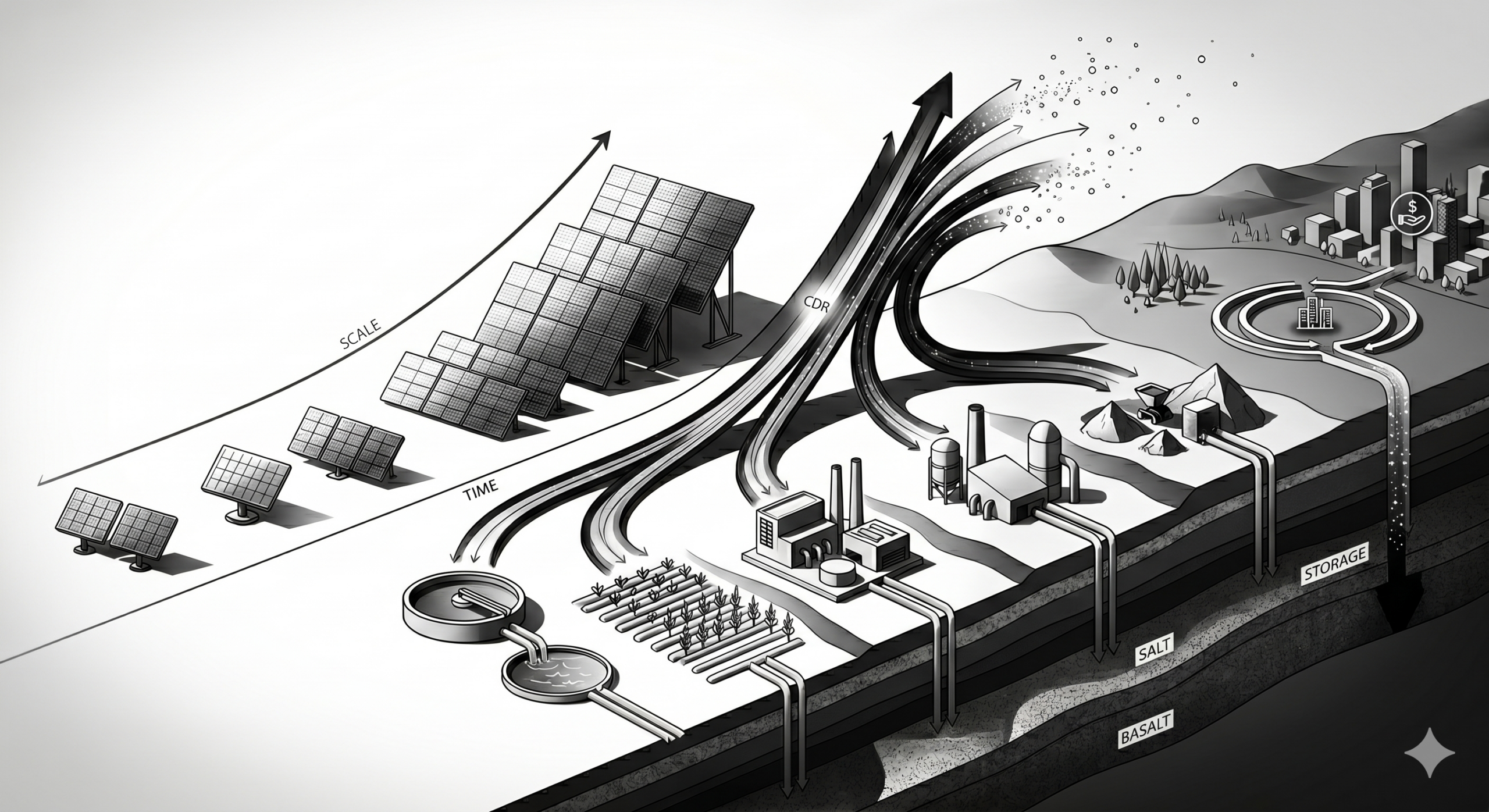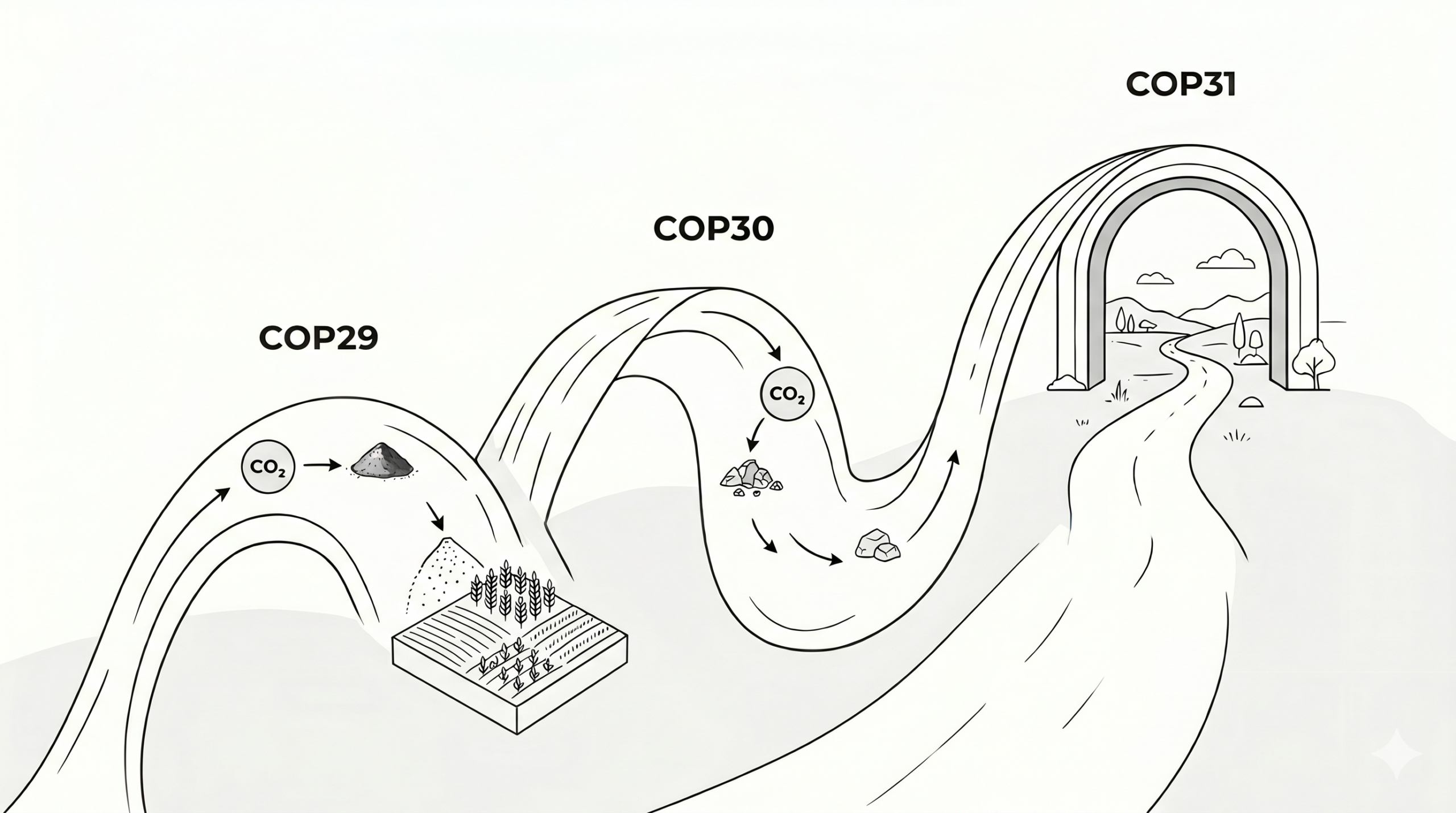

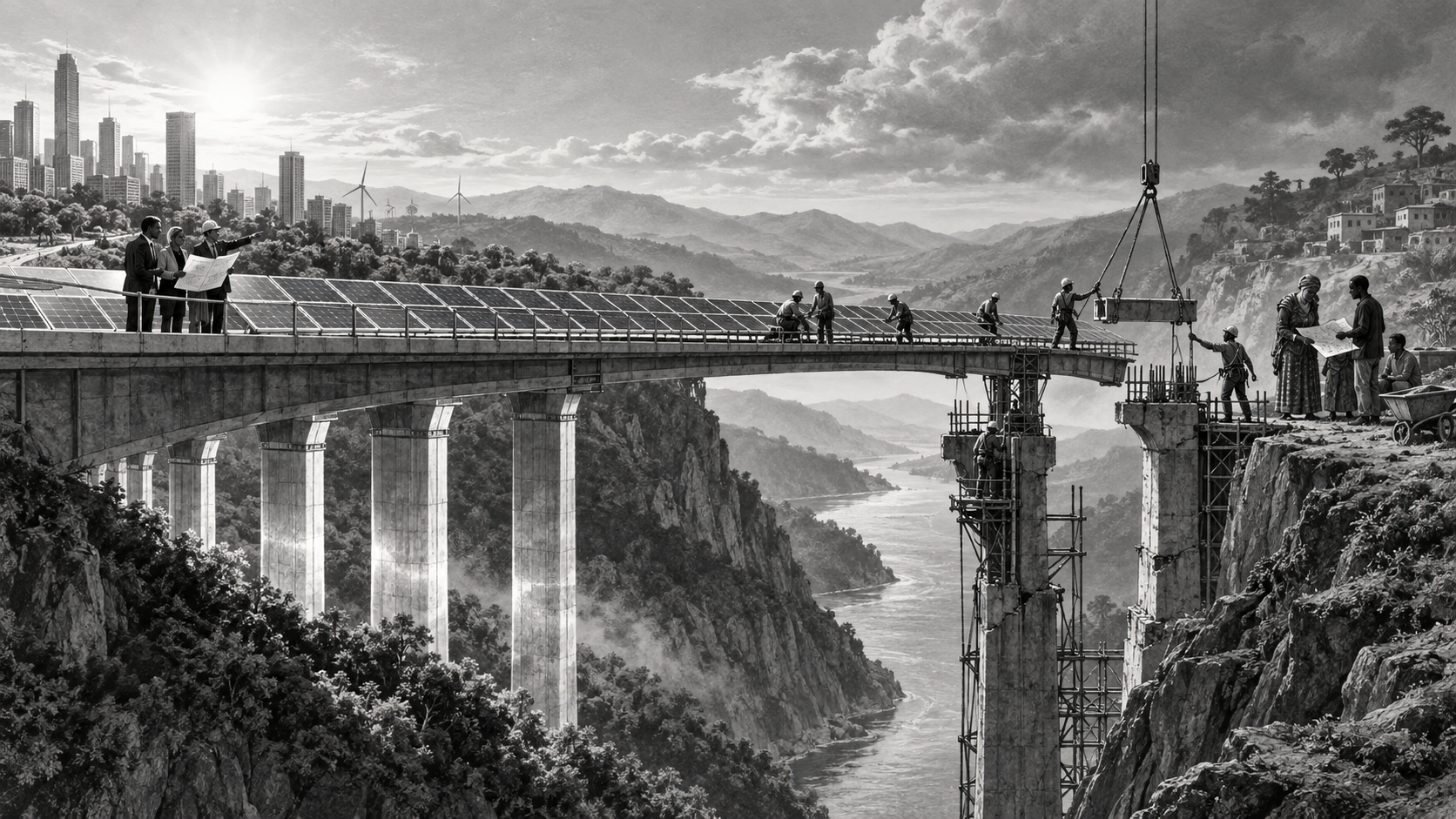

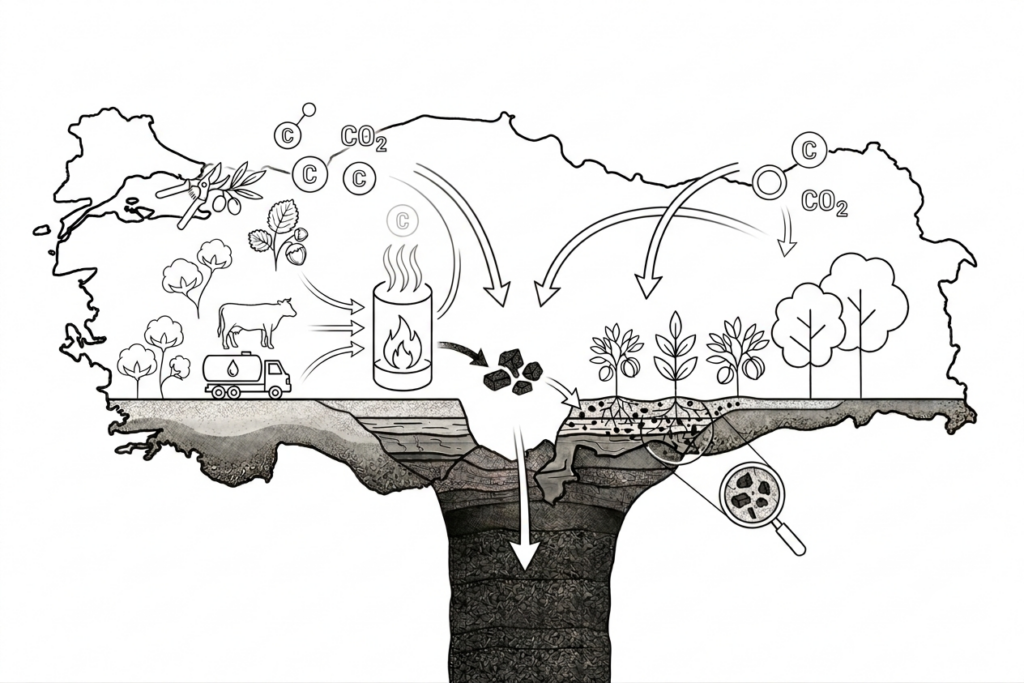
Meeting Türkiye’s 2053 net-zero emissions target requires deploying durable carbon dioxide removal (CDR) pathways alongside deep decarbonization measures. As national Emissions Trading Systems (ETSs) expand globally, Border Carbon Adjustments (BCAs) are emerging as trade measures to address carbon leakage, with the EU Carbon Border Adjustment Mechanism (CBAM) acting as the first operational implementation. Biochar offers an immediate, high-durability carbon removal option to navigate these evolving trade and carbon pricing mechanisms.
The immediate opportunity rests on underutilized resource streams. By converting agricultural residues, forestry management waste, and municipal organic streams into stable solid carbon, biochar secures carbon removal over centuries. Because it relies on secondary waste biomass, it scales without competing with food production for arable land or water resources.
Beyond national climate goals, Türkiye is positioned to act as a regional biochar hub. Leveraging its industrial base, agricultural scale, and logistical links, the country can connect biomass resources, technology deployment, and carbon credit transfer channels across the Mediterranean, the Middle East, and Central Asia.
1- Feedstock Availability and Resource Mapping
Türkiye generates diverse secondary biomass streams across municipal, agricultural, and forestry sectors. Current baseline practices, such as open-field residue burning, landfilling organic waste, unmanaged sludge disposal, and accumulating forest fuel loads, release biogenic carbon back into the atmosphere while creating environmental liabilities. Systematically aggregating these secondary streams establishes a biochar feedstock base without requiring dedicated land use or competing with food production.
Agricultural and Agro-Industrial Residues
Agricultural production across Türkiye generates consistent seasonal residues. Pruning waste from fruit-bearing trees alone represents an estimated national biochar potential of 175,000 tonnes annually (Dursun N., 2024). Orchard prunings (including apple, apricot, almond, and olive trees) combined with high-volume field residues (such as hazelnut shells, cotton stalks, cereal straw, and olive pomace) provide a predictable, geographically distributed feedstock base.
Municipal Solid Waste and Sewage Sludge
Urbanization and municipal operations generate substantial biogenic waste streams that currently represent economic and environmental burdens for local authorities. TurkStat reported 32.3 million tonnes of municipal waste collected in 2024, with household food waste accounting for an estimated 8.69 million tonnes annually under UNEP indices. In parallel, municipal sewage sludge represents a growing volume. According to research, sewage sludge can be transformed into biochar through innovative thermochemical technologies, where high-temperature processing neutralizes organic pathogens, microplastics, and persistent synthetic compounds such as PFAS.
Forestry Slash and Wildfire Biomass
Forest management in Aegean and Mediterranean regions produces substantial wood slash, thinning residues, and understory clearing waste. Left unmanaged in forest stands, this biomass accumulates as combustible fuel. Directing this biomass into controlled pyrolysis supports wildfire fuel reduction while securing solid biogenic carbon storage.
Biogas Infrastructure as Aggregation Hubs
Scaling biochar deployment requires rural logistics nodes to collect, test, and process dispersed feedstocks. Existing rural biogas facilities provide established operational infrastructure for feedstock collection, pre-treatment, and handling. Biogas plants can aggregate local agricultural residues, co-process solid digestate through pyrolysis units, and serve as regional nodes for chain-of-custody tracking and quality control.
2- Zero Waste Alignment, Industrial Decarbonization, and Building Industry Scale
Connecting biochar to industrial systems aligns carbon management with circular economy principles and decarbonization strategies.
Zero Waste Integration
Türkiye’s Zero Waste framework focuses on resource efficiency and landfill diversion. Extending this logic directly to biogenic carbon management allows agricultural residues, forestry slash, municipal organic fraction, and sewage sludge to be treated as secondary carbon feedstocks rather than waste liabilities. Pyrolysis locks the carbon contained in these residues into a solid, durable format, preventing methane and carbon dioxide emissions from natural decay or open burning.
Industrial Decarbonization and Process Emissions
Industrial decarbonization requires addressing both fossil fuel and direct process emissions. Heavy industrial sectors face unavoidable process emissions that energy efficiency and fuel switching cannot eliminate. Durable carbon dioxide removal provides the removal capacity needed to balance these residual, hard-to-abate emissions. In parallel, biochar functions as a solid material input in manufacturing. Because products like polymers, asphalt, and industrial filters rely on fossil-derived raw materials or carbon-intensive fillers, replacing those additives with biochar lowers the total embodied carbon of the final product while storing biogenic carbon inside the material.
Scale of the Building and Construction Industry
Türkiye is a major global producer of cement and structural building materials. Incorporating biochar into concrete, cementitious formulations, asphalt, and composite building materials embeds solid carbon directly into long-lived physical infrastructure. Given the output volume of Türkiye’s construction sector, integrating even minor percentages of biochar by weight per tonne of building product creates a massive, long-term carbon storage sink across domestic and regional infrastructure markets.
3- Climate Vulnerabilities in the Mediterranean and Biochar’s Dual Benefit
The Mediterranean basin is warming significantly faster than the global average (20% faster than the global annual average and up to 50% faster during summer), accelerating soil moisture loss, drought frequency, and severe wildfire risks. Biochar deployment delivers a dual climate benefit by contributing to both wildfire risk mitigation and agricultural adaptation.
Wildfire Mitigation and Forest Stock Protection
Unmanaged understory brush and slash act as high-density fuel loads during summer heatwaves. Utilizing forest management clearing waste for biochar production alters wildfire behavior by reducing available surface fuels. This lowers fire intensity, helping prevent low-severity ground fires from escalating into catastrophic crown fires that destroy standing forest carbon stocks.
Soil Adaptation and Agricultural Resilience
Agricultural soils across the region face organic matter depletion and acute drought stress. Applying biochar to agricultural soils increases soil organic carbon levels, improves water retention capacity, and enhances nutrient retention. These physical soil improvements cushion crops against extreme heat events, reduce irrigation demand, and help maintain crop stability in degraded soils.
Conclusion & Strategic Outlook
Biochar connects agricultural waste management, industrial material decarbonization, and regional climate resilience into a practical, scalable opportunity for Türkiye. Unlocking its full strategic value will require harmonizing domestic protocols with international quality benchmarks like the EU Carbon Removals Certification Framework (EU CRCF), establishing Article 6 pathways for cross-border market transfers, and formally incorporating durable carbon dioxide removal, including biochar, into the Turkish Emissions Trading System (TR ETS). This integration will position Türkiye as a reliable regional hub for sustainable bioeconomy execution and high-integrity carbon removal.