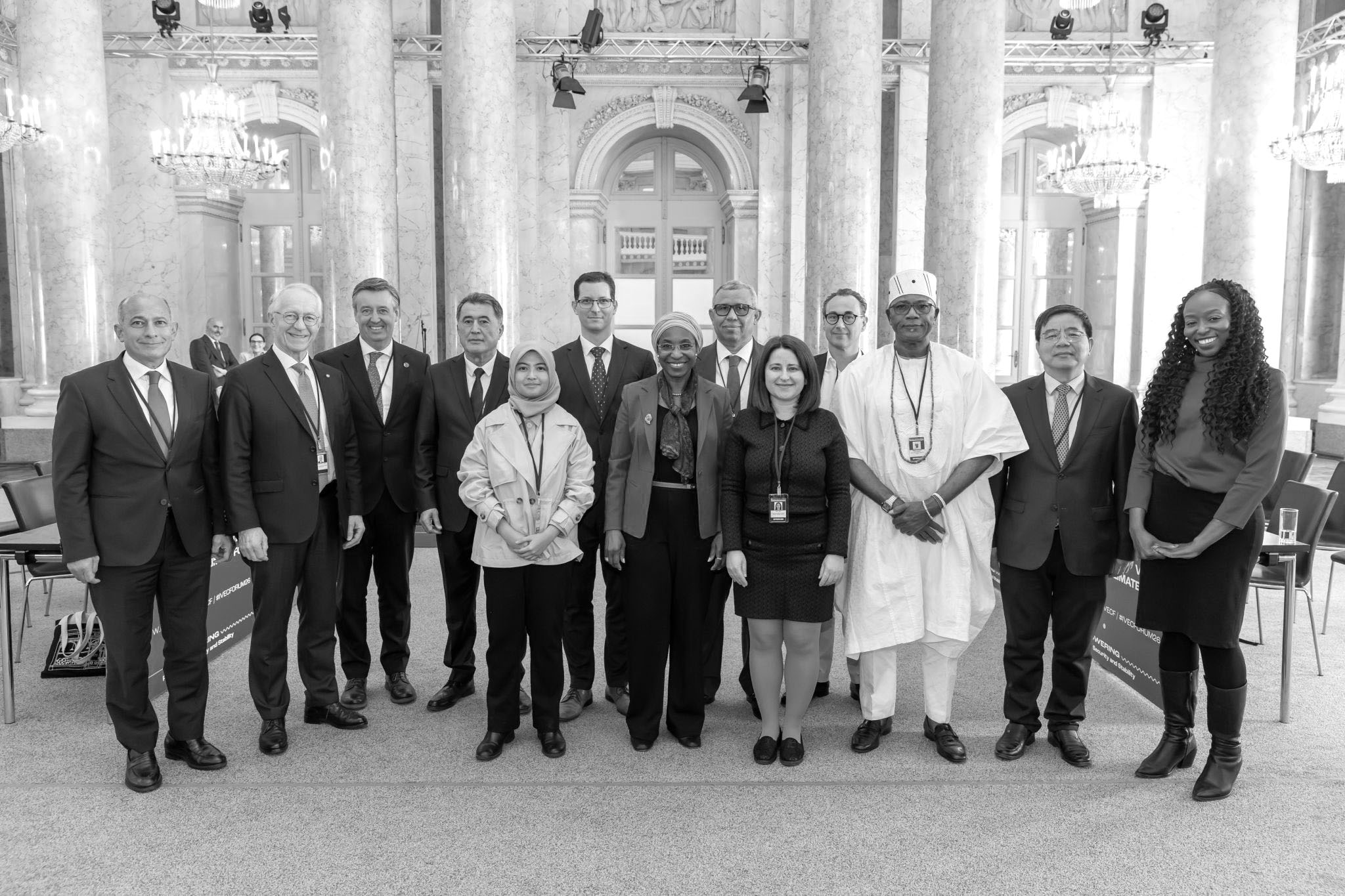
The opening session of the CDR Stage towards COP31 felt like a turning point. For the last three years, I have joined countless online CDR events, and as far as I know, I was almost always the only person joining from Türkiye in most of them. This week was different. I co-hosted our opening webinar alongside “my partner in crime” Göker Avcı, as we build this CDR Stage journey together. What made me most happy was that two-thirds of the participants were from Türkiye. Seeing newcomers from heavy emitting industries, finance, and sustainability consultancies in the same room as seasoned international CDR experts is exactly what we planned for. Participants came from a wide range of backgrounds, reflecting how CDR now speaks to many agendas at once: climate policy, industry, finance, sustainability, innovation, urban transformation, climate tech and nature-based solutions.
Learning from the Solar Journey
Our guest speaker Christopher Neidl, the Carbon Removal Lead of the Climate High-Level Champions, brought a unique perspective from his 15 years in the solar sector. While the solar and CDR sectors are different in many ways, their scaling journeys share striking similarities. Back in 2000, no one expected solar to reach the scale and low cost it has today. It vastly exceeded expectations because the community focused on more than just R&D.
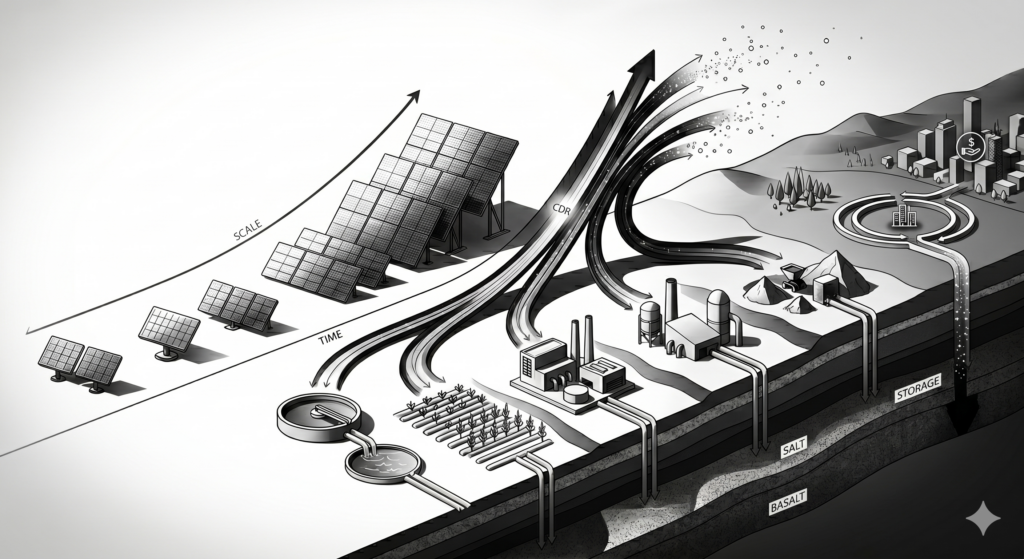
Scaling a novel technology is a complex process that requires market creation, validation, and policy frameworks to be in place. The technology mattered, and the enabling environment mattered just as much. This complexity takes time, and you cannot skip these steps. Just as solar moved from a marginal, academic interest to a global energy pillar, CDR is now entering that critical window where we must focus on the “market machinery” to bend the curve this decade. This is a similar phase, but with greater complexity and a much shorter timeline.
The task ahead is broad. It includes supporting research and development, creating credible markets, distinguishing high-quality removals from weak claims, developing standards for measurement and verification, and building investor confidence. It also requires demand from companies and governments, along with policy frameworks that can give the sector long-term direction.
Climate System’s Repair Kit
Deep emissions reduction is a priority, it is the default. At the same time, the world is moving toward a future where some degree of temperature overshoot is becoming an inevitable reality. CDR becomes essential for managing the overshoot and “helping move atmospheric carbon in the other direction” as Neidl aptly put it. CDR introduces another dimension within the wide range of climate action: repair. It asks how societies can stop adding to the problem while also beginning to reverse part of the harm already done. Chris Sherwood, Secretary General of the Negative Emissions Platform (NEP) echoed this during the session, noting that CDR is unique because it offers the hope of actually healing the atmosphere rather than just limiting damage.
CDR: A “Function” to Add
One of the most enlightening parts of the discussion was Neidl’s perspective on how we define Carbon Dioxide Removal. As Neidl pointed out, often, people look at CDR as if it were a specific “thing” (like a bird in the sky), but CDR is actually a function.
“Don’t think of CDR as a bird you are looking for. Think of it as flight. There are many different things that can fly, and we are discovering them all the time.”
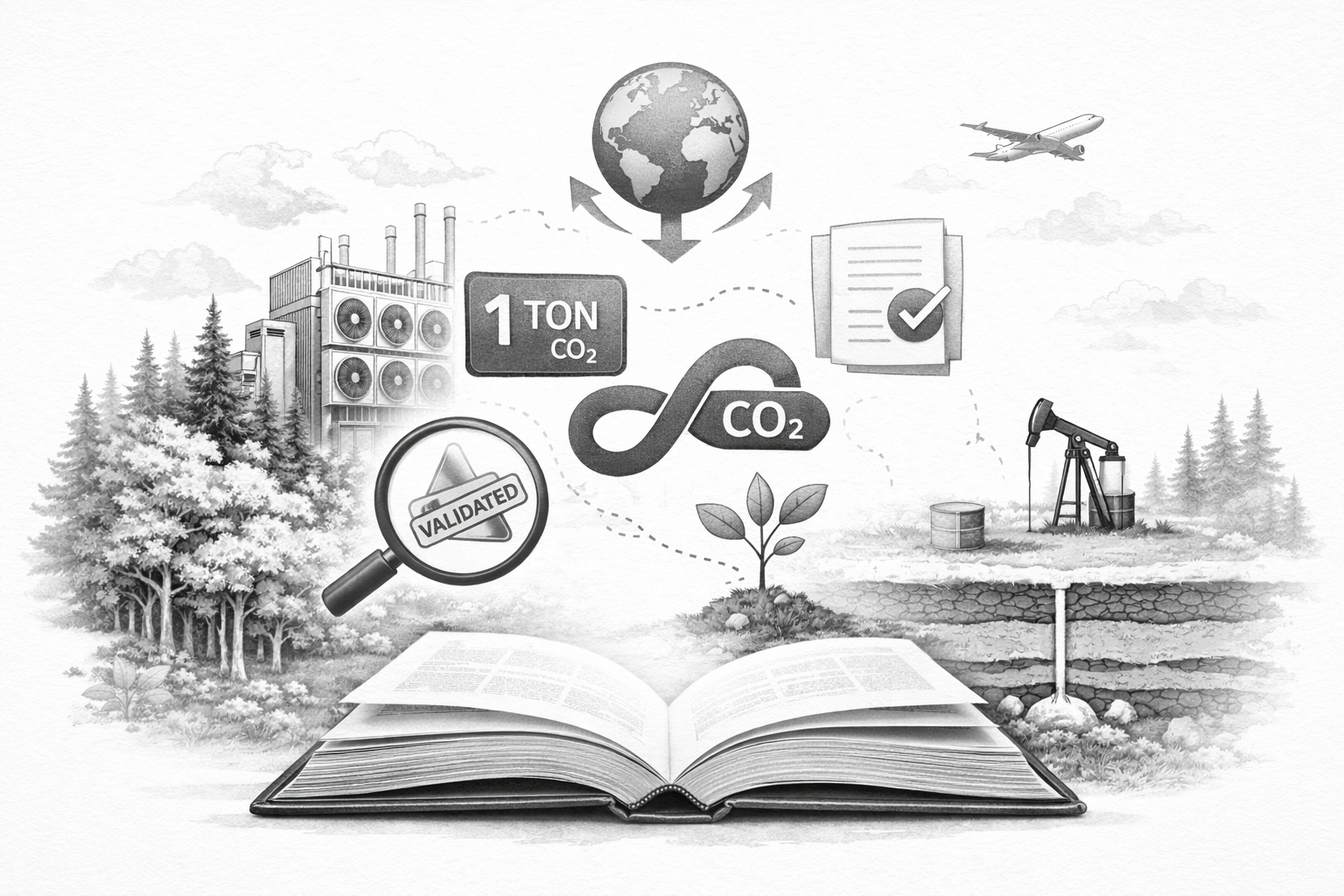
This shift in perspective is critical. Unlike the solar industry, which scaled by converging on a single technology, CDR will scale through diversity. It is a latent potential found in wastewater treatment, concrete manufacturing, agriculture, forests, and beyond. Scaling it doesn’t mean building something from zero; it means hooking the “function” of carbon removal into the massive industrial foundations that already exist, creating value beyond climate benefits alone. Through this lens, waste management, agriculture, construction materials, biomass, energy systems, logistics, cement, mining and heavy industry can all become part of the CDR landscape. Removal pathways need to be embedded into supply chains, infrastructure planning and circular economy strategies.
CDR2030 Initiative
We often hear the mid-century target of 10 billion tons of CO2 removal per year. While that number is necessary to reach Paris Agreement goals and manage temperature overshoot, it can feel overwhelming. Neidl introduced the CDR2030 initiative which was part of the action agenda at COP30 in Belém and will be officially launched soon. It focuses on the immediate window: the next five years.
The targets for this decade are:
- 100 million tons per year of novel CDR.
- 3 gigatons per year of nature-based solutions.
Right now, we are at a fraction of that capacity. To bend the curve, we must focus on three practical levers: activating policy at every level (from municipal to global), integrating CDR into existing value chains, and mobilizing demand to create a functional market for these removals. The decisions, investments and partnerships formed in the next few years will shape what becomes possible by mid-century. Early markets need to emerge. Policy frameworks need to mature. Industrial partnerships need to form. Technical capacity needs to grow. Demand needs to become visible and credible.
Türkiye’s CDR Potential
CDR aligns perfectly with three of the priorities of Türkiye’s COP31 Presidency: Zero Waste, industrial decarbonization, and urban resilience. We have the industrial heritage and the technical capability to make this geography a hub for high-integrity CDR projects. As Neidl noted, Türkiye’s potential is a “well-kept secret” that we are now ready to share with the global community.
This potential is especially relevant because the country has a diverse industrial base, significant agricultural activity, growing renewable energy capacity, complex urban systems and the emerging climate agenda with the new ETS regulation and CBAM integration. These assets can become building blocks for different CDR pathways when combined with the right policy signals, financing models, technical capacity and international partnerships. Waste streams can become inputs. Industrial clusters can become deployment sites. Cities can become laboratories for circular carbon solutions. Nature-based approaches can strengthen resilience while contributing to removal capacity.
What is Next?
The energy in the room confirmed that we are moving past the general awareness phase and into the era of implementation. Having newcomers from finance and heavy industry alongside seasoned CDR experts is exactly how we close knowledge gaps and move toward collaboration.
Our CDR Stage journey continues in May with a session focused on the “engine” of this growth: Investing in Carbon Removal: Financing Models and the Evolution of CDR Credit Markets.