

Energy resilience is often discussed in terms of backup generators, grid upgrades and emergency planning. But there is another question worth asking: what if buildings and local communities could contribute more actively to their own energy security?
Solar energy can be part of the answer because it brings generation closer to where energy is needed.
From centralised supply to local resilience
Electricity systems depend on a complex network of generation assets, transmission infrastructure and distribution grids. Disruptions at any point can affect homes, businesses and essential public services.
Distributed energy resources offer another layer of protection. Rooftop solar, batteries and other locally connected technologies can diversify electricity supply and reduce dependence on a single source.
The International Energy Agency has highlighted the role of distributed energy resources in strengthening energy security and resilience, particularly where centralised infrastructure is vulnerable.
The same logic applies well beyond emergency situations. Extreme weather, infrastructure failures, rising demand and the electrification of heating and transport all make resilience an increasingly important consideration in energy planning.
Solar panels alone do not guarantee resilience
There is an important distinction between generating renewable electricity and maintaining access to electricity when the grid fails.
A conventional grid-connected solar PV system will generally shut down during a grid outage unless it has been specifically designed to operate in backup or islanded mode, which means running while disconnected from the grid. Adding a battery does not automatically resolve this issue.
Resilient operation depends on how the entire system is designed: the inverter, battery, switching equipment, electrical protection, control strategy and the loads that need to remain powered.
This also means that resilience does not always require an entire building to operate independently. In many cases, the priority is to maintain a defined set of essential services.
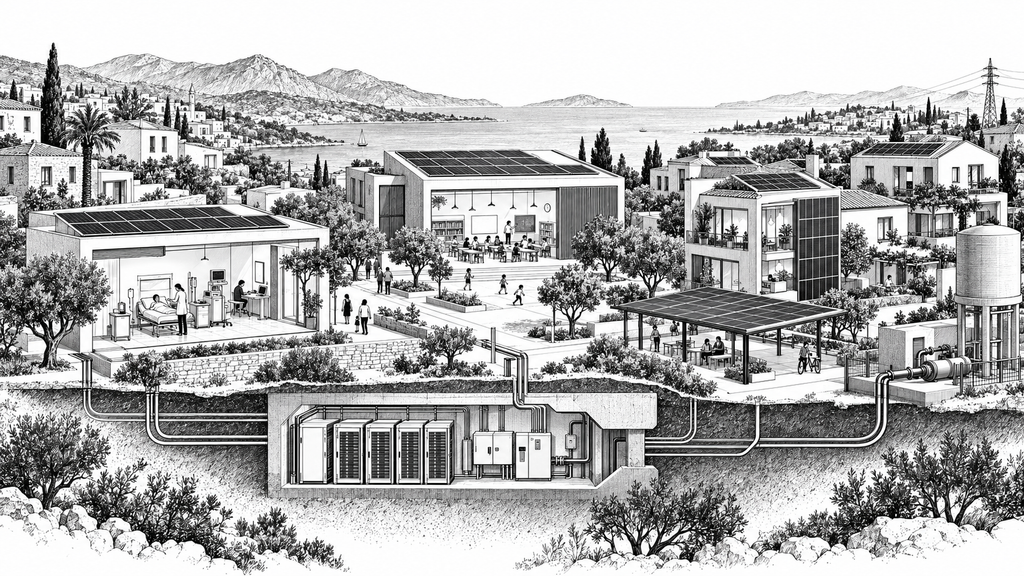
For a hospital, this might mean critical medical equipment and communications. For a school or community centre, it could mean lighting, connectivity and a safe space for local residents. For water infrastructure, continuity of pumping and treatment may be the priority.
The first design question should therefore be: which services must remain operational, and for how long? The energy system can then be sized and designed around that requirement.
Buildings can become part of the energy infrastructure
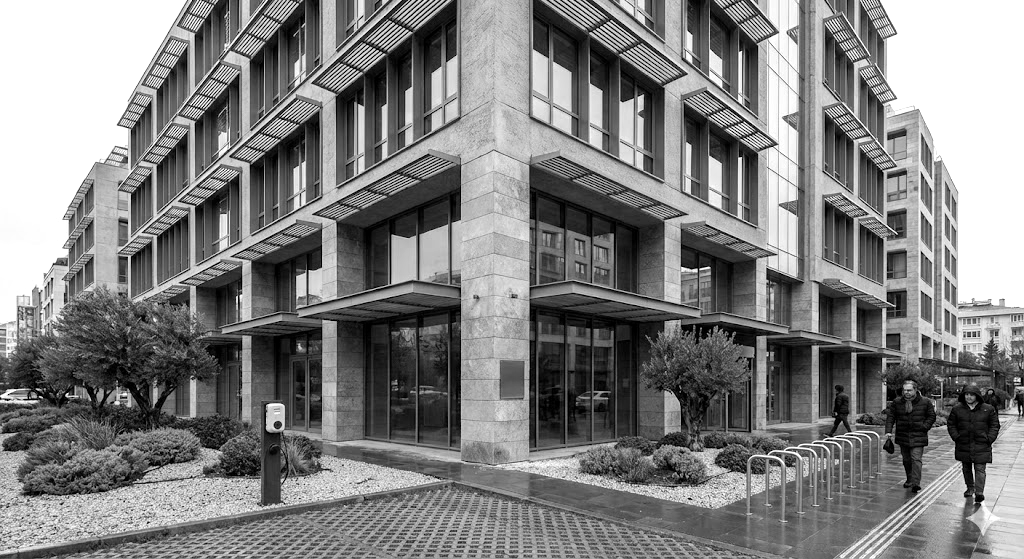
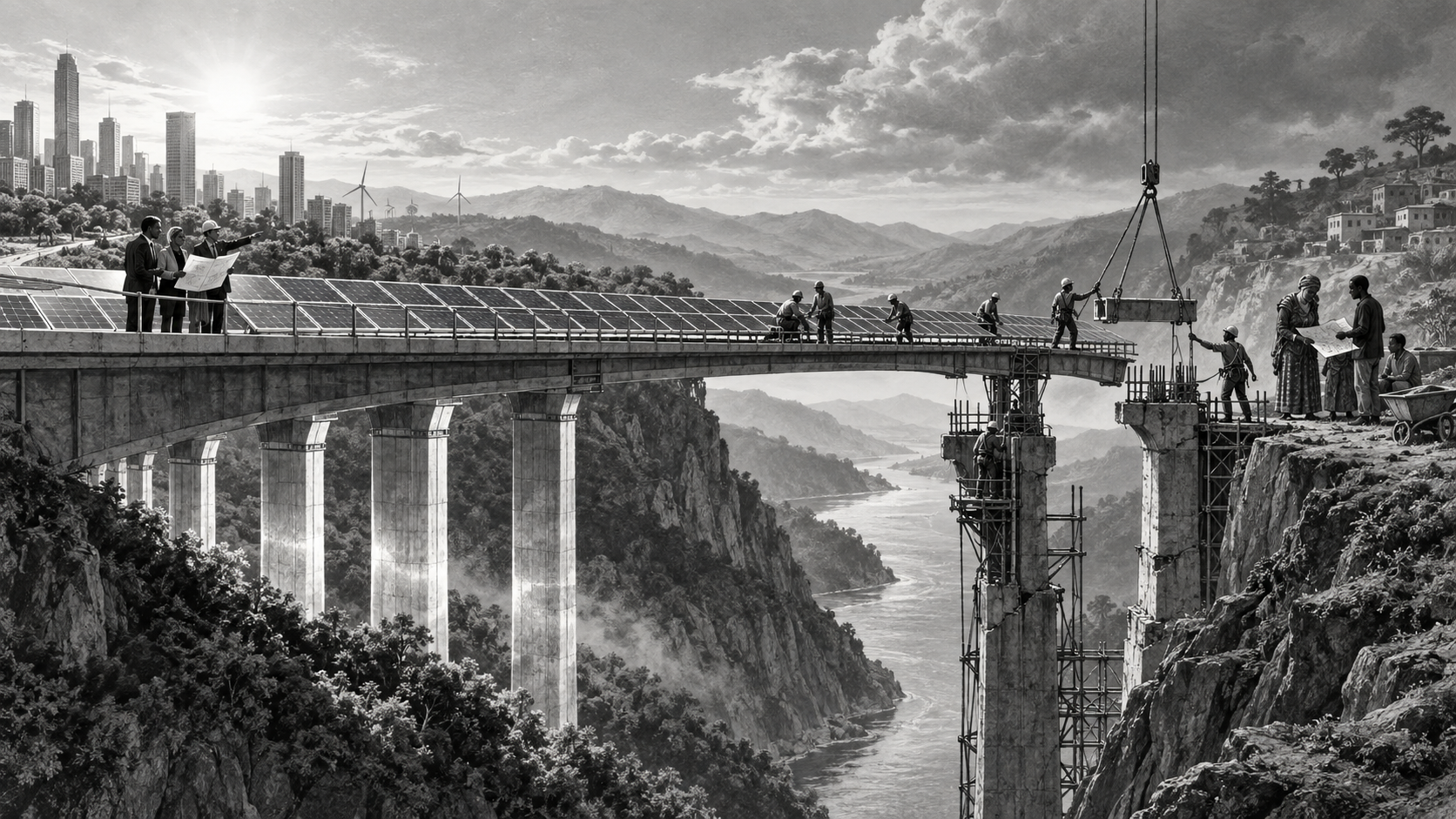
Buildings consume electricity, but their roofs, façades, parking areas and other architectural elements can also host or incorporate solar generation.
New construction and building renovation are opportunities to integrate energy generation into the design from the outset.
Building-integrated photovoltaics (BIPV), for example, can replace conventional building elements such as roofing or façade cladding while generating electricity. When a roof or façade already needs replacement, integrating PV into that intervention can combine building-envelope functions with energy generation.
However, BIPV is not automatically the best solution for every building. Conventional rooftop PV may be more appropriate where the existing roof is in good condition, while façade-integrated systems may be particularly relevant during deep renovation or new construction. Structural integrity, orientation, shading, fire safety, waterproofing, cost and maintenance all influence the choice.
Treating buildings as potential energy assets means considering generation, storage, efficiency and resilience together rather than as separate projects.
From resilient buildings to resilient communities
A building-scale system is only one part of the picture.
At district level, several buildings may coordinate their energy use, share infrastructure or participate in a local microgrid. With suitable technical arrangements, such systems may be able to disconnect from the main grid during an outage and continue supplying selected loads.
At grid level, distributed resources need to be visible and manageable. Distribution system operators require appropriate connection standards, metering, coordination and control mechanisms to integrate increasing numbers of small-scale generators and storage systems.
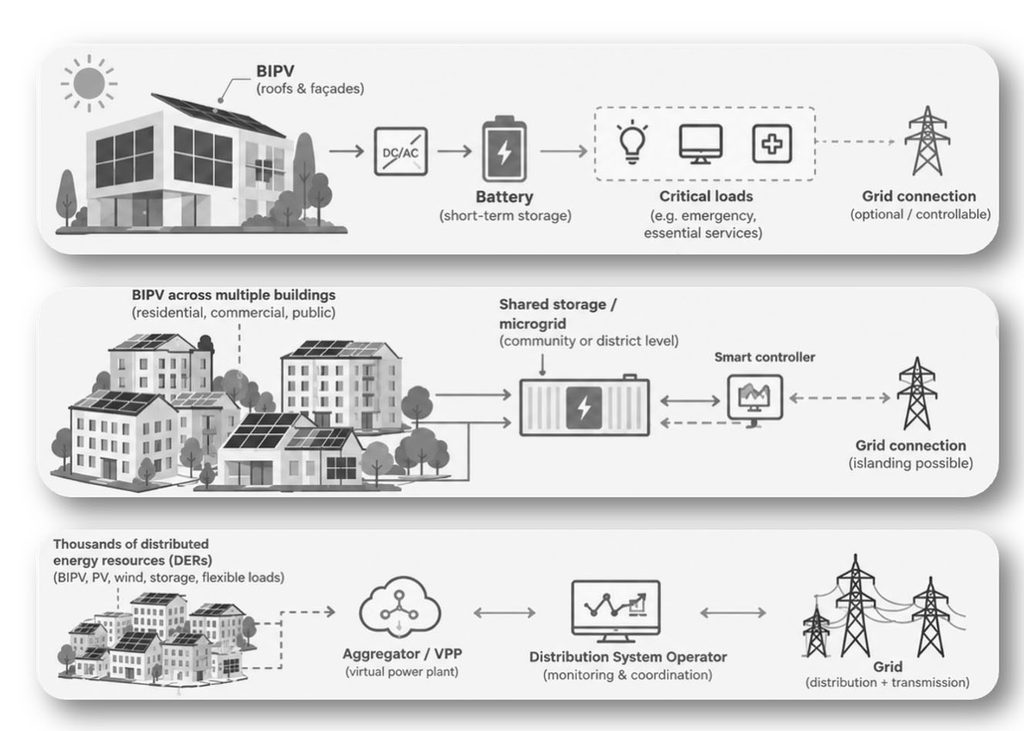
These layers are interdependent. A building may have solar panels and a battery, but its wider contribution depends on how the system is operated. A collection of buildings may have local generation, but coordinated planning is needed to turn individual assets into a reliable community resource.
Designing for resilience from the beginning
A practical approach starts with four questions:
- What must remain operational? Identify critical loads and the consequences of an interruption.
- Where can energy be generated? Assess rooftops, façades, canopies and other suitable locations.
- How will energy be available when needed? Consider storage, backup operation, demand management and system controls.
- How will the system work with others? Plan for grid connection, local coordination, maintenance and future expansion.
These questions are relevant to new developments, building renovation, public infrastructure and reconstruction after a crisis. In each case, the most effective solution depends on local conditions, technical requirements and the needs of the people relying on the system.
The aim is an energy system with more options, fewer single points of failure and the ability to maintain essential services when conditions change.
Solar energy becomes a resilience strategy when generation is designed around real needs, storage and controls are fit for purpose, and individual buildings are considered as part of a wider energy system.