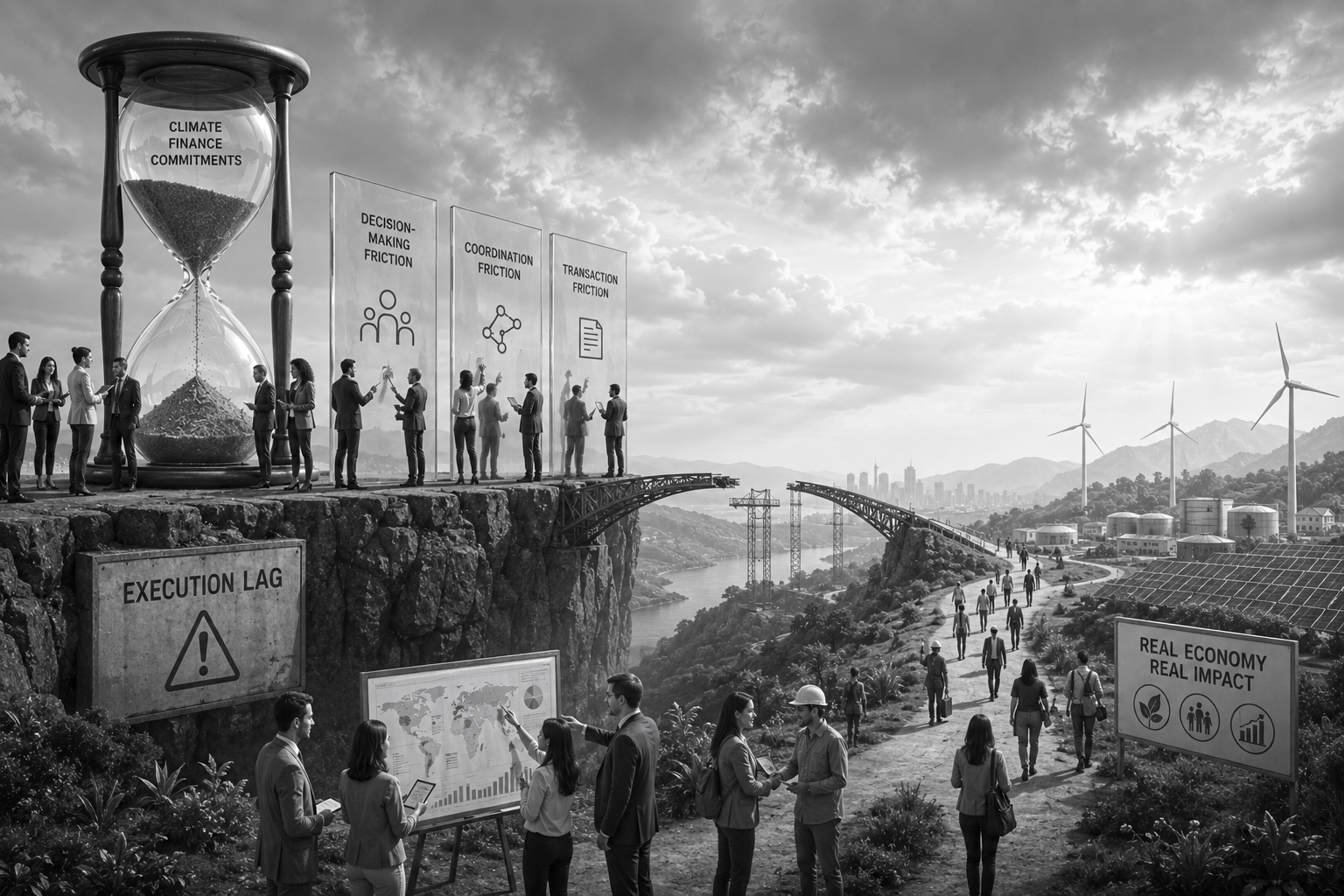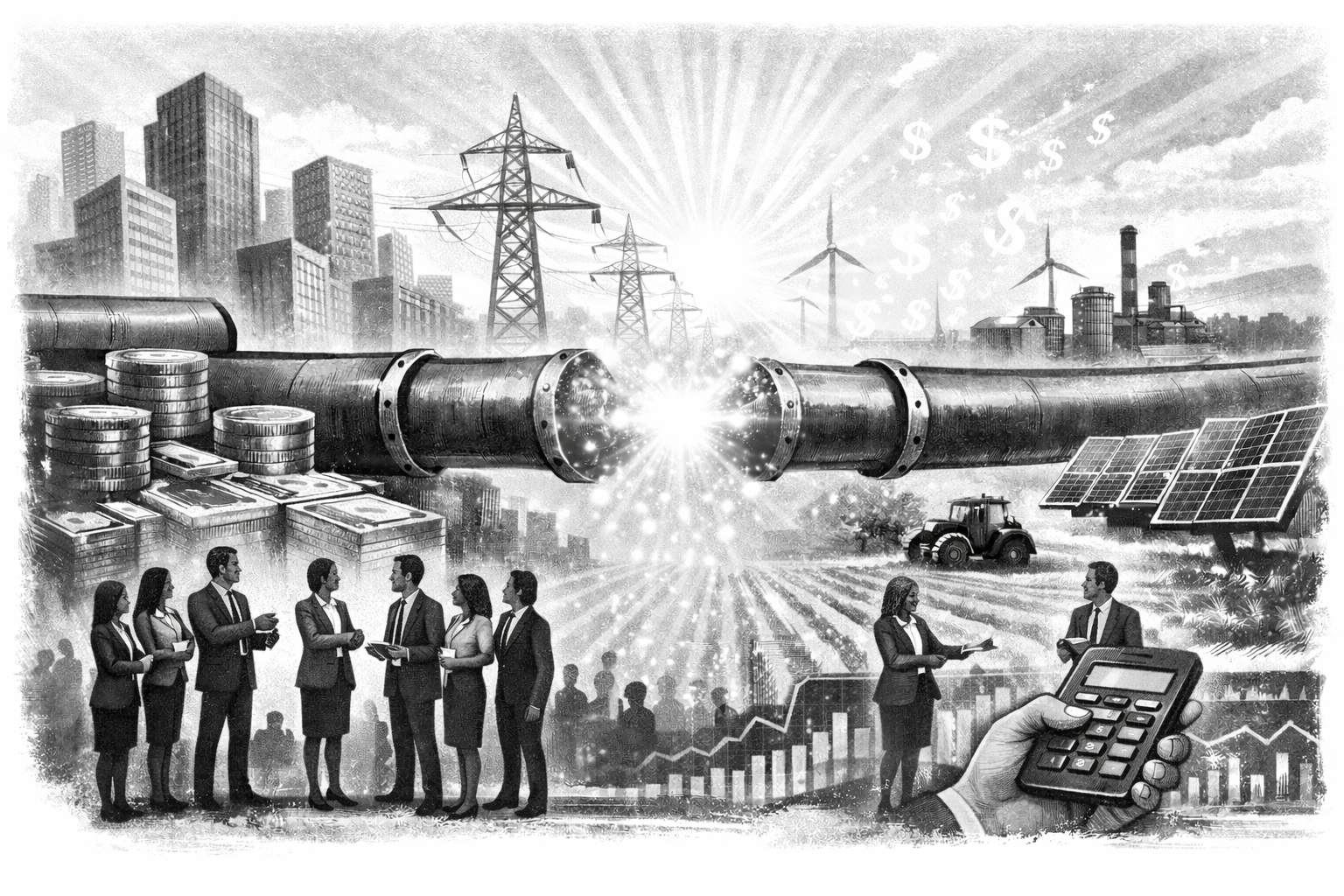



Climate diplomacy has become remarkably good at announcing trillion-dollar ambitions. The harder part is explaining when the money will arrive, who will receive it and how much will actually protect people. As COP31 approaches, the test is whether finance can move beyond conference rooms and into communities.
The pledge: progress, but not enough
The COP29 agreement calls for at least $300 billion a year for developing countries by 2035, alongside efforts to scale climate finance to $1.3 trillion annually. These are future goals not sums already paid. OECD data show that developed countries provided and mobilised $115.9 billion in 2022, $132.8 billion in 2023 and $136.7 billion in 2024. The old $100 billion goal was eventually exceeded, but only after its original 2020 deadline.
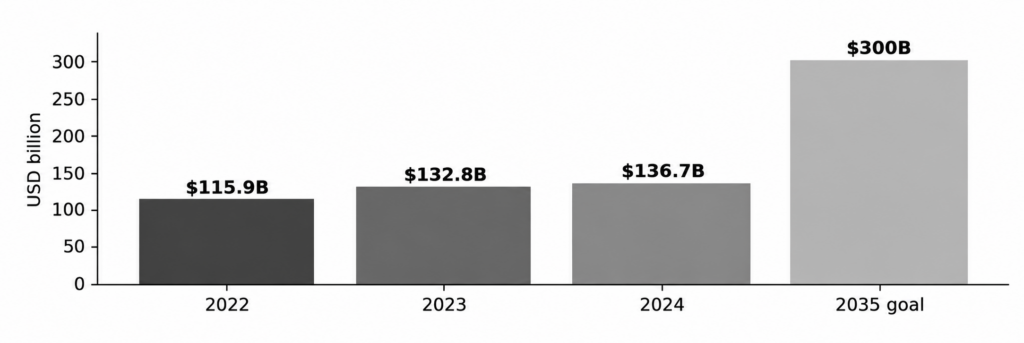
The new pledge cannot yet be declared a success or failure. Comparable 2025 figures are not expected before 2027 at the earliest. The 2024 total is about 46% of the new annual target, but this is a scale comparison, not a formal assessment of the 2035 commitment.
Adaptation has a particularly expensive problem
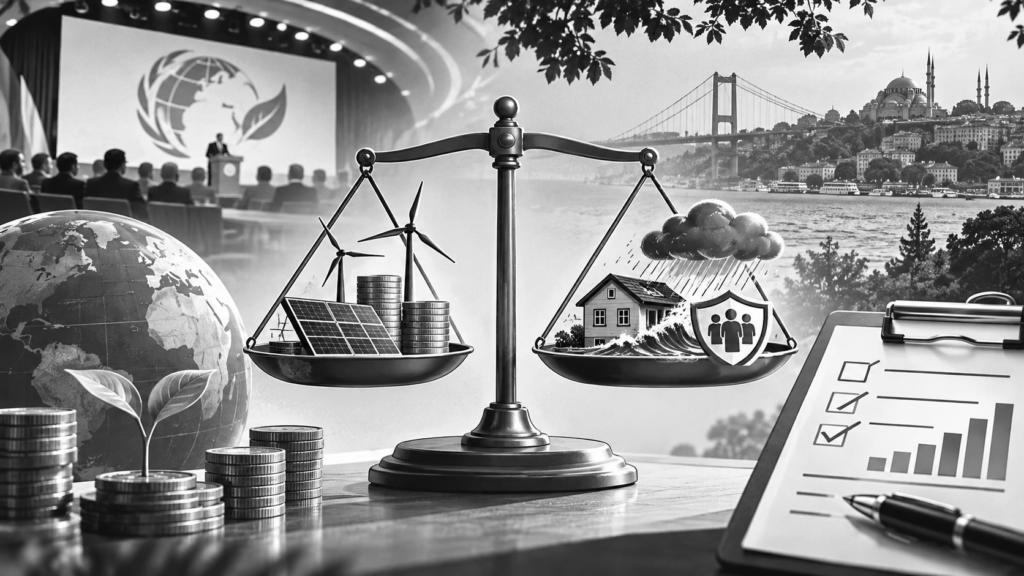
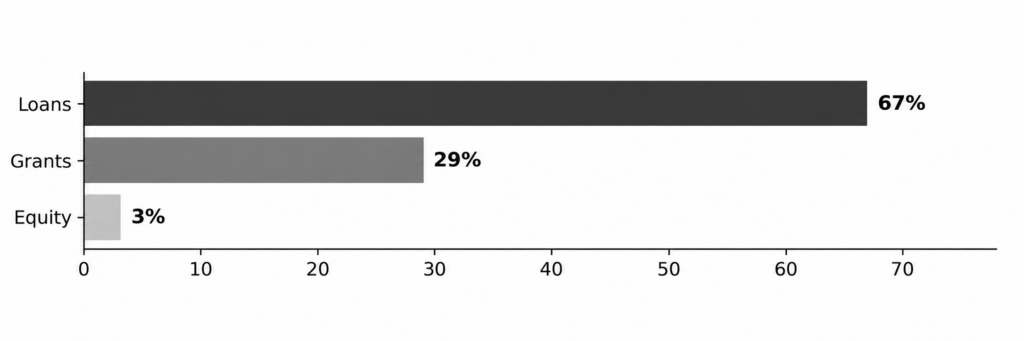
UNEP estimates that developing countries will require $310–365 billion annually for adaptation by 2035, compared with just $26 billion in international public adaptation finance in 2023. That is a roughly 12–14-fold difference. Adaptation is only one component of climate finance; its estimated needs should not be directly subtracted from the broader $300 billion pledge.Financing also comes with conditions. In 2024, loans accounted for 67% of public climate finance and grants for 29%, according to the OECD. Loans may be suitable for revenue-generating power plants; they are much less straightforward for flood barriers, public health resilience or water systems with little direct commercial return.
What COP31 can and cannot offer
The COP31 Climate Implementation Bridge aims to translate national climate plans into investment-ready portfolios. The UN-led finance dialogue in Istanbul emphasized project preparation, blended finance, domestic green markets, risk-sharing and reliable climate data. UNEP FI likewise identifies adaptation finance, financial-flow alignment and implementation as core negotiating and action priorities.
This is sensible, but bankability is not the same as affordability. A guarantee may lower lending risk; concessional debt can reduce repayment pressure; grants can fund early-stage feasibility or non-commercial public goods. Each instrument addresses a different barrier. None, by itself, guarantees that a project reaches financial close or that the most vulnerable receive support.
What would credible delivery look like?
COP31 cannot eliminate the finance gap in two weeks. It could, however, establish a public scorecard that distinguishes pledges, signed commitments, actual disbursements and operational results. It could make project-preparation support available to smaller local actors, expand grant-based adaptation finance and disclose financing terms—not just headline totals.
The next generation will not experience climate diplomacy as a communique. It will experience it through reliable electricity, flood-resistant schools, secure water supplies and the price of adaptation. The world does not lack climate-finance announcements. It lacks affordable, accessible and accountable delivery.
Official sources and data notes
OECD (2026), Climate Finance Provided and Mobilised by Developed Countries in 2013–2024: https://www.oecd.org/en/publications/climate-finance-provided-and-mobilised-by-developed-countries-in-2013-2024_ab5eb9ad-en/full-report.html
UNEP (2025), Adaptation Gap Report 2025: https://www.unep.org/resources/adaptation-gap-report-2025
UNEP Finance Initiative (2026), From Belém to Antalya: What COP31 means for financial institutions: https://www.unepfi.org/themes/climate-change/from-belem-to-antalya-what-cop31-means-for-financial-institutions/
United Nations in Türkiye (2026), Climate finance takes centre stage ahead of COP31 in Istanbul: https://turkiye.un.org/en/322300-climate-finance-takes-centre-stage-ahead-cop31-istanbul
UNFCCC (2024), COP29 new collective quantified goal: https://unfccc.int/news/cop29-un-climate-conference-agrees-to-triple-finance-to-developing-countries-protecting-lives-and